 Save to Pinterest
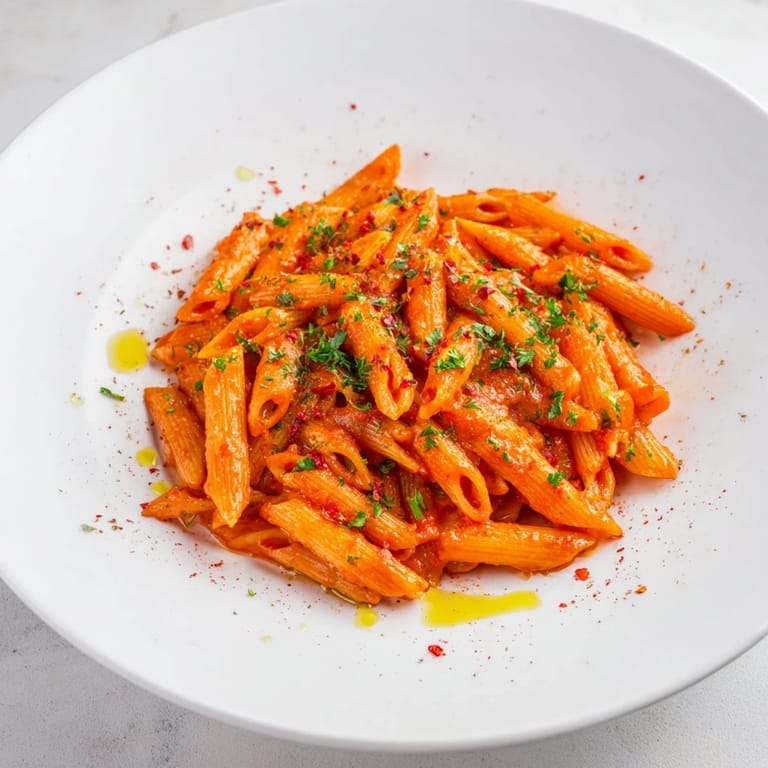
 There's a night I can't forget—my roommate's first time cooking in our tiny shared kitchen, and he chose penne all'arrabbiata. He burned the garlic within seconds, laughed it off, started over, and somehow created magic anyway. I've made this dish hundreds of times since, but something about watching someone discover its simplicity and heat for the first time made me fall completely in love with it.
I served this to a food critic friend once, and she was shocked how a dish with five main ingredients could be so complete. She went quiet halfway through, just eating, and that silence told me everything.
Ingredients
- Penne rigate (400 g): The ridges grab the sauce beautifully—smooth pasta slides right past all that spicy goodness.
- Extra virgin olive oil (3 tbsp, plus more for finishing): This isn't just cooking oil; it's flavor, so choose one you'd actually taste on its own.
- Garlic cloves (4 large, thinly sliced): Thin slices cook faster and more evenly, preventing bitter burnt edges that ruin everything.
- Red chili flakes (1–2 tsp): Start with one and taste your courage—you can always add more heat, but you can't take it back.
- Peeled whole tomatoes (800 g): Canned tomatoes from San Marzano region are ideal, but any quality brand works; crush them by hand for better texture.
- Sea salt and black pepper: Simple seasoning that lets the tomato and heat shine without distraction.
- Fresh flat-leaf parsley (2 tbsp, chopped): The final bright note that cuts through the richness and brings everything into focus.
Tired of Takeout? 🥡
Get 10 meals you can make faster than delivery arrives. Seriously.
One email. No spam. Unsubscribe anytime.
Instructions
- Boil the pasta:
- Bring a large pot of salted water to a rolling boil—it should taste like the sea. Add penne and cook until al dente according to package directions, then drain while reserving half a cup of starchy pasta water; this liquid gold will help the sauce cling to each piece.
- Infuse the oil:
- Heat olive oil in a large skillet over medium heat until you can smell it warming, then add sliced garlic and chili flakes. Listen for the gentle sizzle and watch the garlic turn pale golden within a minute—this is the moment to stop before bitterness creeps in.
- Build the sauce:
- Add crushed tomatoes, salt, and pepper to the skillet and let it simmer uncovered for 12–15 minutes, stirring occasionally so the bottom doesn't catch. You'll see the sauce shift from watery to velvety as the water cooks away and flavors deepen.
- Marry pasta and sauce:
- Toss the drained penne into the sauce and stir constantly, adding a splash of reserved pasta water if it looks too thick. The starch helps everything cling together into a silky marriage rather than pasta drowning in broth.
- Finish with care:
- Remove from heat, fold in chopped parsley, and drizzle generously with excellent olive oil. Serve immediately while the heat and aroma are still at their peak.
 Save to Pinterest
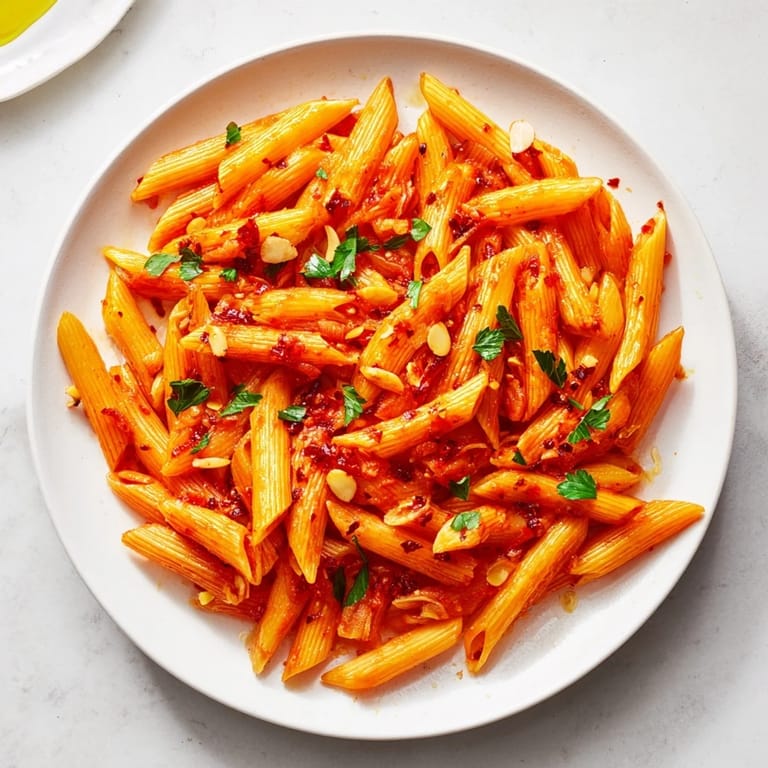
 My mother called me last winter asking how to make something quick and warming. When I told her this, she made it that night and texted me a picture of the bowl. No words, just the image of those red-coated noodles and a heart emoji.
The Heat You Can Control
Arrabbiata means angry in Italian, and the heat is supposed to speak for itself. I've learned that chili flakes vary wildly in intensity depending on freshness and origin, so tasting as you build is essential rather than following blindly. Some people add them to the oil longer for deeper heat, others add them at the very end for bright spice—both ways work, just taste and adjust to your comfort zone.
Why This Dish Teaches You Everything
This recipe taught me that cooking doesn't need complexity to be profound. Watching the tomato break down, the oil turn orange-red, the garlic soften into sweet mellowness beside the aggressive bite of chili—it's a master class in restraint and letting ingredients speak. When you make this once, you understand why Roman cooks have been making it for generations.
Variations and Moments
I've made this with fresh tomatoes in summer and they never quite matched the depth of canned, so I stopped fighting it. I've tried adding a pinch of sugar, a splash of pasta water earlier, fresh basil at the end—and each time I circle back to the original because it needs nothing. The best version I've made was a rainy Tuesday when I had nowhere to be and let the sauce simmer ten minutes longer than usual, watching it become almost jammy.
- A splash of good red wine in the sauce adds unexpected complexity and a subtle sweetness that balances the heat.
- Some nights I add a whisper of anchovy paste—just a half teaspoon—and it amplifies every flavor without announcing itself.
- If you have high-quality bottled peperoncini peppers instead of flakes, slice them thin and use them the same way for a fresher heat.
 Save to Pinterest
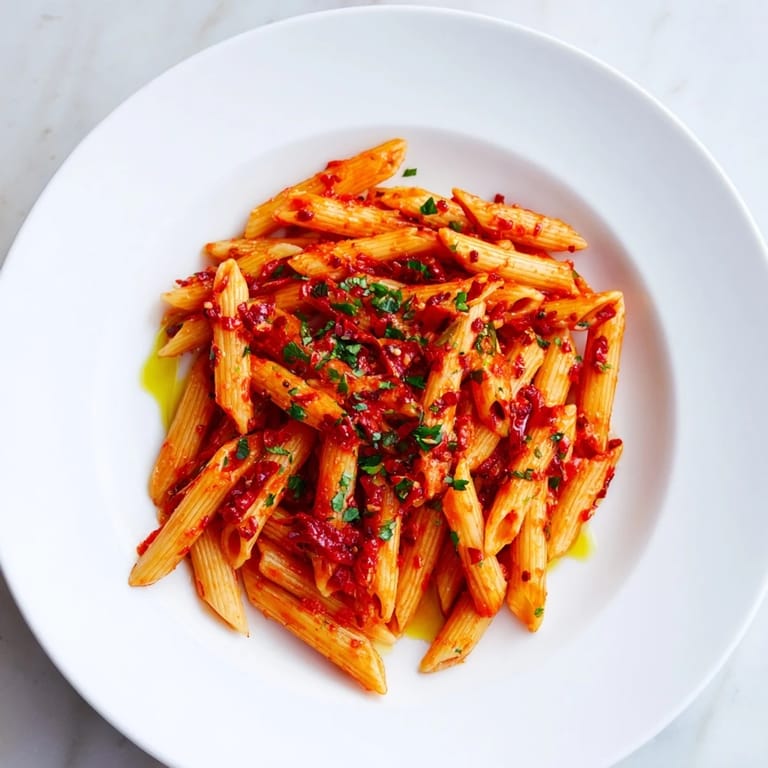
 Make this when you need something honest and quick, when hunger is real and time is short. You'll have dinner in thirty minutes and a dish that tastes like it came from someone's kitchen who knows exactly what they're doing.
Common Questions
- → How do I adjust the heat level?
Modify the amount of red chili flakes to suit your spice preference. For milder flavors, start with less and add gradually.
- → Can I use fresh tomatoes instead of canned?
Fresh ripe tomatoes can be used but require peeling and crushing. Canned peeled tomatoes offer convenience and consistent flavor.
- → What pasta should I use for this dish?
Penne rigate is traditional, as its ridges hold the sauce well, but other short pasta shapes like rigatoni or mezzi rigatoni also work.
- → How do I prevent garlic from burning?
Sauté garlic gently on medium heat until fragrant but not browned, usually about one minute, to avoid bitterness.
- → Is it necessary to reserve pasta water?
Yes, reserved pasta water helps loosen the sauce and helps it cling better to the pasta when mixed together.