 Save to Pinterest
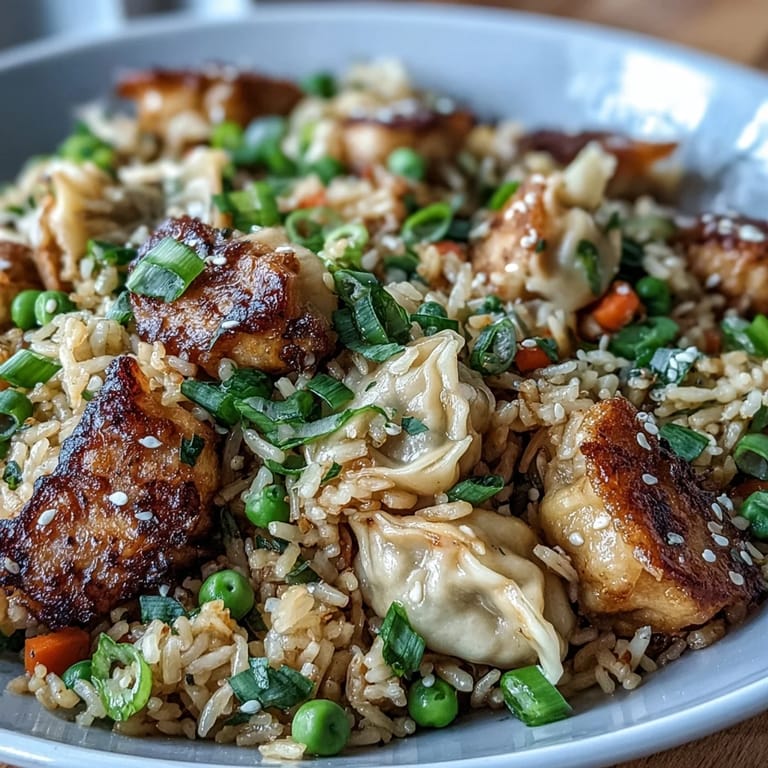
 One Thursday night, I opened my freezer and found a lonely container of dumplings from Trader Joe's, half-forgotten behind the ice packs. Instead of reheating them the usual way, I grabbed yesterday's rice and decided to turn them into something warm and complete. Fifteen minutes later, my kitchen smelled like toasted sesame and garlic, and I realized I'd stumbled onto the perfect solution for those random leftovers that never quite feel like enough on their own.
My roommate came home just as I was finishing, and the smell of sesame oil and soy sauce pulled her straight into the kitchen. She took one bite and asked if I could make it again the next day—that's when I knew this wasn't just a quick fix, but something worth keeping around. Now it's become our go-to lunch when the fridge needs clearing out and we want something satisfying.
Ingredients
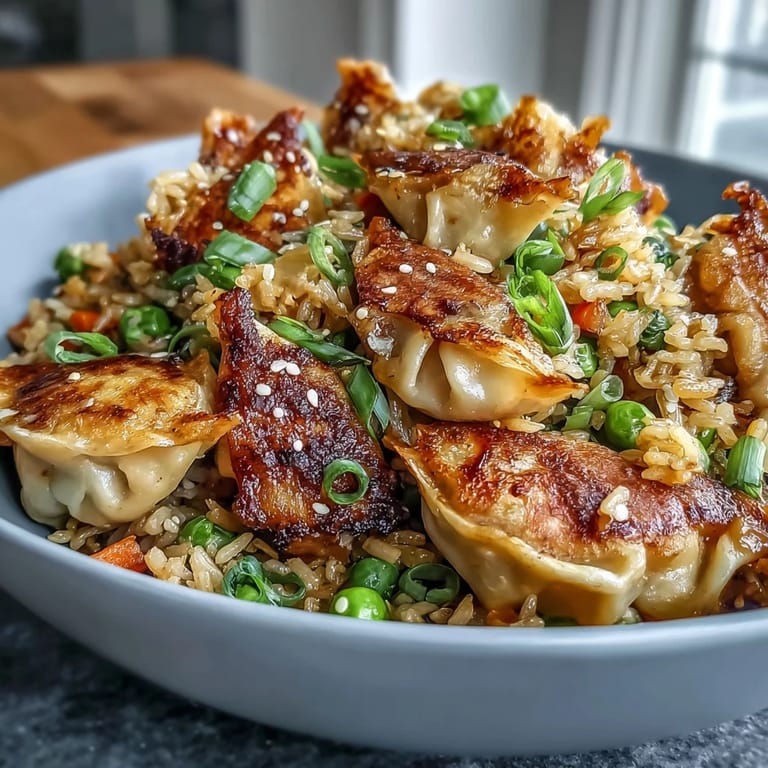
- Cooked dumplings (6 pieces): Leftover dumplings work beautifully here, and chopping them into bite-sized pieces lets them distribute flavor throughout the rice instead of being one big lump.
- Cooked jasmine or long-grain rice (2 cups): Chilled rice is your secret weapon—cold rice doesn't clump together and actually crisps up better in the pan when you toss it with heat and oil.
- Frozen mixed vegetables (1/2 cup): No need to thaw them; they'll cook through in minutes and add color and nutrition without extra prep work.
- Green onions (2): Slice them fresh right before you add them at the end so their bright flavor doesn't fade away.
- Shredded cabbage (1/2 cup, optional): Adds a light crunch and subtle sweetness that plays well with the salty soy sauce.
- Soy sauce (2 tablespoons): Use low sodium if you're watching salt, and taste as you go—you can always add more but you can't take it out.
- Toasted sesame oil (1 teaspoon): This small amount carries a lot of flavor; using it early means the aroma builds throughout cooking.
- Freshly ground black pepper (1/2 teaspoon): Fresh pepper tastes sharper and more alive than pre-ground, which makes a real difference in simple dishes.
- Garlic (1 clove, minced): Don't skip this—30 seconds of sizzling in oil releases all its magic and sets the tone for the whole dish.
- Fresh ginger (1 teaspoon, grated, optional): If you use it, add it right with the garlic so both aromatics bloom together.
- Cilantro and sesame seeds (optional garnish): These are what make people think you spent more time cooking than you actually did.
Tired of Takeout? 🥡
Get 10 meals you can make faster than delivery arrives. Seriously.
One email. No spam. Unsubscribe anytime.
Instructions
- Prep your dumplings and rice:
- Cut your cooked dumplings into bite-sized pieces—not too tiny or they'll disappear, not too chunky or they'll feel overwhelming. Make sure your rice is broken up; cold rice clumps together, so run your fingers through it or use a fork to separate any stuck bits before you start cooking.
- Heat your pan and bloom the aromatics:
- Get your skillet or wok smoking hot over medium-high heat and add the sesame oil. Drop in your minced garlic and ginger (if using) and let them sizzle for exactly 30 seconds—you want them fragrant, not brown or burnt.
- Add color with vegetables:
- Toss in your frozen vegetables and cabbage, stirring constantly for about 2 to 3 minutes until they're warm and just tender but still have a little snap to them. This is your window to get them cooked through without turning them mushy.
- Bring it all together:
- Add your chopped dumplings and the rice, stirring well to break up any clumps and coat everything with the oil and aromatics. You should hear the rice sizzle when it hits the hot pan—that's the sound of the edges getting crispy, which is where all the flavor lives.
- Season and finish:
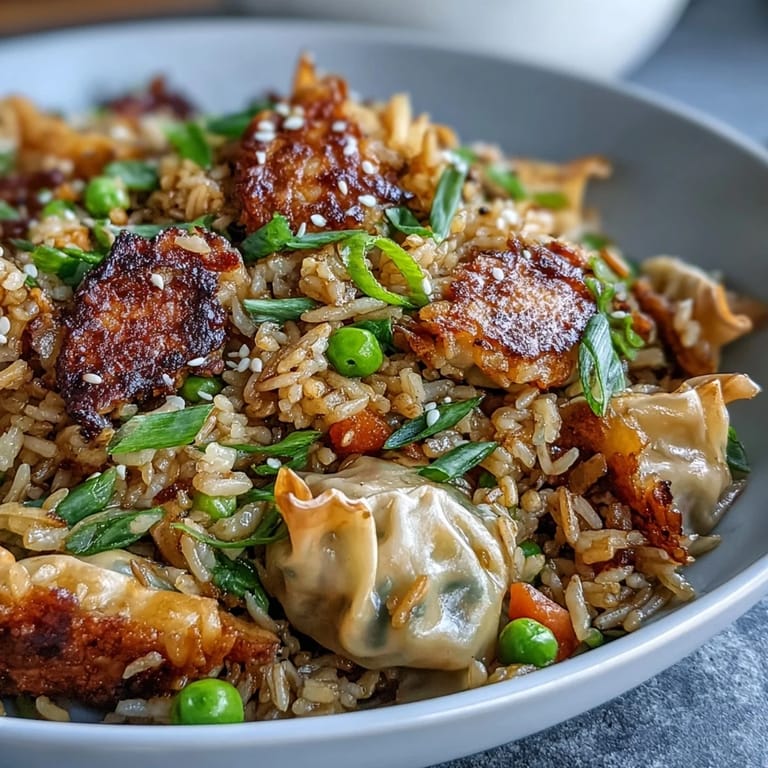
- Drizzle the soy sauce over everything and sprinkle the black pepper, then stir-fry for another 3 to 4 minutes until the rice is heated through and you can hear and see some bits crisping up around the edges. Add your green onions, give it one final toss, and taste—adjust salt if needed.
- Plate and garnish:
- Serve it hot with cilantro and sesame seeds scattered on top if you have them. These garnishes aren't just pretty; they add brightness and nuttiness that make the whole dish sing.
 Save to Pinterest
 There's something oddly satisfying about turning throwaway ingredients into a complete meal that tastes like you put real thought into it. This dish became my quiet victory on nights when I felt too tired to cook, yet too hungry to settle for cereal.
Why Cold Rice Changes Everything
The first time I made this with warm rice, I ended up with a mushy, compacted mess that looked nothing like fried rice—more like rice pudding that hadn't been sweetened. I learned that afternoon that the starch in warm rice makes it sticky and clingy. Cold rice has already set, so each grain stays separate when you toss it around in the hot pan, and you actually get those crispy, slightly caramelized edges that make fried rice taste like something from a restaurant instead of something you threw together on a random Tuesday night.
The Dumpling Factor
Using leftover dumplings instead of the usual protein like scrambled egg or chicken changes the whole character of the dish. The dumplings add this pleasant chewiness and a hint of whatever filling they have—whether it's pork, vegetable, or shrimp—and they taste so much better when they're warmed through in a fried rice than when they're reheated on their own. Chopping them into pieces instead of leaving them whole means you get dumpling flavor in every bite rather than occasional dense pockets of it. It's the kind of thing that feels like a secret once you discover it.
Variations That Actually Work
This recipe is forgiving in the best way possible. I've made it with frozen peas and carrots alone, with leftover roasted broccoli and snap peas, with store-bought slaw mix, and even with shredded zucchini when I was trying to use things up. The framework stays the same, but the results always feel fresh and different. What matters is having some texture contrast and a vegetable or two to balance the richness of the oil and soy sauce.
- Try whisking an egg in a separate pan and scrambling it before adding the rice for extra protein that makes it feel like a complete meal.
- Add a splash of sriracha or chili oil at the end if you want heat, or drizzle it on top so people can control their own spice level.
- If you want a sauce-based version, whisk the soy sauce with a splash of rice vinegar and a tiny bit of sugar before drizzling it in for brightness.
 Save to Pinterest
 This recipe saved me more times than I can count, and it taught me that some of the best meals come from working with what's already in your kitchen instead of against it. It's proof that leftovers don't have to feel like a consolation prize.
Common Questions
- → Can I use any dumplings for this dish?
Yes, any cooked dumpling variety works well, making it an excellent way to use leftovers or store-bought options.
- → What type of rice works best?
Chilled jasmine or long-grain rice provides the ideal texture to avoid clumping and creates a fluffy base.
- → How do I add more protein to this dish?
Incorporate a scrambled egg before adding the rice for an easy protein boost.
- → Are there vegetarian adaptations?
Yes, substitute dumplings with vegetable-based ones and use tamari instead of soy sauce to keep it dairy-free and vegetarian.
- → What enhancements add extra flavor or spice?
Adding sriracha or chili oil before serving brings a spicy kick, while fresh herbs like cilantro enhance aroma.