 Save to Pinterest
 There's something about the way butternut squash caramelizes in the oven that makes a Tuesday night feel like an occasion. My neighbor stopped by one autumn afternoon with a bag of squash from her garden, and I found myself layering flavors in bowls instead of the usual weeknight scramble. This dish came together almost by accident, but it tasted like I'd been planning it all along.
I made these bowls for a dinner party last spring when someone mentioned they needed a gluten-free option, and I realized halfway through cooking that this was already it. Watching four people at my table take that first bite and then immediately go quiet (the good quiet) told me this recipe was worth keeping close.
Ingredients
- Butternut squash, peeled and diced (2 cups): The natural sweetness balances the savory elements, and dicing it uniform means everything roasts evenly instead of some pieces turning crispy while others stay soft.
- Steak, cubed (1 pound sirloin or ribeye): Cutting it into cubes gives you more surface area for searing, which means more of that golden, flavorful crust that makes the whole bowl sing.
- Quinoa, rinsed (1 cup): Rinsing removes the bitter coating, and it's one of those grains that actually holds its texture when dressed, unlike rice which can turn mushy.
- Fresh garlic (3 cloves, sautéed): Sauté them gently before blending so they lose that harsh raw bite and become sweet and mellow in the sauce.
- Fresh herbs (parsley, thyme, rosemary): Split them between the roasting pan and the sauce so the flavor threads through every component instead of just sitting on top.
- Heavy cream or Greek yogurt (1/2 cup): The yogurt version keeps things lighter without sacrificing that silky sauce, and it adds a subtle tang that keeps the dish from feeling too rich.
- Olive oil (2 tablespoons): Use good quality here since it's doing real work, not just cooking but becoming part of the flavor profile.
- Salt and black pepper (1/2 teaspoon each, divided): Dividing the seasoning means the steak, squash, and sauce each get their own moment to shine rather than everything tasting uniform.
- Water (2 cups): Use filtered if you have it, since the quinoa will absorb everything including any chlorine taste from tap water.
Tired of Takeout? 🥡
Get 10 meals you can make faster than delivery arrives. Seriously.
One email. No spam. Unsubscribe anytime.
Instructions
- Get everything ready:
- Preheat your oven to 400°F while you peel and dice the squash, chop your herbs fresh, and rinse the quinoa under cold water until the water runs clear. Having everything prepped means the actual cooking happens smoothly instead of you scrambling halfway through.
- Roast the squash until it caramelizes:
- Toss your diced squash with one tablespoon of olive oil and half the herbs, spread it on a baking sheet in a single layer, and let it sit in the oven for 25 to 30 minutes. You'll know it's ready when the edges turn golden and a fork pierces the center easily.
- Cook the quinoa while the squash roasts:
- Bring water to a boil, add your rinsed quinoa, cover it, and turn the heat down to low. After about 15 minutes, the water will be absorbed and the grains will look fluffy and tender instead of crunchy.
- Sear the steak until it's golden on all sides:
- Heat your cast iron skillet over medium-high heat until it's really hot, then pat your steak cubes dry with paper towels and season them. Sear for about 2 to 3 minutes per side until you see a deep brown crust, then let them rest for a few minutes so the juices redistribute.
- Blend the sauce until it's silky:
- Add your sautéed garlic, cream or yogurt, the remaining herbs, and a pinch of salt to a blender and pulse until smooth. If it's too thick, add a splash of water until it reaches that pourable consistency that coats the back of a spoon.
- Assemble each bowl with intention:
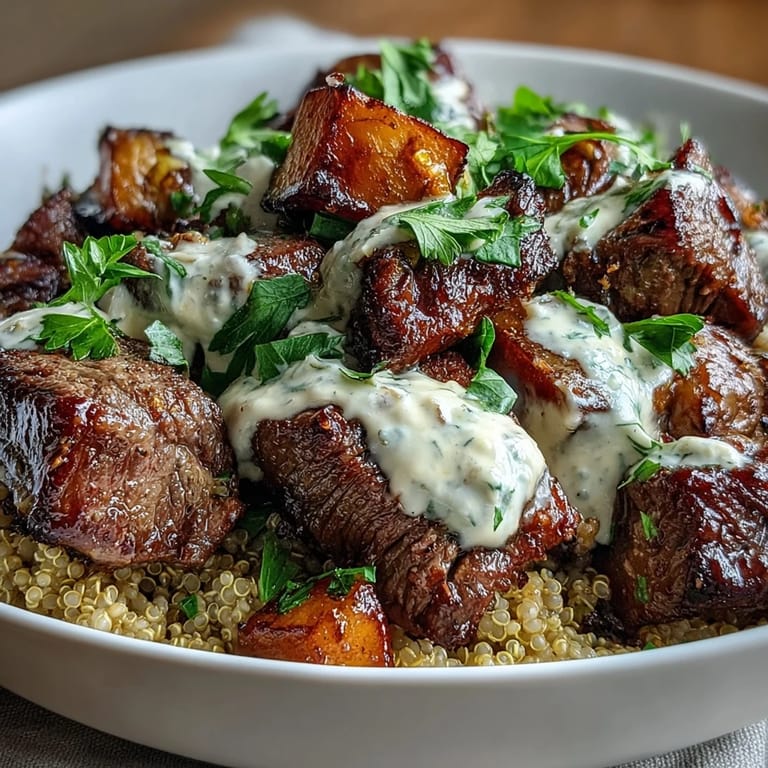
- Start with quinoa as your base, top it with roasted squash and steak, then drizzle the sauce over everything so it seeps into the warm grains. Finish with a sprinkle of fresh parsley and serve while everything is still warm.
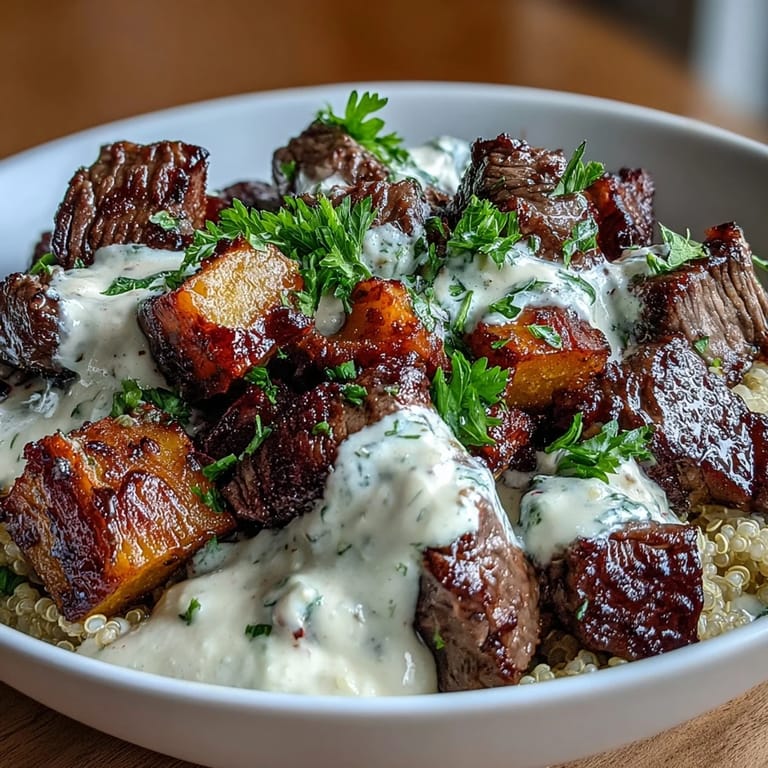 Save to Pinterest
 My daughter asked for thirds that night, which from a teenager counts as poetry. This bowl turned into something we make when we want to feel like we're taking care of ourselves without the effort feeling like punishment.
Why This Comes Together Better Than You'd Think
The genius of this bowl is that you're cooking three completely different components on different schedules and at different temperatures, and somehow they all finish at roughly the same time. The oven is doing most of the work on the squash, the stovetop handles both the grain and the steak in parallel, and your blender finishes the sauce in seconds. It feels more complicated than it actually is, which is exactly the kind of recipe that makes you look like you have your life together.
The Sauce Is Where the Magic Actually Lives
I spent way too long trying to make this sauce from scratch with cream reductions before someone told me to just blend everything together. The warm squash and steak don't need cream that's been simmered for twenty minutes; they need something that tastes like fresh herbs met dairy and got married on the spot. It's the sauce that transforms four good ingredients into something that feels intentional and restaurant-worthy, so don't skip it or tone it down just because it seems too simple.
Make-Ahead Strategy and Serving Ideas
All four components keep separately in the refrigerator for up to four days, which means you can roast a batch of squash on Sunday and build different bowls throughout the week depending on what else you're eating. Sear your steak fresh each time, but everything else travels well and actually improves slightly as flavors meld overnight. For meal prep lunches, keep the sauce in a separate container and drizzle it right before eating so the quinoa doesn't get soggy.
- You can substitute farro or brown rice for quinoa if you want something with a different texture or simply ran out of quinoa like I always do.
- For a dairy-free version, use coconut cream or a cashew-based yogurt in the sauce and it won't feel like you're missing anything.
- A squeeze of fresh lemon juice in the sauce brightens everything if your version tastes like it needs to be reminded it's autumn and not February.
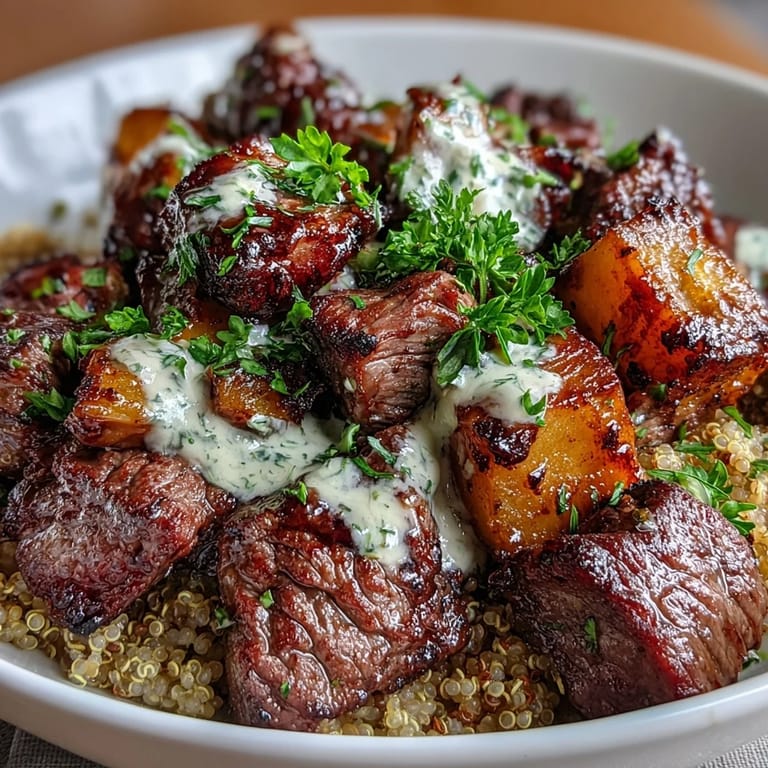 Save to Pinterest
 This bowl is proof that cooking doesn't have to be complicated to feel like an accomplishment. Make it once and you'll find yourself reaching for it again and again.
Common Questions
- → How do I ensure the steak stays tender and juicy?
Pat the steak cubes dry and sear over medium-high heat for 2–3 minutes per side to lock in juices. Let the meat rest briefly before serving.
- → Can I substitute quinoa with another grain?
Yes, farro or brown rice can be used as alternatives, adjusting cooking times accordingly.
- → What herbs work best for the garlic herb cream sauce?
Fresh parsley, thyme, and rosemary combine well, lending a fragrant and earthy note to the creamy sauce.
- → How to roast butternut squash evenly?
Toss squash cubes with olive oil and herbs, spread in a single layer on a baking sheet, and stir halfway through roasting for uniform browning.
- → Is it possible to prepare this dish ahead of time?
Yes, components can be prepped separately and stored for up to 4 days, making it convenient for future meals.