 Save to Pinterest
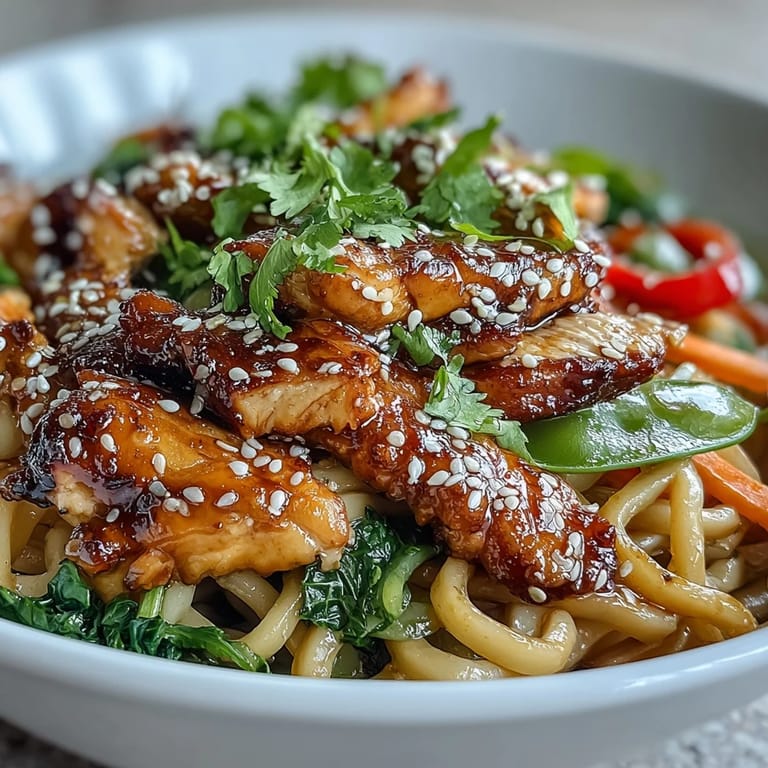
 There's something about the sizzle of chicken hitting a hot wok that makes you feel like you're cooking something special, even on a Tuesday night. I discovered this sesame noodle bowl during one of those weeks when I had random ingredients in the fridge and absolutely no plan. The combination of tender chicken, fresh vegetables, and that glossy, sweet-savory sauce came together so naturally that I've made it dozens of times since. It's become my go-to when I want something that tastes restaurant-quality but doesn't demand hours in the kitchen.
I made this for my neighbor one evening when she mentioned being tired of the same old rotation, and watching her eyes light up when she took that first bite was exactly the kind of small kitchen victory that keeps you excited about cooking. She asked for the recipe immediately, and now I run into her making it at least once a week. Those moments remind me that the best dishes aren't always the complicated ones, but the ones that feel generous and approachable.
Ingredients
- Boneless, skinless chicken breast or thighs (500 g): Thighs stay moister during the quick cooking, but breasts work beautifully if you slice them thin and don't overcook them.
- Dried udon, soba, or rice noodles (250 g): Each brings its own texture—udon is chewy and substantial, soba is nutty, rice noodles are delicate, so pick based on your mood.
- Red bell pepper (1): The sweetness matters here; it balances the savory sauce and adds a visual pop that makes the bowl feel generous.
- Carrot, julienned (1 medium): Julienne it thin so it softens just right in those 2-3 minutes of stir-frying.
- Sugar snap peas (100 g): These stay crisp even with heat, which is exactly what you want for texture contrast.
- Spring onions (2), sliced: Save these for the very end; they brighten everything with a fresh bite.
- Low-sodium soy sauce (60 ml): Low-sodium lets you control the saltiness and taste the other flavors more clearly.
- Brown sugar (2 tbsp): This isn't excessive sweetness; it rounds out the ginger and sesame and creates that caramelized depth.
- Toasted sesame oil (1 tbsp): Use the toasted kind, never the cooking kind—the difference is like night and day.
- Rice vinegar (1 tbsp): A touch of acid brightens the entire sauce and keeps it from feeling one-dimensional.
- Fresh ginger, grated (2 tsp): Grate it yourself right before mixing; the fragrance alone will make you hungry.
- Garlic, minced (2 cloves): Mince it fine so it distributes evenly through the sauce.
- Cornstarch (1 tsp, optional): Use this only if you want the sauce thicker and glossier; it's wonderful but not essential.
- Toasted sesame seeds (2 tbsp): Toast your own if you can—they taste infinitely better and only take a minute in a dry pan.
- Fresh coriander or cilantro, chopped: This is where freshness comes in; it cuts through the richness beautifully.
- Lime wedges (optional): A squeeze of lime at the table lets everyone adjust the brightness to their preference.
Tired of Takeout? 🥡
Get 10 meals you can make faster than delivery arrives. Seriously.
One email. No spam. Unsubscribe anytime.
Instructions
- Cook the noodles:
- Get a large pot of salted water boiling and follow the package directions precisely—you want them tender but not mushy. Drain and rinse them under cold water right away to stop them cooking, then set aside so they don't clump together.
- Whisk the sauce together:
- In a small bowl, combine the soy sauce, brown sugar, sesame oil, rice vinegar, ginger, garlic, and cornstarch if using. Whisk it all together and let it sit for a minute so the brown sugar dissolves.
- Heat your pan hot:
- Use a large nonstick skillet or wok over medium-high heat and add a splash of neutral oil. You want it shimmering and hot enough that the chicken hits it with a satisfying sizzle.
- Cook the chicken until golden:
- Add the sliced chicken in a single layer and resist the urge to move it around for the first minute so it can brown properly. Cook until it's golden and cooked through, about 4-5 minutes total, then remove it to a plate.
- Stir-fry the vegetables quickly:
- Add a little more oil if the pan looks dry, then add your bell pepper, carrot, and snap peas. Keep them moving over the heat for 2-3 minutes so they soften just slightly but stay bright and crisp.
- Bring everything together:
- Return the chicken to the pan, pour in the sauce, and toss everything until it's all coated. Let it simmer for 1-2 minutes so the sauce thickens slightly and clings to everything.
- Add the noodles and finish:
- Add your cooked noodles and sliced spring onions, tossing gently until everything is combined and heated through, which takes just a minute or two.
- Plate and garnish:
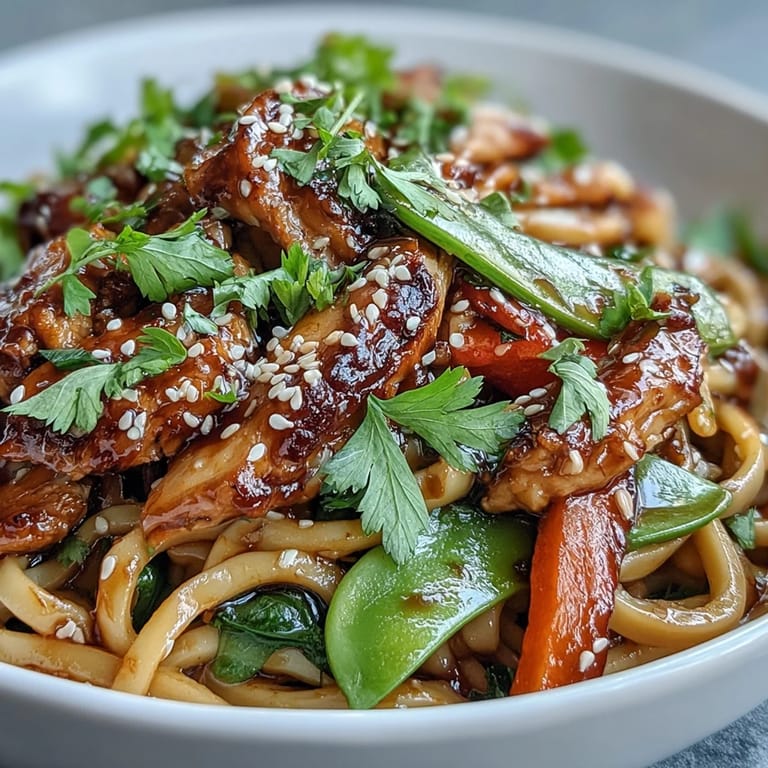
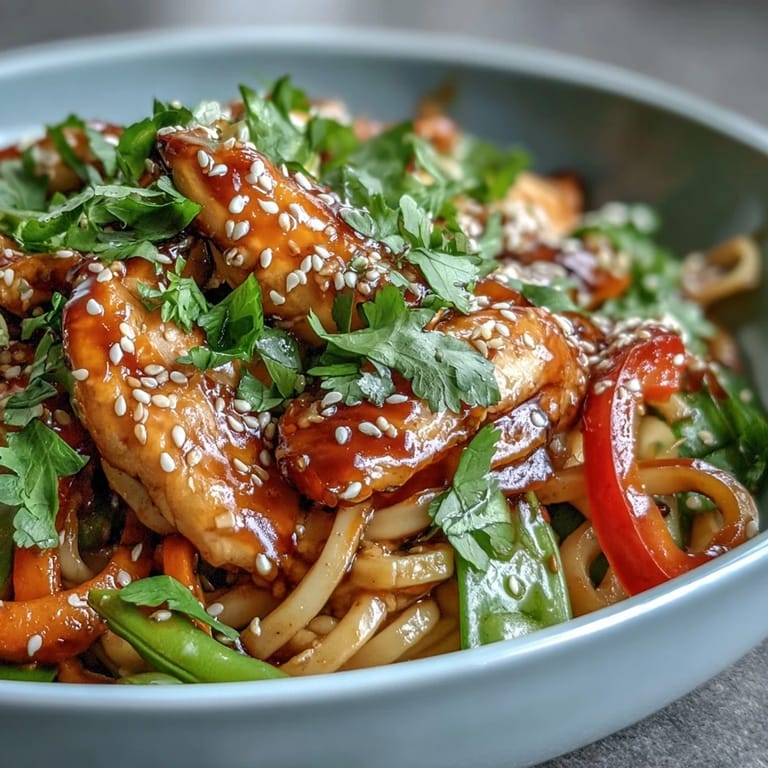
- Divide among bowls and finish with a generous handful of sesame seeds, fresh cilantro, and lime wedges so everyone can squeeze a bit of brightness into their bowl.
 Save to Pinterest
 There was an evening when a friend with a picky toddler watched me make this, and by the end of the night, her daughter was actually eating vegetables without protest. That's when I realized this dish isn't just delicious—it's approachable enough to feel homey, but elegant enough to feel like you've done something worth celebrating.
Building Flavor Layers
The magic of this bowl lives in how each element plays a role: the ginger and garlic create warmth, the sesame oil brings nutty richness, the brown sugar adds a subtle caramel note, and the rice vinegar keeps everything bright instead of heavy. When you whisk these together, you're not just mixing ingredients—you're building something balanced and complex that tastes like it took all day to make. I learned this by accident once when I forgot the vinegar entirely, and the sauce tasted flat and one-dimensional. That small bottle of acid changed everything for me.
Vegetable Prep Matters
The reason I julienne the carrot and slice the peppers thin isn't just for looks—it's because those cut sizes mean everything cooks evenly and picks up the sauce better. I used to chop things randomly until I realized that uniformity actually affects the eating experience. When you cut things intentionally, they cook in the same time, stay at the same level of tenderness, and the whole bowl feels cohesive rather than chaotic.
Making It Your Own
Once you've made this once, you'll start seeing it as a template rather than a strict formula. I've added broccoli when I had it, thrown in mushrooms for earthiness, even added a handful of spinach at the very end. The base sauce is forgiving enough to handle variations, and the technique stays exactly the same. The beauty is that it adapts to what's in your fridge while still tasting intentional and balanced.
- For heat, scatter some chili flakes or sliced fresh chili over the top right before eating so people can control how much they want.
- If you're making this vegetarian, press and cube firm tofu, then cook it the same way as the chicken until the edges are golden and crispy.
- Leftover sauce keeps in the fridge for up to a week and works beautifully on cold noodles the next day or drizzled over roasted vegetables.
 Save to Pinterest
 This bowl has become the kind of recipe I make when I want to feel like I'm taking care of people, including myself. It asks for just 35 minutes and repays you with something that tastes like it came from somewhere special.
Common Questions
- → What type of noodles work best?
Udon, soba, or rice noodles all work beautifully. Udon offers a chewy texture, soba brings a nutty buckwheat flavor, and rice noodles stay light and delicate. Choose based on your preference or what's available.
- → Can I make this vegetarian?
Absolutely. Substitute the chicken with firm tofu, tempeh, or edamame. Press and pan-fry tofu first for crispy edges, then follow the same preparation method for the vegetables and sauce.
- → How do I store leftovers?
Store components separately in airtight containers for up to 3 days. Keep noodles, chicken, vegetables, and sauce apart to prevent sogginess. Reheat gently and toss together before serving with fresh garnishes.
- → Can I adjust the sauce sweetness?
Yes, the brown sugar can be increased or decreased to taste. For less sweetness, reduce to 1 tablespoon or substitute with honey or maple syrup. Add chili flakes if you prefer heat over sweetness.
- → What vegetables can I add?
Broccoli florets, sliced mushrooms, baby corn, bok choy, or snow peas all work well. Add harder vegetables like broccoli and carrots first, then tender greens like bok choy near the end to maintain crisp texture.