 Save to Pinterest
 There's a specific evening I can't quite shake—my kitchen windows fogged from steam, the oven filling the entire apartment with the smell of caramelizing tomatoes and sweet onion. I'd bought far too many tomatoes at the farmer's market, convinced by the vendor's promise that they were at peak ripeness, and suddenly I was standing there wondering what to do with them all. That's when it clicked: roast them until they're almost jammy, then transform them into something silky and warm that tastes like someone's Italian grandmother had been cooking in my kitchen all day.
I served this soup to my neighbor last October when she'd just moved in, nervous and unsure if her new kitchen would even work properly. We sat at her mostly bare dining table, bowls steaming between us, and she teared up a little—not from the heat, but because she said it reminded her of her mother's cooking. That's when I realized this isn't just soup; it's the kind of thing that makes people feel at home instantly.
Ingredients
- Ripe tomatoes (1.5 kg): Use the ripest, most flavorful tomatoes you can find—this is where all your flavor comes from, and there's nowhere to hide once they're roasted.
- Yellow onion (1 large): The sweetness balances the tomato's acidity beautifully, and roasting mellows it into something almost caramel-like.
- Garlic cloves (6): Whole and unpeeled, they transform into something gentle and sweet rather than sharp and aggressive.
- Extra-virgin olive oil (2 tbsp): Don't skimp here—good olive oil is the difference between good and genuinely luxurious.
- Kosher salt and black pepper: These enhance every other flavor rather than announcing themselves.
- Vegetable broth (2 cups): Low sodium lets you control the final taste and prevents the soup from becoming one-note.
- Fresh basil leaves (1/2 cup): Add this after blending so it stays bright and aromatic instead of turning dark and muted.
- Unsalted butter (1 tbsp, optional): A small amount adds silk and richness that makes the soup feel complete.
- Sugar (1 tsp, optional): Just a whisper to round out any sharp edges, especially if your tomatoes lean acidic.
- Heavy cream or crème fraîche (1/4 cup, optional): For serving—let people choose whether they want that decadent swirl.
Tired of Takeout? 🥡
Get 10 meals you can make faster than delivery arrives. Seriously.
One email. No spam. Unsubscribe anytime.
Instructions
- Prep and arrange:
- Line your baking sheet with parchment and halve your tomatoes lengthwise so the cut sides face down—this is where all the caramelization happens. Toss the tomatoes, onion quarters, and whole garlic cloves with olive oil, salt, and pepper.
- Roast until golden:
- Slide everything into a 220°C oven and let it go for 35–40 minutes until the tomatoes are blistered at the edges and the onions are completely soft. You'll know it's right when the kitchen smells like concentrated tomato and caramel.
- Build the soup base:
- Scrape all the roasted vegetables and every precious drop of juice into a large pot, then pour in your vegetable broth and bring it to a gentle simmer. This is where the magic starts to feel real.
- Season and infuse:
- Stir in your fresh basil, butter if using, and a teaspoon of sugar—let it all sit together for about 5 minutes so the basil releases its fragrance into the liquid. Taste it here and you'll understand why this matters.
- Blend until silky:
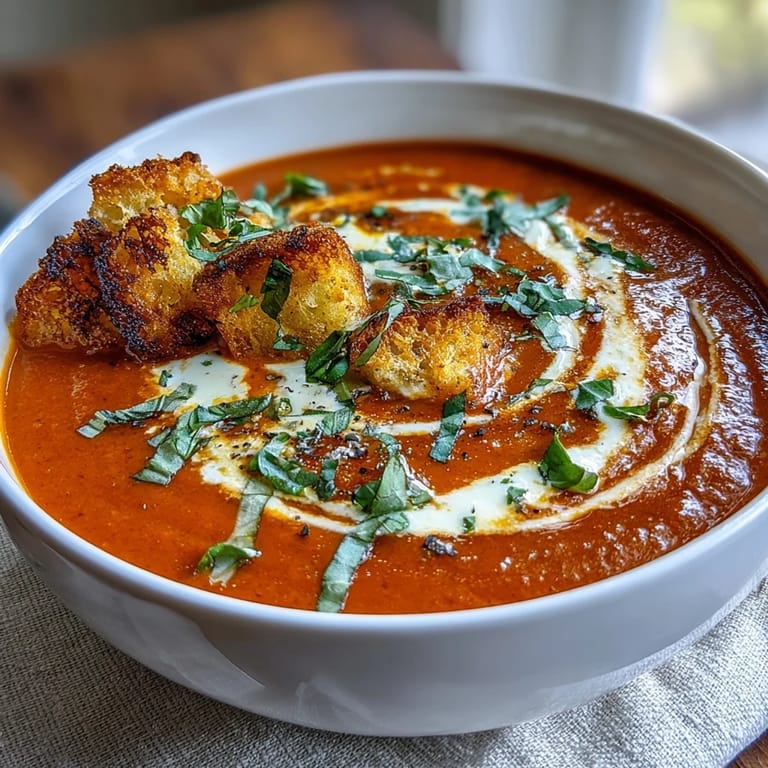
- Use an immersion blender right in the pot, moving it around until there are no visible chunks and the color is a uniform warm rust. If you're using a countertop blender, work in batches and be careful with the hot liquid.
- Final touch:
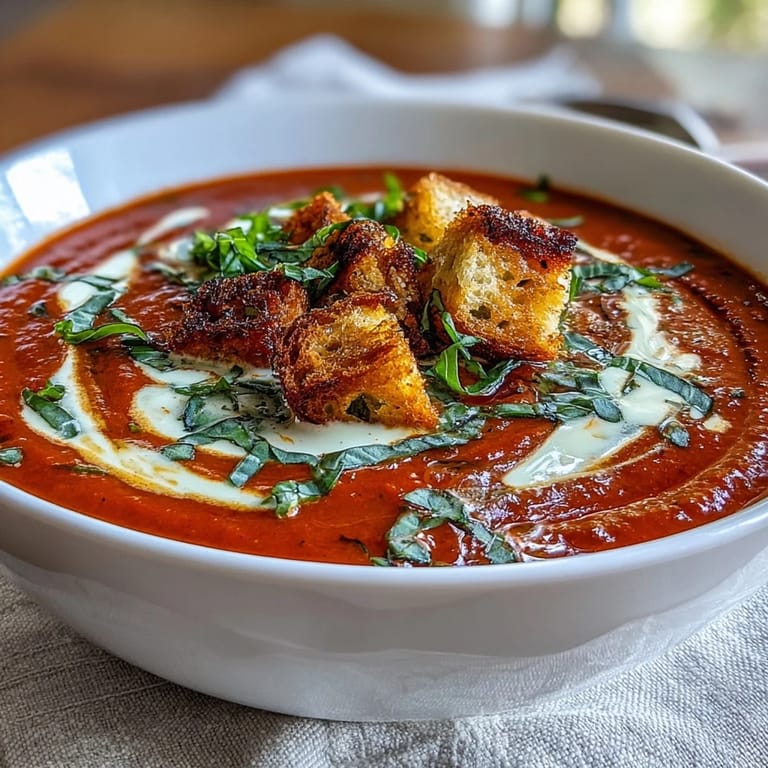
- Taste and adjust—if it needs brightness, add a squeeze of lemon; if it's too sharp, a tiny pinch more sugar helps. For a perfectly smooth finish, you can strain it through a fine sieve, though it's beautiful either way.
- Serve with intention:
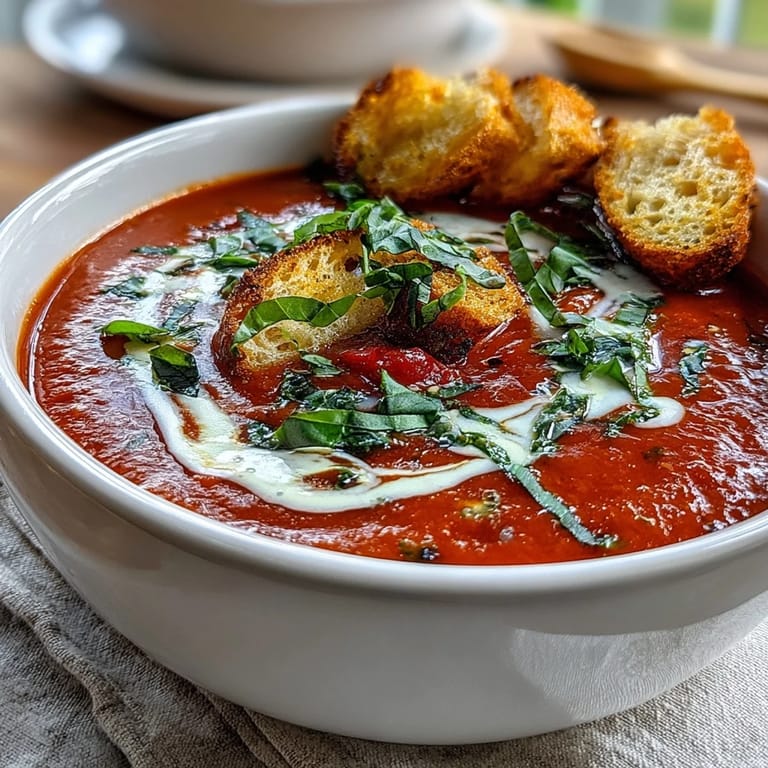
- Pour into warm bowls and let people add their own cream, basil, and croutons so each bowl feels personalized.
 Save to Pinterest
 My mother called while I was making this last spring, and instead of our usual rushed conversation, I just held the phone and let her listen to the sound of the blender, the clink of bowls being set out, the quiet contentment of cooking something that matters. She didn't say much, but somehow that shared moment—sound and smell traveling through a phone line—meant more than any written recipe ever could.
Making It Your Own
This soup is a canvas more than it is a rigid formula. I've added a splash of balsamic vinegar when I wanted depth, stirred in a teaspoon of tomato paste to amplify the tomato flavor, and even dropped a pinch of red pepper flakes for a gentle warmth that sneaks up on you. None of these changes hurt the original; they just nudge it in a direction that felt right for that particular day.
Vegan and Dairy-Free Options
Simply omit the butter and cream, or use their plant-based counterparts—the soup loses nothing essential, just gains a lighter feel. I've made it this way more than once for friends, and honestly, without the cream, you notice the roasted tomato flavor even more intensely, which is its own kind of luxury.
Pairing and Storage
Serve this with crusty bread you can dip without thinking, or alongside a simple green salad if you want something lighter. It pairs beautifully with a crisp white wine—something Italian if you're feeling romantic about the whole thing. This soup keeps wonderfully in the refrigerator for three or four days, and it actually tastes better the next day once all the flavors have had time to settle and deepen.
- Reheat gently on the stove rather than the microwave to keep the texture silky.
- If it thickens too much when cold, thin it with a splash of broth or cream when you warm it up.
- Make it ahead for dinner parties—one less thing to worry about while people arrive.
 Save to Pinterest
 This soup taught me that some of the best things in a kitchen come from abundance—too many tomatoes, an afternoon to spare, and enough time to let roasting do the work for you. Make it when you want to feel like you've taken care of yourself and anyone lucky enough to sit at your table.
Common Questions
- → Why roast the tomatoes instead of using canned?
Roasting fresh tomatoes at high heat caramelizes their natural sugars and concentrates their flavor far beyond what canned varieties can achieve. The oven's dry heat creates those lovely charred spots and intensifies the tomato essence, giving your finished soup that restaurant-quality depth and complexity.
- → Can I make this soup ahead of time?
Absolutely. This soup actually improves after resting in the refrigerator for 1-2 days as the flavors meld together. Store in an airtight container and reheat gently on the stove, adding a splash of broth or water if needed to thin. The cream is best added just before serving.
- → What's the purpose of the butter?
The butter adds a luxurious mouthfeel and subtle richness that balances the tomatoes' natural acidity. It's completely optional—omit for a lighter version or dairy-free needs. The soup remains deliciously silky without it, thanks to the roasted vegetables' natural body.
- → How do I prevent the soup from being too acidic?
The roasting process naturally mellows the tomatoes' acidity. If your batch still tastes too sharp, that teaspoon of sugar works wonders. Alternatively, add more caramelized onions or a splash of cream. Ripe tomatoes at peak season also need less sweetening than off-season ones.
- → Can I freeze this soup?
Yes, freeze without the cream for up to 3 months. Cool completely, transfer to freezer-safe containers leaving an inch of space for expansion. Thaw overnight in the refrigerator and reheat gently. Add fresh cream and basil when serving for the best texture and flavor.
- → What blender works best for silky texture?
An immersion blender is wonderfully convenient and produces excellent results. For an ultra-silky finish, use a high-speed countertop blender and strain through a fine sieve. The sieve removes any remaining pulp or seeds, creating that professional, velvety texture found in fine dining establishments.