 Save to Pinterest
 There's something about the first time you taste a properly made poke bowl that just hits differently—I was in a tiny hole-in-the-wall spot in Hawaii, squeezed between tourists and locals, watching the server layer perfectly cubed fish over ice-cold greens with this casual precision that made it look effortless. The soy-ginger marinade had this glossy sheen, and the way the sesame oil caught the light made me realize this wasn't fancy cooking, it was just respect for really good ingredients. I spent the flight home trying to recreate it, and honestly, my version now tastes even better because I know exactly what's in every layer.
I made this for my sister who swore she didn't like soy-based dressings, and watching her go back for seconds while barely acknowledging my skeptical smile was its own kind of victory—the marinade isn't cloying because the honey and rice vinegar brighten everything up, and the fresh ginger cuts through with this clean spice that just works. Now it's the dish she texts me asking for when she wants something that feels special but doesn't actually stress her out to eat.
Ingredients
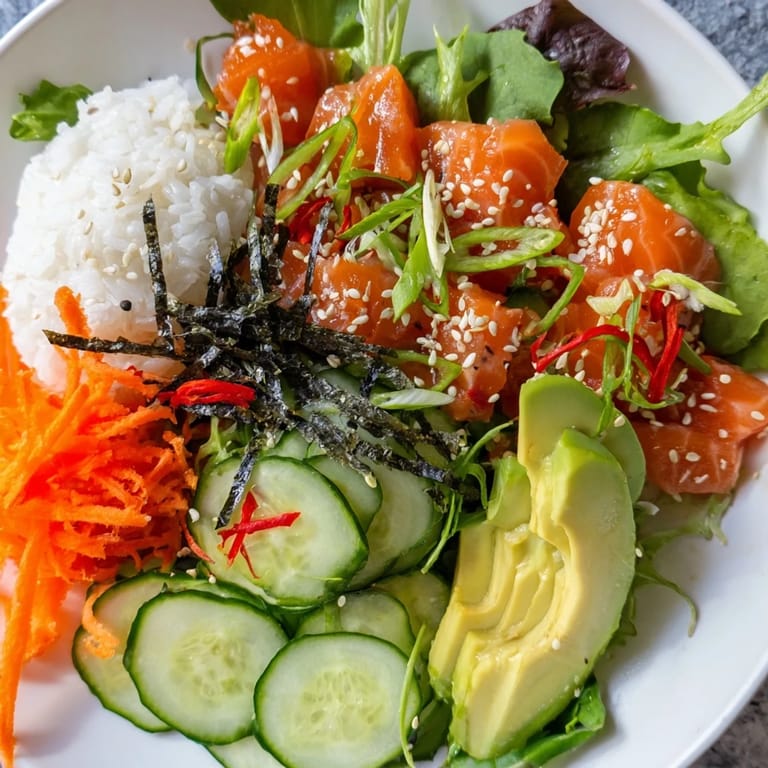
- Sushi-grade salmon or tuna (400 g / 14 oz, cubed): This is the whole reason you're making this, so don't skimp—buy from a fishmonger you trust and ask them which pieces are safest for raw eating. Cut your cubes uniform (about 1 cm each) so they marinate evenly and look intentional on the plate.
- Soy sauce (2 tbsp): The foundation of your marinade, bringing umami depth and saltiness that wakes everything up—use tamari if you need gluten-free, and taste as you go because brands vary wildly in intensity.
- Sesame oil (1 tbsp): A little goes a long way; this stuff is liquid gold and honestly makes the whole bowl taste like you know what you're doing.
- Rice vinegar (1 tbsp): The brightness that keeps the marinade from being flat or heavy, and it prevents the fish from tasting too raw somehow.
- Fresh ginger (1 tsp, grated): Use a microplane if you have one—you want fine, fluffy strands that distribute evenly instead of little chunks that bite unexpectedly.
- Honey or maple syrup (1 tsp): Just a touch to round out the sharp edges of the vinegar and soy, adding a whisper of sweetness that makes you wonder what it is.
- Garlic (1 small clove, minced): Don't skip this even though it seems small—it anchors the whole dressing and adds a savory note that deepens everything.
- Mixed salad greens (120 g / 4 cups): Use whatever's fresh and crisp; I prefer a mix because the different textures keep things interesting bowl after bowl.
- Cucumber (1 medium, thinly sliced): Watery and cooling, and slicing thin means they stay crisp and don't get in the way of the other flavors.
- Avocado (1 large, sliced): Adds creaminess that balances the acidity and makes the whole bowl feel luxurious without being heavy—slice it just before assembly so it doesn't brown.
- Carrots (2 small, julienned): Their sweetness complements the salty marinade, and the thin julienne gives you texture variety that matters.
- Cooked sushi or brown rice (120 g / 1 cup, cooled): Optional but worth including if you want the bowl to feel more substantial—use sushi rice if you're going full Hawaiian, brown rice if you're keeping it lighter.
- Toasted sesame seeds (2 tbsp): Toast them yourself if you can; the difference between raw and toasted is the difference between blah and mmm.
- Sliced scallions (2 tbsp): A sharp green note that cuts through the richness and adds this bright, fresh bite right at the end.
- Nori strips (1 sheet): That umami punch and crispy texture that reminds you this is sushi in bowl form.
- Pickled ginger: Use the kind from a jar if you want to keep this easy; it adds brightness and a subtle heat that doesn't overpower anything.
- Red chili, sliced (1 small, optional): For anyone at the table who wants heat, let them add their own and control how much.
Tired of Takeout? 🥡
Get 10 meals you can make faster than delivery arrives. Seriously.
One email. No spam. Unsubscribe anytime.
Instructions
- Build Your Marinade:
- In a bowl, whisk together the soy sauce, sesame oil, rice vinegar, grated ginger, honey, and minced garlic until the honey dissolves and everything looks emulsified and glossy. The marinade should smell aggressive in the best way—if something smells off, trust your nose and start over.
- Marinate the Fish:
- Add your cubed fish to the marinade and toss gently but thoroughly so each piece gets coated, then cover and refrigerate for at least 10 minutes while you prep everything else. The cold keeps the fish firm and lets the flavors seep in without cooking the raw fish, which is exactly what you want.
- Prepare Your Salad Base:
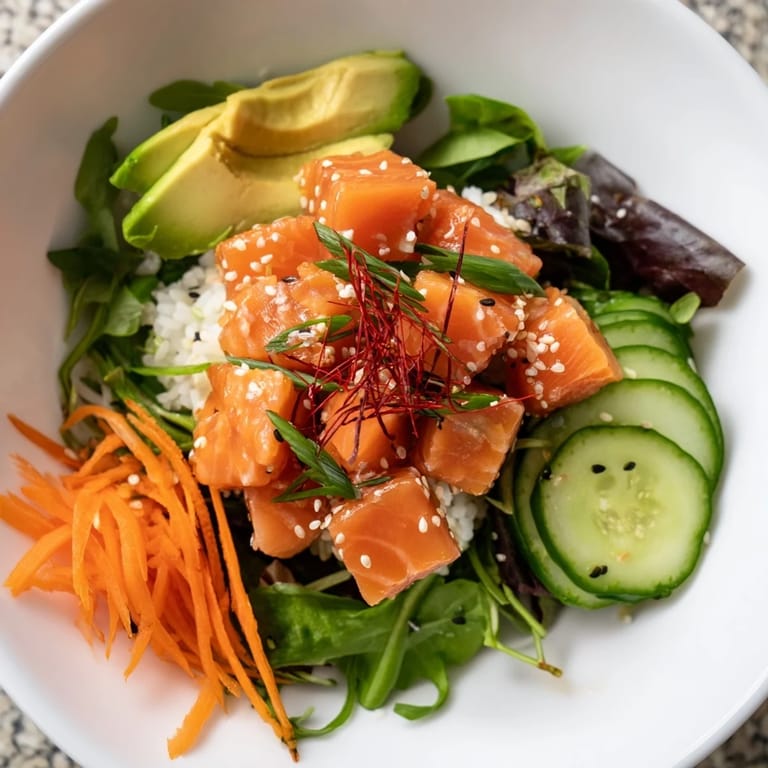
- While the fish is marinating, arrange your greens, cucumber, avocado, carrots, and rice (if using) into individual bowls—this step is actually satisfying because you get to see how prettily you can stack everything. Layer thoughtfully so each bite has a mix of textures and colors.
- Bring It All Together:
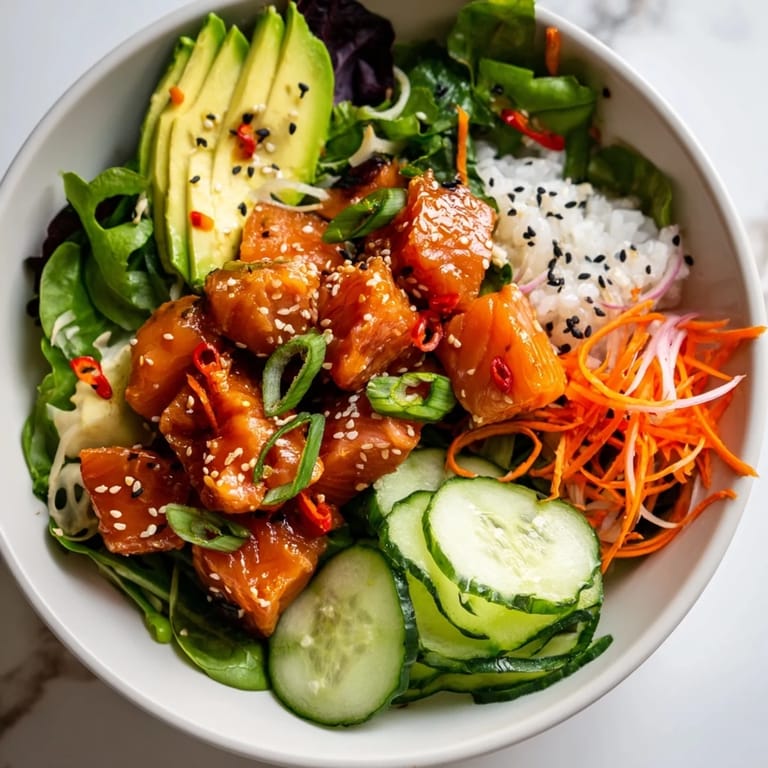
- Spoon the marinated fish directly over your salad base, pouring all that flavorful marinade over the greens because it's too good to waste. The cold fish and the room-temperature greens create this nice textural contrast that makes eating it feel almost refreshing.
- Garnish and Serve:
- Top each bowl with sesame seeds, scallions, nori strips, and pickled ginger—arrange them so they look intentional, not tossed on. Add chili if your crew likes heat, then serve immediately while everything is still cold and crisp.
 Save to Pinterest
 The moment I realized this recipe had truly worked was when my roommate, who lives on ramen and takeout, made it unprompted on a random Tuesday and then ate it at his desk without complaining about feeling bloated afterward—suddenly it became his emergency dinner when nothing else felt right, and mine became the one everyone asks me to bring to potlucks.
Why This Bowl Works
The genius of a poke bowl is how it respects each ingredient instead of trying to hide them under sauce or heat—the cold temperature keeps everything crisp, the marinade is assertive enough to matter but light enough that you still taste the fish, and the layers mean you're getting textural variety with every spoonful. It's the kind of dish that proves fancy food doesn't require fancy techniques, just thoughtfulness and good ingredients.
Timing and Flexibility
The whole thing takes 20 minutes because there's no cooking involved, just assembly and a bit of waiting—you can prep your vegetables hours ahead and keep them in containers in the fridge, marinate your fish whenever you want (within reason), and put it all together right before you eat. This flexibility makes it perfect for meal prep if you're that person, or for throwing together last-minute when you suddenly realize you're hungry and want something that feels special.
Customizing Your Bowl
The beauty of a poke bowl is that it's a template, not a rulebook—swap the fish for shrimp or tofu if that's what you have, add edamame or radish for extra crunch, skip the rice if you're eating lighter, or double the chili if heat is your love language. The marinade works on practically anything, and you can adjust the soy sauce down if you're watching sodium, or add a splash more sesame oil if you want richness.
- Keep your greens varied because monotony gets boring fast, and mix textures so every bite stays interesting.
- If you're making this vegetarian, marinate your tofu or tempeh for the same 10-30 minute window so it absorbs all those flavors.
- Pair it with a crisp white wine like Sauvignon Blanc if you're feeling fancy, or just serve it cold with water and call it a day.
 Save to Pinterest
 This bowl has become my emergency meal, my show-off dinner, and my Tuesday night standby—it's the kind of food that doesn't stress you out in the kitchen but somehow tastes like someone who actually cares made it. Make it once and you'll understand why people keep coming back to it.