 Save to Pinterest
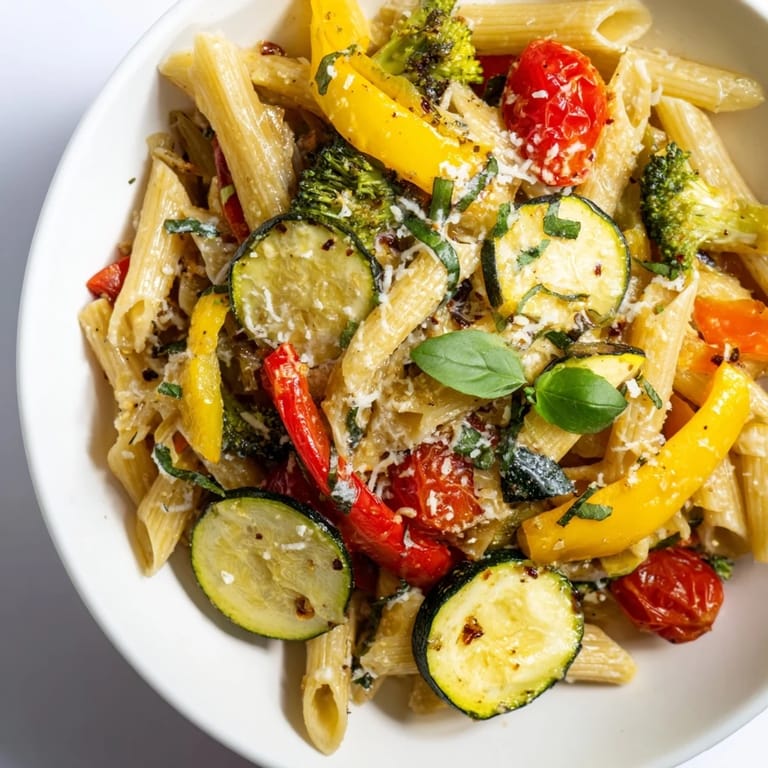
 My kitchen window was open one April evening when I realized I had a fridge drawer full of vegetables and no plan. The pasta water was already boiling out of habit, and I started chopping everything colorful I could find. What came together that night wasn't just dinner, it was a lesson in trusting abundance. The vegetables roasted until their edges crisped, the pasta soaked up every bit of garlicky oil, and I haven't looked at spring produce the same way since.
I made this for a friend who swore she didn't like vegetables unless they were hidden in sauce. She picked up a fork reluctantly, then went quiet for a few bites. When she finally looked up, she just said, I get it now. That moment reminded me that good cooking isn't about tricks or disguises, it's about letting ingredients taste like the best version of themselves.
Ingredients
- Penne or fusilli pasta (340 g): The ridges and curves catch all the olive oil and little bits of roasted garlic, so every forkful has flavor clinging to it.
- Zucchini (1 medium, sliced): Roasting turns it tender and slightly caramelized instead of watery, which makes all the difference.
- Yellow squash (1 medium, sliced): It adds a buttery sweetness that balances the sharper notes from the peppers and onion.
- Red bell pepper (cut into strips): The high heat coaxes out a smoky sweetness that tastes almost like summer itself.
- Yellow bell pepper (cut into strips): It brings color and a milder, fruity flavor that rounds out the mix.
- Red onion (1 small, sliced): Roasting softens its bite and leaves behind a subtle, jammy sweetness.
- Cherry tomatoes (150 g, halved): They burst in the oven and create little pockets of concentrated tomato flavor.
- Broccoli florets (120 g): The florets get crispy at the tips and stay tender at the stems, adding texture and earthiness.
- Extra virgin olive oil (3 tbsp, divided): Use a good one here because it carries the garlic and herbs into every corner of the dish.
- Garlic (3 cloves, minced): Sautéing it briefly in oil releases its fragrance without turning it bitter.
- Dried Italian herbs (1 tsp): A blend of oregano, basil, and thyme gives the vegetables a warm, familiar backbone.
- Salt (½ tsp): It draws out moisture from the vegetables during roasting, intensifying their natural flavors.
- Freshly ground black pepper (¼ tsp): Just enough to add a gentle heat without overwhelming the brightness of the dish.
- Red pepper flakes (pinch, optional): A tiny bit of heat wakes everything up, especially if you like a little kick.
- Parmesan cheese (50 g, freshly grated): It melts into the hot pasta and adds a salty, nutty richness that ties everything together.
- Fresh basil or parsley (2 tbsp, chopped): Stirring in fresh herbs at the end keeps the dish tasting alive and garden fresh.
- Lemon wedges (optional): A squeeze of juice at the table brightens the whole plate and cuts through the richness.
Tired of Takeout? 🥡
Get 10 meals you can make faster than delivery arrives. Seriously.
One email. No spam. Unsubscribe anytime.
Instructions
- Get the oven ready:
- Preheat your oven to 220°C (425°F) and line a large baking sheet with parchment paper so nothing sticks. This high heat is what gives the vegetables their roasted edges.
- Prep and season the vegetables:
- Arrange the zucchini, yellow squash, bell peppers, red onion, cherry tomatoes, and broccoli on the sheet, drizzle with 2 tbsp olive oil, and sprinkle with Italian herbs, salt, and pepper. Toss everything until it's evenly coated, then spread it out in a single layer so it roasts instead of steams.
- Roast until golden:
- Slide the sheet into the oven and roast for 18 to 20 minutes, stirring once halfway through. You'll know they're done when the edges are lightly browned and the vegetables are tender but still have a little bite.
- Cook the pasta:
- While the vegetables roast, bring a large pot of salted water to a boil and cook the pasta according to the package instructions until al dente. Before draining, scoop out half a cup of the starchy pasta water, it helps the sauce cling later.
- Bloom the garlic:
- In a large skillet over medium heat, add the remaining tablespoon of olive oil and sauté the minced garlic for about 30 seconds. You want it fragrant and golden, not brown.
- Bring it all together:
- Add the roasted vegetables and drained pasta to the skillet, tossing gently with tongs. If it feels dry, add the reserved pasta water a splash at a time until everything is glossy and coated.
- Finish with cheese and herbs:
- Remove the skillet from the heat, stir in half the Parmesan and the fresh basil or parsley, and taste for seasoning. Adjust with more salt or pepper if needed.
- Serve it hot:
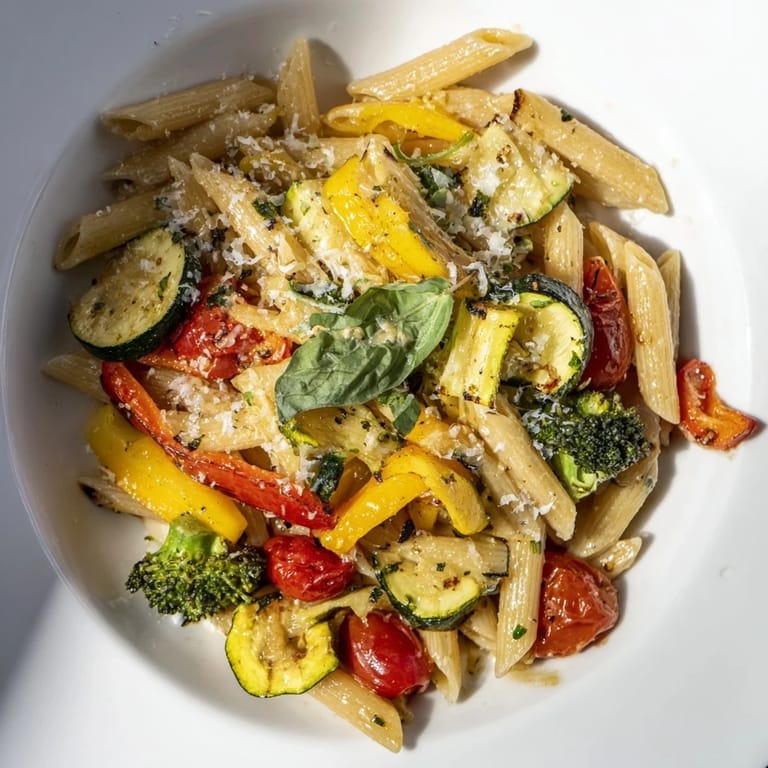
- Plate the pasta immediately, top with the remaining Parmesan and extra herbs, and add a squeeze of lemon juice if you like. The heat from the pasta will melt the cheese into little creamy pockets.
 Save to Pinterest
 One summer evening, I served this to a group of friends on the back porch with a bottle of cold white wine. We passed the bowl around, twirling pasta onto our forks under string lights, and someone said it tasted like the kind of meal you want to remember. That's when I realized this dish wasn't just easy, it was the kind of food that made ordinary nights feel a little more special.
Make It Your Own
This recipe is endlessly adaptable depending on what's in season or what you have on hand. In the fall, I swap in mushrooms and butternut squash, and in late spring, asparagus and snap peas are perfect. If you want more protein, toss in sautéed shrimp, grilled chicken, or a can of drained chickpeas right before serving. The backbone of garlic, olive oil, and Parmesan stays the same, but the vegetables can shift with the seasons and your mood.
Pairing and Serving Ideas
This pairs beautifully with a crisp, chilled Pinot Grigio or Sauvignon Blanc, something that won't compete with the vegetables but will refresh your palate between bites. If you're serving it for a crowd, set out a bowl of extra Parmesan, a small dish of red pepper flakes, and plenty of lemon wedges so everyone can adjust their plate. A simple green salad with a lemony vinaigrette and a loaf of crusty bread are all you need on the side.
Storage and Reheating
Leftovers keep well in an airtight container in the fridge for up to three days, though the pasta will soak up some of the oil as it sits. When you reheat it, add a splash of water or olive oil and warm it gently in a skillet over medium heat, stirring often. The vegetables might soften a bit more, but the flavors deepen overnight, and some people actually prefer it the next day.
- If you're meal prepping, store the roasted vegetables and cooked pasta separately so the pasta doesn't get too soft.
- You can roast the vegetables a day ahead and just toss everything together when you're ready to eat.
- This doesn't freeze well because the vegetables lose their texture, but it's so quick to make fresh that you won't need to.
 Save to Pinterest
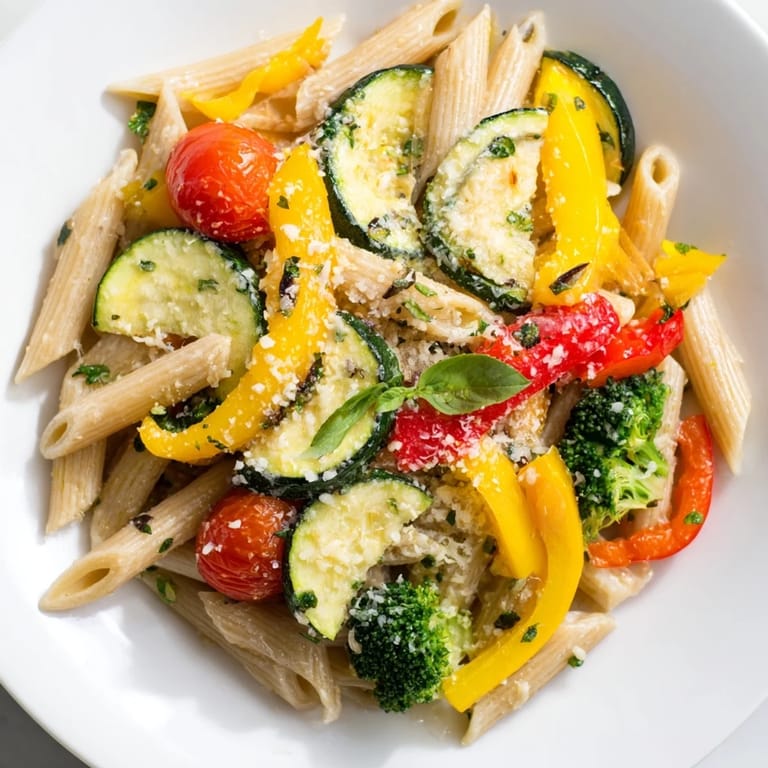
 This is the kind of recipe that feels like a gift every time you make it, simple enough for a weeknight but vibrant enough to serve to people you want to impress. Keep it in your rotation, and you'll always have a way to turn vegetables into something you actually crave.
Common Questions
- → Can I prepare this dish ahead of time?
While best served immediately, you can roast the vegetables up to 2 hours ahead and store them at room temperature. Cook the pasta fresh when ready to serve, then combine everything together. This keeps the pasta from becoming mushy.
- → What vegetables work best for roasting?
Dense vegetables like zucchini, squash, bell peppers, broccoli, and cherry tomatoes roast beautifully. You can also use asparagus, snap peas, mushrooms, green beans, or eggplant depending on season and preference. Aim for similar-sized pieces for even cooking.
- → How do I get the pasta water consistency right?
Reserve ½ cup of starchy pasta water before draining. Add it gradually while tossing the pasta and vegetables—the starch helps create a light, cohesive sauce. Start with 2-3 tablespoons and add more as needed until the mixture is glossy but not wet.
- → Can I add protein to this dish?
Absolutely. Sauté diced chicken breast, shrimp, or chickpeas separately and fold them in at the end. You can also add cooked white beans or crumbled tofu for different protein options. Cook them through before combining with the pasta.
- → What's the best way to store leftovers?
Store cooled portions in an airtight container for up to 3 days in the refrigerator. Reheat gently in a skillet over medium heat with a splash of water or olive oil to restore creaminess. The dish may seem drier when cold; adding liquid while reheating helps revive it.
- → Is this suitable for dietary restrictions?
Yes, it's naturally vegetarian. For vegan, omit Parmesan or use nutritional yeast. For gluten-free, substitute with gluten-free pasta and verify all packaged ingredients are certified gluten-free. For dairy-free, use plant-based Parmesan alternatives that melt well.