 Save to Pinterest
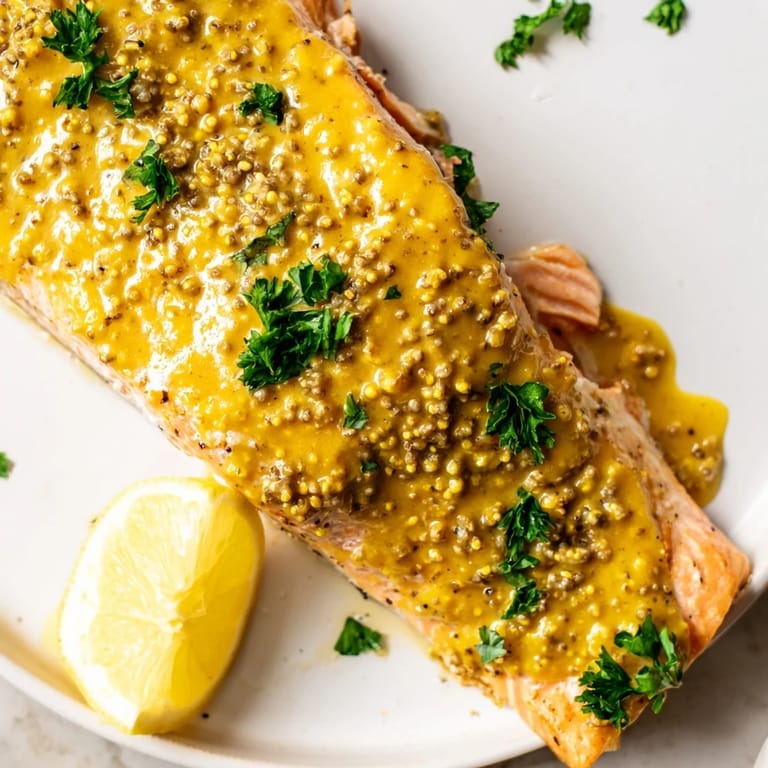
 I discovered this honey mustard salmon on a Tuesday night when my pantry was nearly empty and guests were arriving in an hour. I had salmon thawing, a jar of Dijon mustard, and a squeeze bottle of honey, and somehow that became the dish everyone asked me to make again. What started as improvisation turned into something I've made dozens of times since, each time realizing how the sweet and tangy sauce clings to the fish in the most satisfying way.
I remember serving this to my brother's new partner at a casual dinner, watching her take that first bite and close her eyes like she was tasting something she'd been craving without knowing it. He texted me the next day asking for the recipe, and I realized then that some dishes just have that quiet power to make people feel welcomed.
Ingredients
- Salmon fillets (4, about 6 oz each): Look for fillets that are similar in thickness so they cook evenly; I prefer skin-on because it crisps up beautifully and keeps the flesh moist underneath.
- Dijon mustard (3 tbsp): This is the backbone of your sauce, bringing that sophisticated bite that honey alone could never achieve.
- Whole grain mustard (2 tbsp): Those little seeds add texture and a gentler mustard flavor that balances the Dijon's sharpness.
- Honey (3 tbsp): Use real honey if you can; it caramelizes differently than syrup and creates a richer glaze.
- Olive oil (1 tbsp): This helps the sauce coat the fish evenly and prevents sticking on the pan.
- Lemon juice (1 tbsp): The acidity cuts through the richness and keeps everything bright instead of heavy.
- Garlic (2 cloves, minced): Fresh garlic adds a savory depth that makes people wonder what your secret is.
- Salt and black pepper: A half teaspoon of salt and a quarter teaspoon of pepper season everything without overpowering the delicate fish.
Tired of Takeout? 🥡
Get 10 meals you can make faster than delivery arrives. Seriously.
One email. No spam. Unsubscribe anytime.
Instructions
- Heat your oven and prep the pan:
- Set your oven to 400°F and line a baking sheet with parchment paper. This takes barely a minute but saves you from a stuck-on mess later.
- Build your sauce:
- Whisk both mustards, honey, olive oil, lemon juice, and minced garlic together in a small bowl until you see no streaks of honey left. The mixture should smell bright and assertive, like it means business.
- Arrange and dry the salmon:
- Place your salmon fillets on the prepared sheet and pat them completely dry with paper towels. Moisture is the enemy of browning, so don't skip this step even though it feels unnecessary.
- Coat generously:
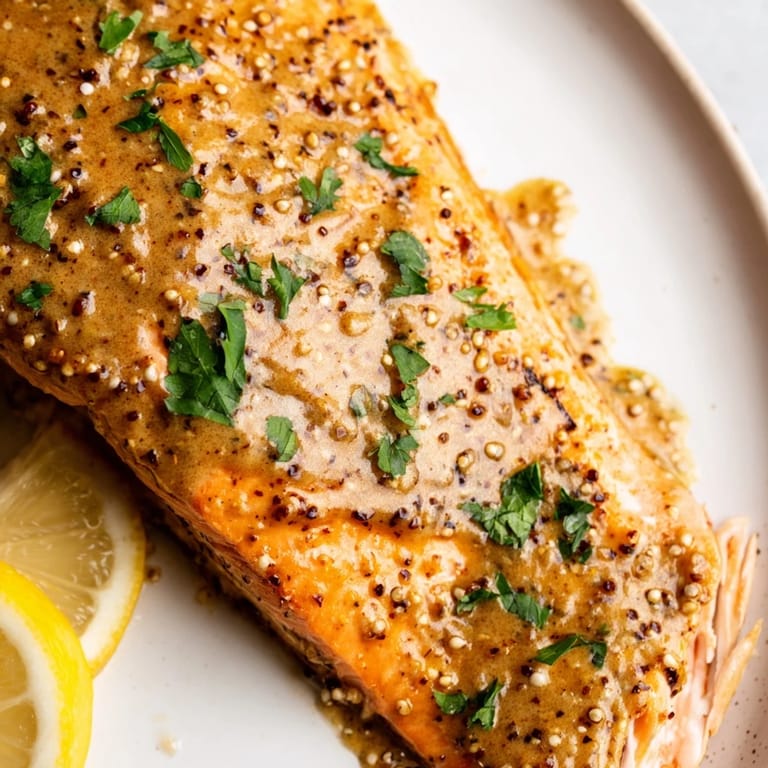
- Spoon the honey mustard sauce over each fillet, spreading it across the top so every bite gets that golden glaze. Don't hold back here.
- Bake until just cooked through:
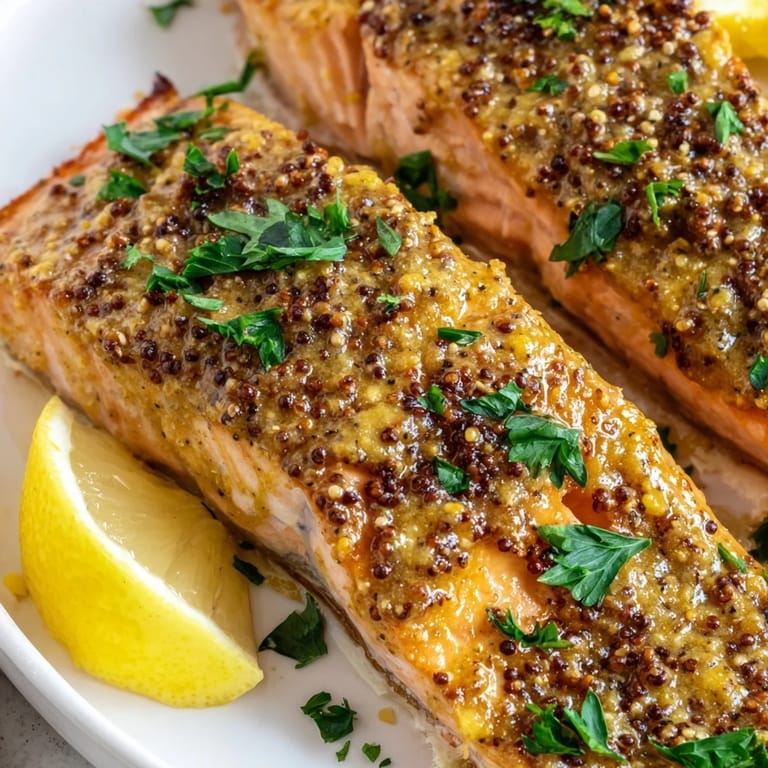
- Slide the sheet into the oven for 15 to 20 minutes, depending on how thick your fillets are. The salmon is ready when it flakes easily with a fork and the center is opaque, not translucent.
- Finish and serve:
- Pull the salmon from the oven, scatter parsley over the top if you have it, and serve with lemon wedges so people can adjust the brightness to their taste.
 Save to Pinterest
 There's a moment, right around minute 18 of baking, when the kitchen fills with this incredible aroma of honey and mustard mingling with the salmon. That smell is when I know I'm about to make someone happy.
Why This Sauce Works
The genius of this combination is that Dijon mustard and honey are naturally drawn to each other. Dijon brings sophistication and tang, while honey softens it and adds warmth. Together they create a sauce that feels indulgent without being heavy, which is exactly what salmon needs. The garlic and lemon keep everything from becoming cloying, so you actually want another forkful instead of being done halfway through.
What to Serve It With
I've served this with everything from simple rice to roasted asparagus to a scattered salad, and it adapts beautifully to whatever you have. On nights when I'm low on energy, I'll make a quick quinoa pilaf while the salmon bakes, and that's dinner solved. The salmon is rich enough that you don't need anything heavy alongside it, just something to soak up the extra sauce.
Making It Your Own
Once you understand how this sauce works, you can swap things around slightly depending on what's in your kitchen. I've made it with regular yellow mustard when I ran out of Dijon, and while it tastes gentler, it's still delicious. You could brush some of the sauce on roasted vegetables at the same time, and they'll pick up all those beautiful flavors too.
- If you want extra caramelization and a little char, switch the oven to broil for the last two minutes of cooking, but watch it constantly because salmon cooks fast under direct heat.
- The sauce can be made up to a day ahead and stored in the refrigerator, so you can actually have this completely ready before your guests arrive.
- Leftover salmon reheats beautifully in a 300°F oven for about five minutes, making this one of the rare recipes that's almost as good the next day.
 Save to Pinterest
 This recipe has become my go-to when I want to feel like a good cook without spending all evening in the kitchen. It's the kind of dish that makes people feel cared for without requiring you to stress.
Common Questions
- → How do I prevent salmon from drying out while baking?
Ensure the salmon is coated evenly with the honey mustard sauce and bake at 400°F for 15-20 minutes until just opaque. Avoid overcooking by checking for flakiness with a fork.
- → Can I use skinless salmon fillets for this dish?
Yes, both skin-on and skinless fillets work well. Skin-on helps retain moisture but skinless will also absorb the glaze flavors beautifully.
- → What can I serve alongside honey mustard salmon?
Complement this dish with rice, quinoa, roasted vegetables, or fresh salads to create a balanced meal.
- → Is it possible to make the glaze milder in flavor?
Substitute Dijon mustard with regular yellow mustard for a gentler bite in the honey mustard sauce.
- → How can I add extra caramelization to the salmon glaze?
Broil the salmon during the last 2 minutes of baking to develop a golden, caramelized surface on the glaze.
- → Are there any common allergens in this dish?
This preparation contains fish and mustard; check mustard ingredient labels for potential allergens such as sulfites.