 Save to Pinterest
 There's something magical about watching a kitchen timer hit zero and realizing dinner is actually done. That's carbonara for you—no cream, no fussing, just eggs, cheese, bacon, and pasta creating something impossibly silky in under twenty minutes. The first time I made it properly, I was surprised how the hot pasta itself becomes the engine, turning raw egg into this glossy sauce without any actual cooking. It felt like a small kitchen miracle, and now it's my go-to when I want something that tastes fancy but doesn't demand hours of attention.
I remember making this for my partner on a random Wednesday when we were both too hungry to wait, and watching their face when that first forkful landed. They couldn't believe it was carbonara—the real kind—made in a apartment kitchen with about ten dollars' worth of ingredients. That's when it clicked for me: this dish works because it respects simplicity. Every element matters, and nothing is there by accident.
Ingredients
- Spaghetti, 200 g (7 oz): Use dried pasta for the right texture and starch release; fresh pasta won't give you the same creamy bind.
- Eggs, 2 large: Room temperature works best, and they're the entire sauce, so quality matters more than you'd think.
- Parmesan cheese, 40 g (1/3 cup) freshly grated: Pre-grated stuff has anti-caking agents that make the sauce grainy and separate; real Parmigiano-Reggiano grated at home changes everything.
- Black pepper, 1/4 tsp freshly ground: This isn't garnish—it's a core flavor, so crack it fresh right before using.
- Bacon or pancetta, 100 g (3.5 oz) diced: Pancetta is traditional and milder, but good quality bacon works if that's what you have; the fat is what carries the flavor.
- Pasta water, 1/3 cup (80 ml) reserved: This starchy liquid is your secret weapon for creating that silky sauce without cream.
- Extra Parmesan and black pepper for serving: A little more at the end makes people think you spent hours on this.
Tired of Takeout? 🥡
Get 10 meals you can make faster than delivery arrives. Seriously.
One email. No spam. Unsubscribe anytime.
Instructions
- Boil the pasta:
- Bring a large pot of salted water to a boil—it should taste like the sea. Drop in your spaghetti and cook until al dente, watching the package time as your guide but tasting a strand a minute before it's supposed to be done. When it's right, reserve a generous third of a cup of that starchy pasta water before you drain everything.
- Whisk the egg base:
- In a bowl, crack your eggs and add the freshly grated Parmesan and black pepper. Whisk it all together until it's smooth and pale, like you're making the base for something important—because you are.
- Crisp the bacon:
- While the pasta cooks, dice your bacon and get it into a cold skillet over medium heat. Let it slowly render and brown until the edges curl and it's golden all over, about three to four minutes. You'll know it's ready when the kitchen smells irresistible.
- Bring it all together:
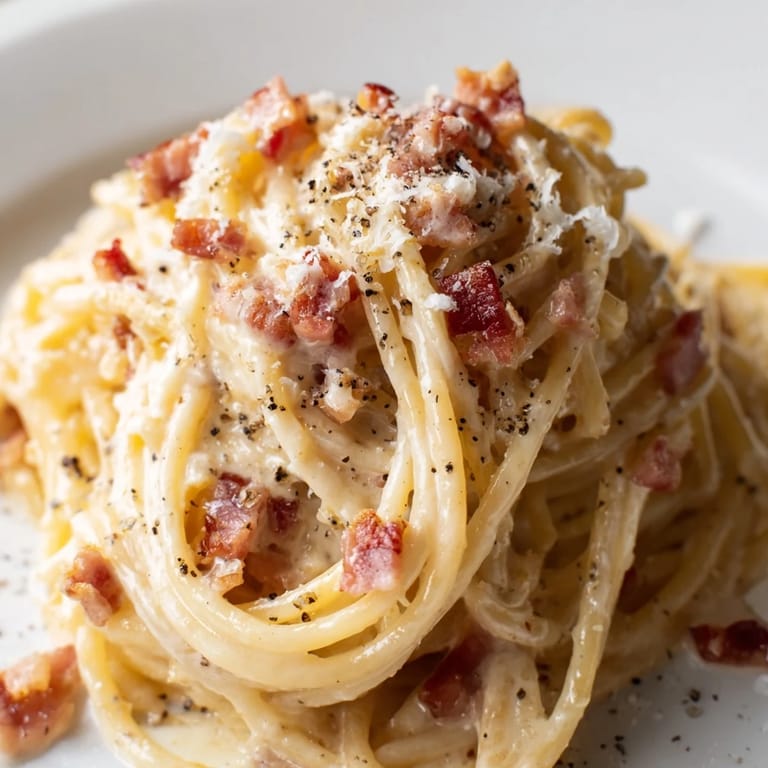
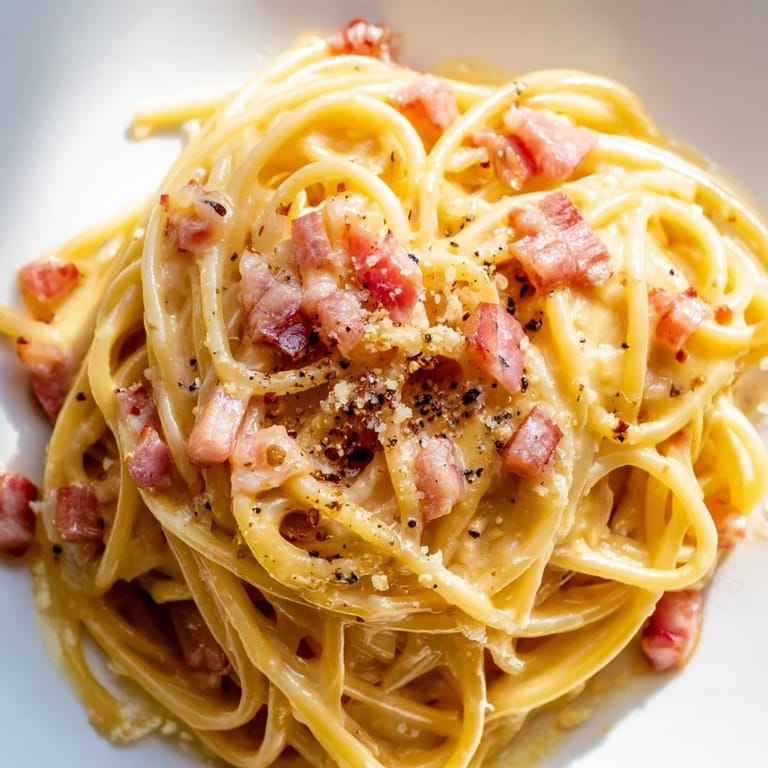
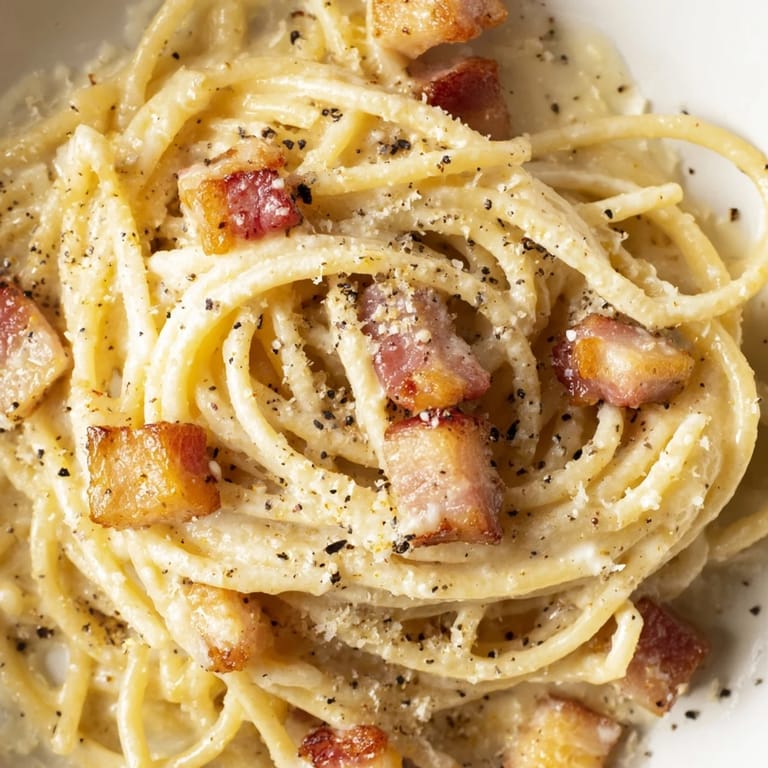
- Here's where magic happens: take the skillet off the heat, add your hot drained pasta directly to the bacon, then immediately pour in that egg-cheese mixture. Work fast and toss vigorously, adding splashes of pasta water until the sauce becomes silky and coats every strand. You're not cooking the eggs; the residual heat and the starch are doing that for you.
- Serve right now:
- Plate it immediately while it's still creamy, then crown each bowl with a little more Parmesan and a crack of fresh pepper.
 Save to Pinterest
 There was this moment, probably on my fifth attempt at carbonara, when I finally stopped overthinking it. I'd been so worried about scrambling the eggs that I was being timid with my tossing, and the sauce wasn't coming together. Then I just committed to vigorous movement, trusted the heat, and suddenly it was perfect—silky, clung to the pasta, everything I wanted. That's when I understood this dish isn't about perfection; it's about confidence and knowing exactly when to stop second-guessing yourself.
The Magic of Simplicity
Carbonara taught me that sometimes the best recipes are the ones with nowhere to hide. You can't cover up bad ingredients or rushed technique with a complicated sauce. That bacon has to be good, the eggs have to be fresh, the cheese has to be real, and the timing has to be precise. There's no room for shortcuts, and honestly, that's liberating. It means if you nail the technique, you know exactly why it worked, and you can make it again and again with confidence.
Variations and Customizations
Some people swear by Pecorino Romano instead of Parmesan—it's saltier and sharper, and it pulls the whole dish in a different direction that feels more authentically Roman. I've also seen people add a minced garlic clove to the bacon as it crisps, which adds a subtle depth, though you'd remove it before tossing. The beauty is you can adjust the pepper to your heat level or add a tiny pinch of dried red pepper if you want warmth. Once you understand the core technique, small tweaks are fair game.
Making It Your Own
The thing about carbonara is that it feels fancy enough to serve when people come over, but approachable enough to make on a Tuesday night when you just want to eat something good. I've made it in a tiny studio apartment kitchen and in proper kitchens with restaurant equipment, and it comes out beautifully either way. That's the real gift of this recipe—it proves that you don't need much to make something worth remembering.
- Start practicing this technique and you'll begin to understand how emulsions work without ever needing a culinary degree.
- Keep the skillet off the heat when you add the eggs; that's the move that keeps everything from turning into scrambled pasta.
- Eat it immediately, standing if you have to, because carbonara doesn't wait and it doesn't reheat well.
 Save to Pinterest
 Every time I make this, I'm reminded that cooking doesn't have to be complicated to be satisfying. Twenty minutes and a handful of honest ingredients is all it takes to make something that tastes like you really know what you're doing.
Common Questions
- → How do you prevent the eggs from scrambling?
Remove the skillet from direct heat before adding the egg mixture and toss quickly. Adding a little reserved pasta water helps achieve a creamy texture without scrambling.
- → Can I substitute pancetta for bacon?
Yes, pancetta offers a more traditional flavor and works beautifully when diced and cooked until crispy.
- → What type of cheese enhances the sauce best?
Freshly grated Parmesan creates a rich, nutty flavor, while Pecorino Romano can be used for a sharper taste.
- → Why is reserved pasta water important?
The starchy pasta water helps emulsify the sauce, making it silky and helping it cling evenly to the spaghetti.
- → Can garlic be added for extra flavor?
Yes, minced garlic can be sautéed with bacon for added aroma and then removed before tossing the pasta.