 Save to Pinterest
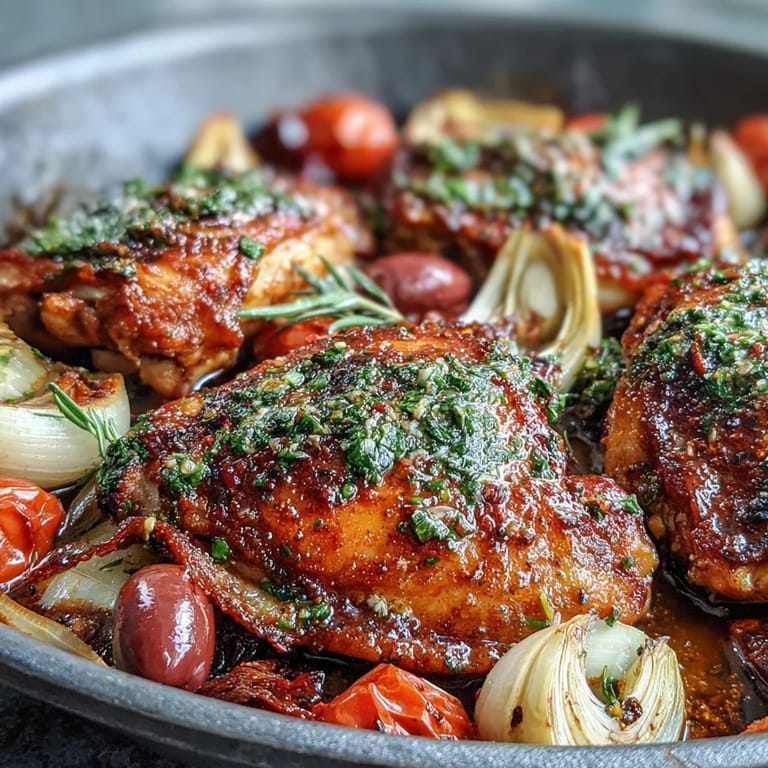
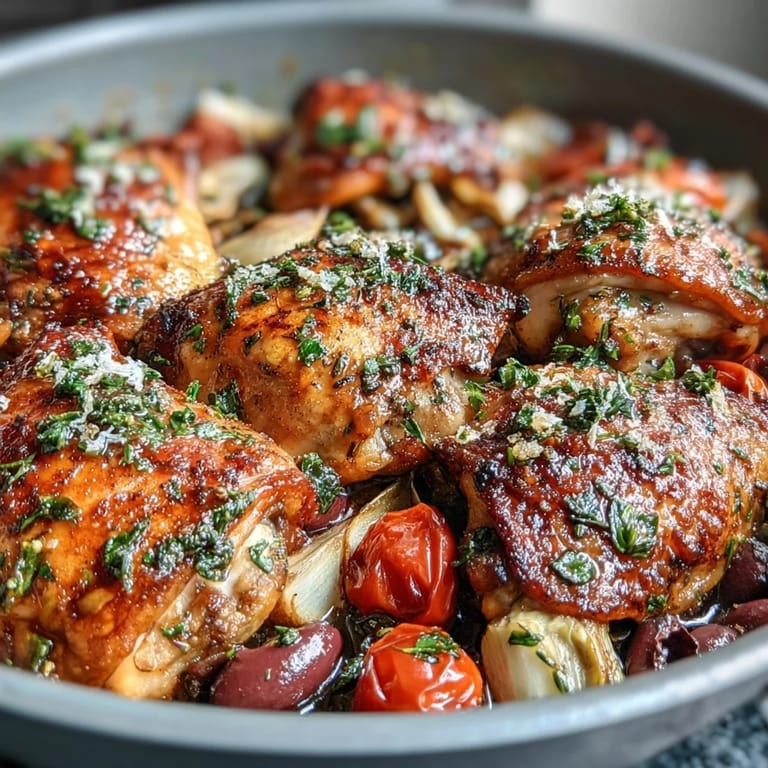
 My kitchen smelled like a Greek taverna the first time I nailed this one-pan dinner—not because I'd mastered anything fancy, but because I'd finally stopped overthinking it. I was rushing through a weeknight, wanted something that didn't demand a sink full of dishes afterward, and grabbed chicken thighs instead of the usual suspects. Thirty-five minutes later, my partner walked in to find golden skin, briny olives, and this incredible aroma that made the whole evening feel less like cooking and more like accidentally stumbling onto something good.
I made this for friends who'd been on my case about my cooking, and watching them go quiet after that first bite felt like winning something. The way the lemon brightness cut through the richness, how the charred bits at the bottom of the pan somehow made their way onto everyone's plate—it became the dish I'd make whenever I wanted to feel competent without the performance anxiety.
Ingredients
- Bone-in, skin-on chicken thighs (4 pieces, about 1.2 lbs / 550 g): These are the secret to never dry chicken; the bone keeps everything tender and the skin becomes your favorite part once it's golden.
- Red onion (1, thinly sliced): Sweeter than yellow onions and they soften beautifully without disappearing into the sauce.
- Garlic cloves (2, minced): Don't skip the mincing—bigger pieces can turn bitter in the oven.
- Red bell pepper (1, sliced): Adds sweetness and those gorgeous pops of color that make the dish feel less like Tuesday dinner.
- Artichoke hearts (1 can, 14 oz / 400 g, drained and quartered): Canned ones work brilliantly here because they're already tender and you're not fighting texture.
- Cherry tomatoes (1 cup / 150 g, halved): They burst slightly in the oven, releasing sweetness that balances the briny olives.
- Kalamata olives (1/2 cup / 80 g, pitted): Buy good ones if you can—cheap olives taste like regret.
- Extra virgin olive oil (2 tbsp): High heat is fine here since you're searing first; save your fancy oil for drizzling at the end if you want to show off.
- Dried oregano (1 tsp), dried thyme (1/2 tsp), smoked paprika (1/2 tsp): These three are the backbone—don't reach for fresh herbs here because dry ones punch harder during cooking.
- Sea salt (1/2 tsp), black pepper (1/4 tsp): Taste as you go because the olives and broth bring their own saltiness.
- Low-sodium chicken broth (1/2 cup / 120 ml): This keeps the bottom from scorching while everything braises together.
- Lemon (zest and juice of 1): The brightness at the end is non-negotiable—it's what makes people ask for the recipe.
- Fresh parsley (2 tbsp, chopped): This is your final flourish, the thing that makes it look intentional even if you threw it together.
Tired of Takeout? 🥡
Get 10 meals you can make faster than delivery arrives. Seriously.
One email. No spam. Unsubscribe anytime.
Instructions
- Heat your oven and prep the chicken:
- Get your oven to 400°F (200°C) so it's ready when you need it. Pat those chicken thighs completely dry—I learned this the hard way when moisture kept them from browning—then season both sides generously with salt, pepper, oregano, thyme, and smoked paprika.
- Sear the chicken until it's golden:
- Heat olive oil in your ovenproof skillet over medium-high heat until it shimmers, then add chicken skin-side down. Let it sit undisturbed for 4-5 minutes so the skin gets properly crispy and brown, then flip for 2 minutes on the other side. Remove to a plate and don't peek while it's cooking.
- Build the base with your vegetables:
- In that same skillet with all the fond stuck to the bottom, add red onion, bell pepper, and garlic. Sauté for 2-3 minutes until they start to soften and smell incredible. You're not trying to cook them through—just waking them up.
- Add the olives, artichokes, and tomatoes:
- Stir in the artichoke hearts, halved cherry tomatoes, and Kalamata olives. Cook for 2 minutes, letting everything get familiar with each other. This is when your kitchen starts smelling like a Mediterranean coast.
- Deglaze and bring it together:
- Pour in the chicken broth and lemon juice, using a wooden spoon to scrape up every brown bit stuck to the pan—that's pure flavor. The liquid should come halfway up the vegetables.
- Return the chicken and finish in the oven:
- Nestle those chicken thighs back in skin-side up, sprinkle with lemon zest, then transfer the whole skillet to the oven. Bake for 25 minutes until the chicken's internal temperature hits 165°F (74°C)—a meat thermometer saves you from second-guessing.
- Garnish and serve:
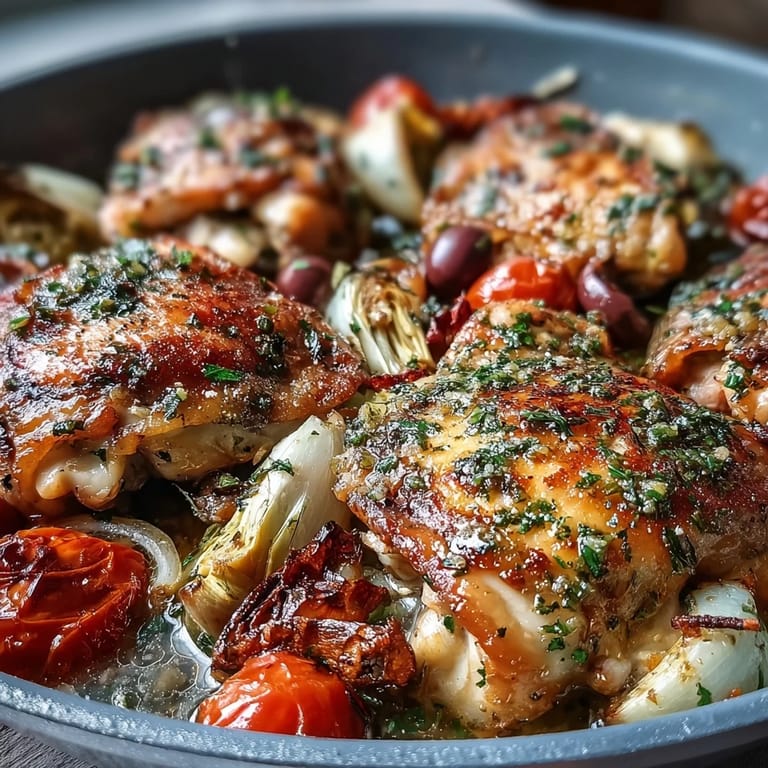
- Pull the skillet out, scatter fresh parsley over top, and bring it straight to the table. Serving it in the same pan you cooked it in is both practical and a little bit showboating, which I'm fine with.
 Save to Pinterest
 There's something about serving a one-pan meal that made me feel less like I was cooking dinner and more like I was hosting something. Everyone ate directly from their own portion, there was sauce to soak up with bread, and somehow a single skillet became the whole event.
Why Chicken Thighs Win Here
Breast meat would dry out before the vegetables finished cooking, but thighs have enough fat to stay juicy even when you're blasting them with heat. The bone conducts heat unevenly, which actually works in your favor—you get pockets of tenderness and flavor that boneless cuts just can't match. Once you taste the difference, chicken breasts start feeling like the safe choice instead of the smart one.
The Lemon is Your Safety Net
I used to be afraid of making dishes taste too briny or salty, so I'd hold back on seasoning and end up with something flat. Then I realized the lemon juice and zest weren't just garnish—they were the final adjustment that made everything sing. It's hard to go wrong once you squeeze that lemon in because it balances the olives, brightens the herbs, and makes even a quick weeknight dinner taste intentional.
What to Serve It With
Crusty bread is the obvious choice because you'll want to soak up every drop of sauce—I've actually torn pieces off before even sitting down. Couscous soaks up the flavors without being heavy, and roasted potatoes turn this into something more substantial if you're feeding hungry people. You could also serve it over rice, with pasta, or honestly just eat the skillet contents on their own if no one's judging.
- Crusty bread means you can skip a starch and let the vegetables do the heavy lifting.
- If you're making couscous, fluff it with a fork and drizzle the skillet sauce over top right before serving.
- Roasted potatoes added to the skillet in the last 15 minutes of cooking would make this even more of a complete meal.
 Save to Pinterest
 This became the dish I make when I want to feel like I have my life together without spending hours in the kitchen. It's proof that simple ingredients in the right combination are louder than complicated technique.
Common Questions
- → What cut of chicken works best?
Bone-in, skin-on chicken thighs are ideal for moist, flavorful results and a crispy skin.
- → Can I substitute the artichokes?
Yes, you can use fresh artichoke hearts or substitute with marinated artichokes for extra flavor.
- → How do I achieve crispy chicken skin?
Sear the chicken skin-side down in hot olive oil until deeply golden before baking to ensure crispiness.
- → Is it possible to make this dairy-free?
Yes, this dish contains no dairy ingredients, making it naturally dairy-free.
- → What sides pair well with this dish?
Crusty bread, roasted potatoes, or couscous complement the robust Mediterranean flavors perfectly.