 Save to Pinterest
 There's something magical about the moment when you cut open a butternut squash and see that deep golden flesh. I learned to make this soup on a particularly gray October afternoon when my neighbor dropped off three enormous squashes from her garden, and I had no idea what to do with them. A quick chat over the fence turned into an impromptu cooking lesson, and now whenever I roast squash, I still hear her saying the edges need to caramelize just right to bring out the real sweetness.
I made this soup for the first time when I was genuinely stressed about impressing someone at dinner, and it turned out to be exactly the thing I needed to calm down. There's something about stirring a pot of warm vegetables and watching them soften that just settles your mind. By the time it was blended, creamy, and fragrant with cinnamon, not only did the soup taste incredible, but I'd already forgotten why I was nervous in the first place.
Ingredients
- Butternut squash (1 large, about 2 lbs): The star of the show—roasting brings out its natural sugars and creates those caramelized edges that make all the difference; don't skip the oven.
- Yellow onion, carrot, and celery (1 medium onion, 1 carrot, 1 stalk): This trio builds the flavor foundation and adds gentle sweetness and depth without overpowering the squash.
- Garlic cloves (2): Just two, added near the end so they stay bright and fragrant rather than turning bitter.
- Olive oil (2 tbsp) and unsalted butter (2 tbsp, optional): The butter is optional but worth it if you want that luxurious, almost silky texture; olive oil handles the roasting beautifully.
- Vegetable broth (4 cups): Low sodium lets the squash shine and gives you room to adjust salt as you taste.
- Ground cinnamon (1/2 tsp), ground nutmeg (1/4 tsp), black pepper (1/2 tsp), kosher salt (1 tsp): These spices warm the whole bowl and should be layered in gradually so you can taste as you go.
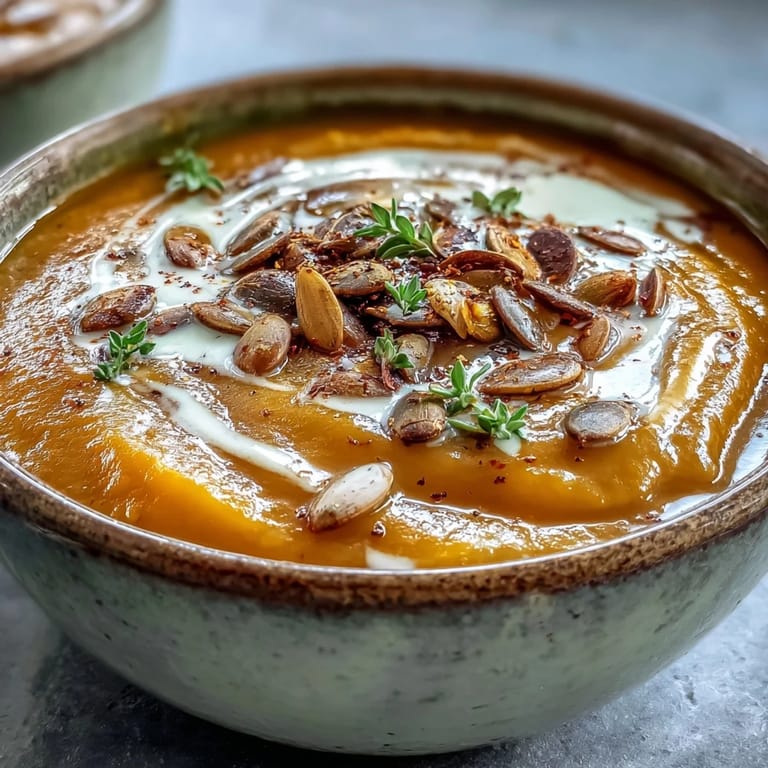
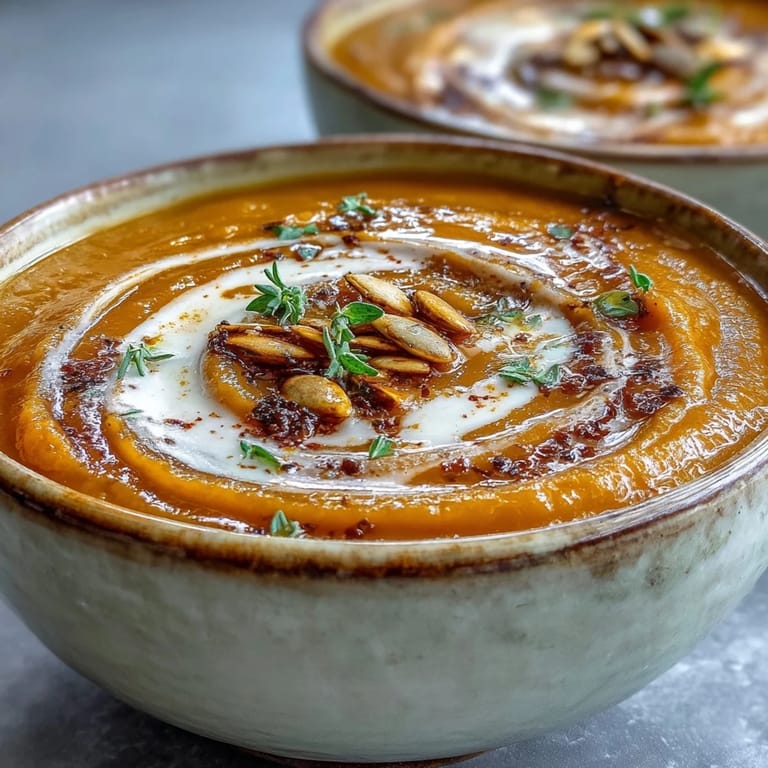
- Heavy cream or coconut milk (1/4 cup), toasted pumpkin seeds, and fresh thyme: Garnishes that transform a simple soup into something you actually want to linger over.
Tired of Takeout? 🥡
Get 10 meals you can make faster than delivery arrives. Seriously.
One email. No spam. Unsubscribe anytime.
Instructions
- Get your oven ready and prep the squash:
- Heat your oven to 400°F and line a baking sheet with parchment paper. Toss your cubed squash with 1 tablespoon of olive oil, a generous pinch of salt, and pepper—don't be shy, this is where the flavor develops.
- Roast until the edges turn golden:
- Spread the squash on the sheet and roast for 25 to 30 minutes until tender and caramelized at the edges; you'll know it's right when a fork slides through easily and the edges have turned a deeper, darker orange.
- Build the aromatics while squash roasts:
- In a large pot over medium heat, warm the remaining olive oil and butter, then add your chopped onion, carrot, and celery. Let them cook for 5 to 7 minutes until they soften and start to become translucent at the edges.
- Add the garlic and toast it briefly:
- Stir in the garlic and let it cook for just 1 minute—you want it fragrant, not brown.
- Combine everything and simmer:
- Add the roasted squash, vegetable broth, cinnamon, nutmeg, salt, and pepper to the pot. Bring to a boil, then lower the heat and let it simmer gently for 10 to 15 minutes so all the flavors get to know each other.
- Blend until smooth and velvety:
- Using an immersion blender, puree the soup right in the pot until it reaches that smooth, creamy texture you're after; if you prefer a countertop blender, work in batches and be careful with the hot liquid.
- Taste and adjust:
- This is your moment to tweak—add more salt, a pinch more spice, or even a touch more broth if it feels too thick.
- Serve with grace:
- Ladle the hot soup into bowls and drizzle with cream or coconut milk, scatter pumpkin seeds on top, and finish with a few fresh thyme leaves if you have them.
 Save to Pinterest
 This soup became my go-to for those moments when someone I care about needs comfort but isn't ready to talk about it yet. A bowl of this, warm bread on the side, and somehow the world feels a little less heavy.
The Secret of Caramelization
I used to make this soup by just roasting the squash until it was soft, and while it was fine, something felt missing. Then I realized I was pulling it out too early, before those edges turned a deeper golden brown. That caramelization is where the real sweetness hides—it's the Maillard reaction doing its magic, turning starches into sugars. Now I let it roast those extra few minutes, and the difference is unmistakable.
Spicing Without Overwhelming
The cinnamon and nutmeg in this soup are gentle, almost whisper-quiet, and that's entirely on purpose. I've made versions where someone went heavy with the spices and it turned into something that tastes like pumpkin pie rather than soup. The trick is to add them early, let them infuse with the broth, and then taste before you add more. You can always add more spice, but you can't take it out.
Making It Your Own
What I love most about this recipe is how it adapts to whatever you have on hand or whatever mood you're in. Some nights I go rich with both butter and cream, other times I use coconut milk and it becomes something almost tropical. You can make it vegan, add a kick of cayenne if you're feeling adventurous, or serve it with crispy sage instead of thyme.
- For a vegan version, use only olive oil and swap cream for coconut milk—the soup loses nothing and gains its own character.
- A sprinkle of cayenne pepper adds heat that makes all the warm spices pop without making it actually spicy.
- Crusty bread isn't just a side; it's the spoon you use when your bowl is almost empty and you're chasing the last of the cream.
 Save to Pinterest
 This soup has taught me that simple ingredients, when treated with care, become something memorable. Make it tonight, and I promise you'll understand why I keep coming back to it.
Common Questions
- → Can I make this soup ahead of time?
Absolutely. This soup actually tastes better the next day as flavors meld together. Store in an airtight container in the refrigerator for up to 4 days. Reheat gently on the stovetop, adding a splash of broth if needed to thin consistency.
- → What's the best way to blend the soup?
An immersion blender works wonderfully directly in the pot with minimal mess. If using a countertop blender, work in batches and vent the lid slightly to allow steam escape. Never fill the blender more than halfway with hot liquid.
- → Can I freeze this soup?
Yes, freeze for up to 3 months. Cool completely before transferring to freezer-safe containers, leaving some space for expansion. Thaw overnight in the refrigerator before reheating. Cream or coconut milk is best added after thawing.
- → How do I know when the squash is properly roasted?
The squash cubes should be fork-tender and showing golden-brown caramelization at the edges. This typically takes 25-30 minutes at 400°F. The roasting step is crucial—it develops depth and sweetness that boiling alone cannot achieve.
- → What can I substitute for butternut squash?
Other winter squash varieties like acorn, delicata, or kabocha work beautifully. Sweet potatoes also create a similar velvety texture and sweet profile. Adjust roasting times as different vegetables may cook at slightly different rates.