 Save to Pinterest
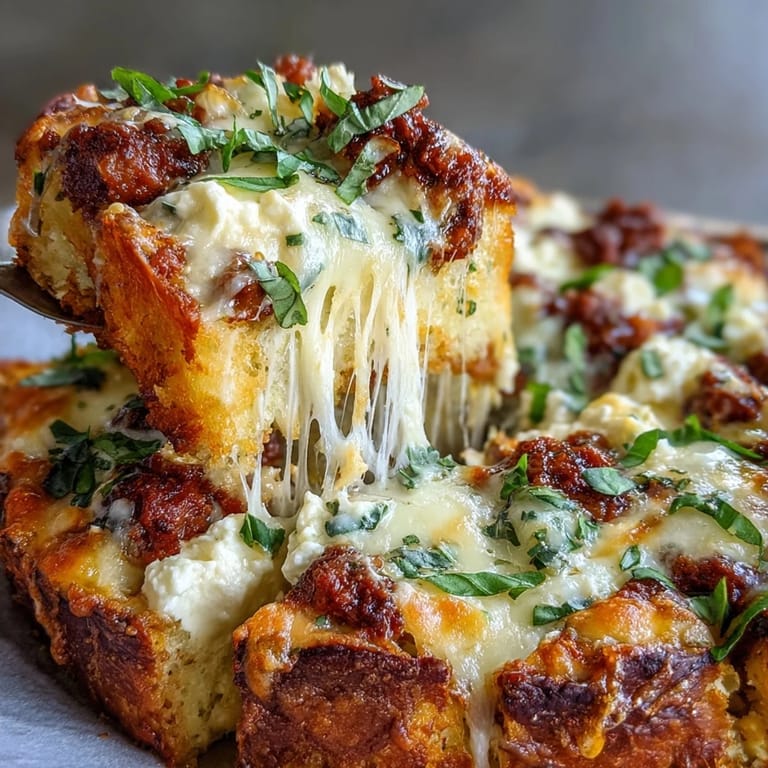
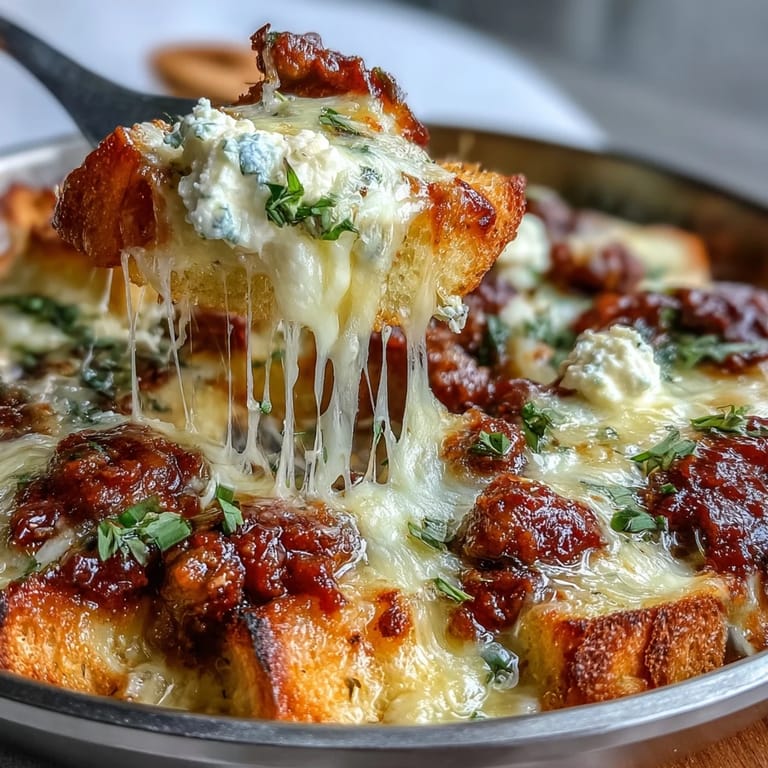
 There's something magical about the moment when you realize you can combine two beloved dishes into one gloriously cheesy skillet. I was standing in my kitchen on a random Tuesday, staring at a half loaf of Italian bread and leftover meat sauce, when it hit me—why not layer them like lasagna but with those buttery garlic bread cubes as the star? The result was so good my partner demanded I make it again the very next week.
I made this for a dinner party last spring when a friend asked me to bring something that could feed six people without heating up the house too much. Pulling that golden, bubbling skillet out of the oven and setting it down in the center of the table felt like a victory lap—everyone went quiet for exactly two seconds before diving in with their spoons, and I knew I'd stumbled onto something special.
Ingredients
- Italian bread (1 large loaf, cut into 1-inch cubes): Day-old bread works wonderfully here because it's firmer and won't turn to mush when layered. Fresh bread is fine too, just let the cubes sit out for a few hours to dry slightly.
- Unsalted butter (4 tbsp, melted): This is your garlic bread foundation, so don't skip it or substitute it with oil—the flavor difference is real.
- Garlic (5 cloves total, minced): Split between the bread and the sauce, garlic is what makes this dish sing. Mince it fresh, never use the jarred stuff for this one.
- Fresh parsley (2 tbsp chopped): Beyond just garnish, it adds a bright, herbaceous note that cuts through the richness.
- Ground beef (1 lb): You can swap this for Italian sausage if you want more fennel notes, or use ground turkey for something lighter.
- Onion (1 small, finely chopped): This builds the flavor base of your sauce—don't rush this step, let it soften completely.
- Crushed tomatoes (1 can, 15 oz): The backbone of your sauce; canned works beautifully and is actually more reliable than fresh here.
- Tomato paste (2 tbsp): This concentrated umami bomb deepens the sauce and makes it taste like it's been simmering for hours.
- Dried oregano and basil (1 tsp and 1/2 tsp): These Italian stalwarts give the sauce its authentic character—dried herbs work better than fresh in a cooked sauce.
- Ricotta cheese (1 cup): This creamy layer is what separates this from just being bread and sauce. Don't be tempted to use cottage cheese as a substitute.
- Parmesan cheese (1/2 cup, grated): Adds a sharp, salty punch that balances the sweetness of the tomatoes beautifully.
- Mozzarella cheese (2 cups, shredded): This is your melty hero—buy the block and shred it yourself if you can, as pre-shredded often doesn't melt quite as smoothly.
- Egg (1 large): This binds the ricotta mixture and helps it set during baking, creating that perfect spreadable texture.
Tired of Takeout? 🥡
Get 10 meals you can make faster than delivery arrives. Seriously.
One email. No spam. Unsubscribe anytime.
Instructions
- Get your skillet ready:
- Preheat your oven to 375°F (190°C) and have your 12-inch cast-iron skillet nearby. A cast iron does wonders here because it conducts heat so evenly that you get those gorgeous golden edges on the cheese.
- Make your garlic bread coating:
- Melt the butter and toss it with those minced garlic cloves, fresh parsley, and salt in a large bowl. Now add your bread cubes and toss until every piece is glistening and coated—this is your chance to get your hands in there and make sure nothing's missed.
- Brown the meat:
- Heat your cast-iron skillet over medium heat and crumble in the ground beef, breaking it apart with a spoon as it cooks. This should take about 5-7 minutes and you'll know it's ready when there's no pink left—don't drain the fat yet if you're using lean beef, as you'll need those flavor compounds.
- Build your sauce base:
- Drain any excess fat if needed, then add your chopped onion and let it soften for 3-4 minutes, stirring occasionally. Add the minced garlic and cook for just 1 minute more—you want it fragrant but not browned.
- Simmer your sauce:
- Pour in the crushed tomatoes, tomato paste, oregano, basil, salt, and pepper, then let it bubble away for 8-10 minutes, stirring occasionally. The sauce should thicken slightly and deepen in color—this is when the flavors really come together.
- Mix your cheese layer:
- In a small bowl, combine ricotta, grated Parmesan, the egg, fresh basil if you're using it, and black pepper. Mix gently with a fork until just combined—you want it spreadable, not whipped.
- Layer your masterpiece:
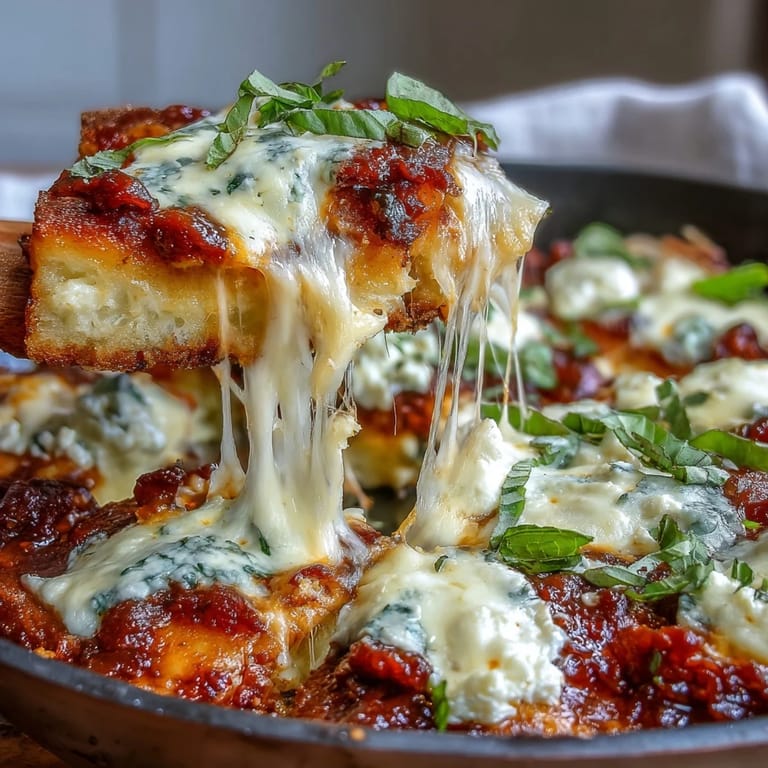
- Spread half your garlic bread cubes over the meat sauce in the skillet, pressing down gently. Dollop half the ricotta mixture over that, then sprinkle half the shredded mozzarella on top. Repeat with the remaining bread, ricotta, and mozzarella—the skillet will look abundantly full, which is exactly right.
- Bake covered:
- Loosely cover the skillet with aluminum foil and bake for 20 minutes. The foil keeps the cheese from browning too quickly while everything heats through.
- Finish with color:
- Remove the foil and bake for another 10-15 minutes until the cheese is bubbly and golden on top and the bread cubes are crispy at the edges. You'll know it's done when the aroma fills your entire kitchen.
- Rest before serving:
- Let the skillet sit for 10 minutes after pulling it from the oven—this allows everything to set just enough so you get clean spoonfuls instead of a molten mess. Garnish with extra parsley or fresh basil if you like.
 Save to Pinterest
 My niece, who's twelve and firmly convinced that lasagna is the peak of all Italian food, took one bite of this straight from the skillet and whispered, 'This is even better than regular lasagna.' That moment—when a reluctant eater becomes a convert—is exactly why I keep making this dish.
Why Cast Iron Matters Here
Using a cast-iron skillet isn't just about tradition, though that's nice too. The skillet heats so evenly and retains temperature so well that your bottom layer gets those beautiful caramelized edges without burning, while your top layer melts into golden perfection. Plus, bringing it straight to the table creates this moment of theater that ceramic baking dishes just don't deliver.
Flexibility and Variations
This recipe is more forgiving than traditional lasagna, which is one of my favorite things about it. I've made it with Italian sausage instead of beef, swapped in ground turkey when I'm eating lighter, and even done a vegetarian version using lentils and extra mushrooms where no one missed the meat. Red pepper flakes stirred into the sauce give it a subtle heat, and a splash of red wine added to the meat while it's browning deepens everything beautifully.
Serving and Pairing Ideas
This skillet is substantial enough to stand alone, but a simple green salad dressed with lemon vinaigrette cuts through the richness perfectly. A glass of Chianti, a crisp Pinot Grigio, or honestly just an ice-cold beer all work beautifully alongside it. Leftovers reheat gorgeously in a 325°F oven for about 15 minutes, covered loosely with foil.
- Fresh arugula salad with lemon and olive oil is my go-to side—light, bright, and it balances the richness without fighting it.
- Garlic breadsticks on the side feel redundant but honestly, who would complain about more garlic bread?
- Make extra of everything because people will ask for seconds, and you'll want to have enough.
 Save to Pinterest
 This recipe proved to me that sometimes the best ideas come from not overthinking things, just looking at what you have and asking 'what if?' Every time I make this skillet, it feels like both comfort food and celebration rolled into one.
Common Questions
- → Can I make this ahead of time?
Yes, assemble the entire skillet up to 24 hours in advance and refrigerate. Add 5-10 minutes to the baking time if baking cold from the refrigerator.
- → What's the best bread to use?
A sturdy Italian or French bread works best as it holds up well during baking. Avoid very soft sandwich bread that may become too mushy.
- → Can I freeze leftovers?
Leftovers freeze well for up to 3 months. Portion into airtight containers and thaw overnight in the refrigerator before reheating.
- → How do I know when it's done baking?
The dish is ready when the cheese is fully melted, bubbly, and lightly golden on top. The bread should be toasted around the edges.
- → Can I make this vegetarian?
Absolutely. Substitute the ground beef with plant-based crumbles or extra vegetables like mushrooms and spinach for a delicious meatless version.
- → Why is resting important before serving?
Letting it rest for 10 minutes allows the layers to set slightly, making it easier to scoop and serve while keeping those beautiful distinct layers intact.