 Save to Pinterest
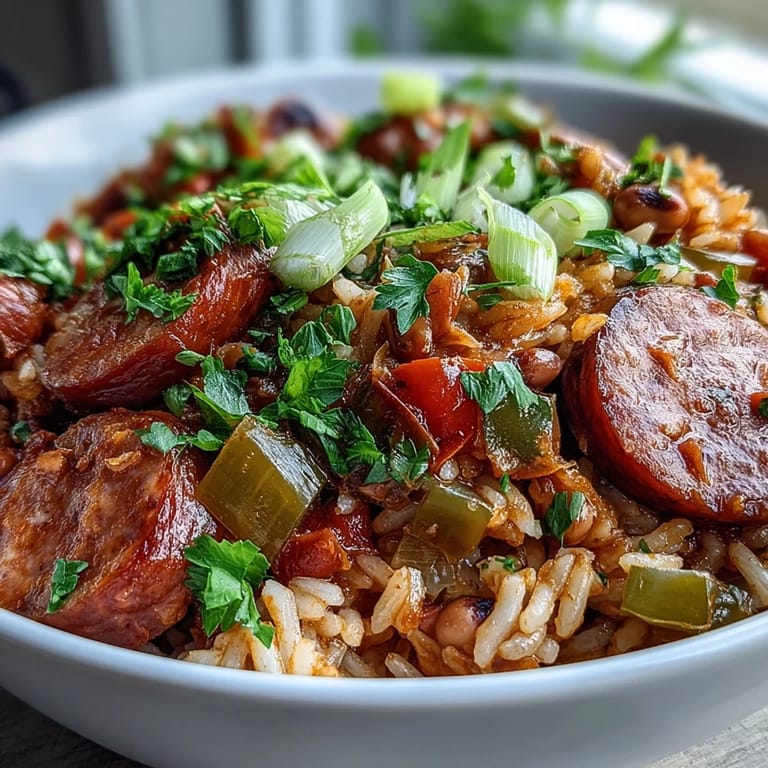
 My neighbor Marcus showed up one Saturday morning with a pot of this jambalaya, steam still rising from the lid, and suddenly my whole kitchen smelled like the French Quarter. He'd learned it from his grandmother in Louisiana, and watching him ladle it out with such ease made me want to master it myself. The first time I made it, I burned the sausage edges and under-seasoned the broth, but something clicked when I tasted that second attempt—the way the spices bloom, how the rice soaks up all that smoky, savory depth. Now it's become my go-to when I want something that feels celebratory without fussing for hours.
I made this for my book club last fall, and three people asked for the recipe before they'd even finished eating—that never happens. What struck me was how everyone relaxed around the table, passing bowls and talking longer than usual. Comfort food has a way of doing that, especially something warm and soulful like jambalaya. I think it's because there's no pretense in it; it's just good, honest cooking.
Ingredients
- Smoked sausage (12 oz, Andouille or kielbasa): This is your flavor anchor—slice it into half-moons so it browns on the cut sides and releases its oils into the pot.
- Onion, celery, and bell peppers (1 medium, 2 stalks, 2 peppers): This trio is the holy trinity of Cajun cooking; don't skip the step of sautéing them properly, as it builds the foundation.
- Garlic (3 cloves, minced): Add it after the vegetables soften so it doesn't burn and turn bitter.
- Black-eyed peas (1 can, drained): These bring earthiness and protein; rinsing them removes excess sodium and foam.
- Long-grain white rice (1½ cups): The rice absorbs all the broth and spices, so don't use short-grain or arborio rice here.
- Chicken broth (3⅓ cups): Low-sodium is important because the sausage and Cajun seasoning bring salt naturally.
- Diced tomatoes (1 can with juices): This adds acidity and moisture; keep the juices rather than draining them.
- Cajun seasoning, smoked paprika, thyme, oregano, bay leaf (as listed): These spices layer to create that authentic Cajun warmth without overwhelming heat.
- Olive oil (2 tbsp): Use a neutral olive oil or vegetable oil; it's just for browning, not for flavor.
- Salt, black pepper, cayenne (as listed): Taste as you go and adjust cayenne last if you want more heat.
- Spring onions and parsley (for garnish): The fresh garnish cuts through the richness and adds a bright finish.
Tired of Takeout? 🥡
Get 10 meals you can make faster than delivery arrives. Seriously.
One email. No spam. Unsubscribe anytime.
Instructions
- Brown the sausage:
- Heat the olive oil in your pot over medium heat and add the sliced sausage. You want it to sit undisturbed for a minute so the edges caramelize and release their smokiness into the oil. After 4–5 minutes, it should smell incredible; don't rush this step.
- Build the base:
- Toss in the onion, celery, and both bell peppers, stirring occasionally as they soften and begin to release their sweet, earthy aroma. This takes about 5 minutes, and you'll notice the vegetables start to stick slightly to the bottom—that's good, that's flavor.
- Wake up the garlic:
- Add your minced garlic and stir constantly for just 1 minute. You're looking for a fragrant bloom without any browning; the moment it smells pungent and alive, you're ready to move forward.
- Toast the rice:
- Stir the raw rice into the pot, coating it in all the oil and vegetable bits. This small step keeps the rice from clumping and gives it a subtle toasted undertone.
- Add the liquid and seasonings:
- Pour in the broth, tomatoes with their juices, black-eyed peas, and all your spices except the bay leaf. Stir everything together until the bay leaf is nestled in and nothing's sticking to the bottom.
- Simmer gently:
- Bring the mixture to a boil, then immediately turn the heat to low and cover with a lid. Set a gentle timer for 20–25 minutes; the rice should be tender and the liquid almost completely absorbed. You'll see little steam holes in the rice when it's done.
- Rest and fluff:
- Turn off the heat, keep the lid on, and let it sit for 5 minutes. This allows any remaining steam to settle into the rice. Remove the bay leaf, then use a fork to gently fluff everything, separating the grains.
- Finish with garnish:
- Scatter the sliced spring onions and fresh parsley over the top right before serving. This fresh touch balances the deep, smoky flavors and adds a pop of color.
 Save to Pinterest
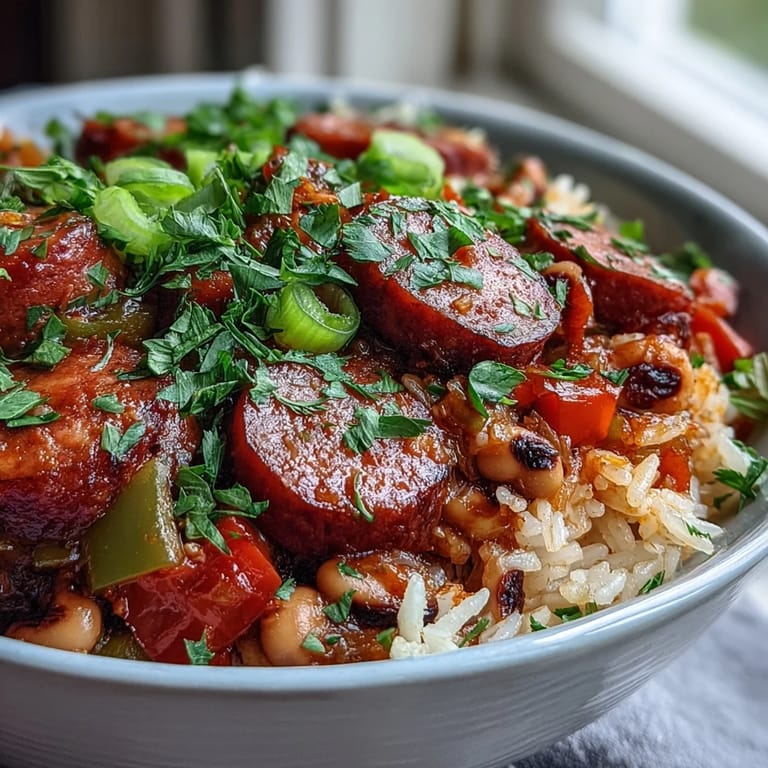
 There's something magical about watching the pot come together, how the spices release their warmth into the steam. My partner walked into the kitchen halfway through cooking and just stood there breathing it in, and I knew right then this dish had become part of our regular rotation. It's one of those meals that tastes like someone cares about feeding you well.
Adjusting the Heat Level
Cajun seasoning already brings a mild warmth, but this recipe lets you decide how spicy you want it. If you like gentle heat, stick with the Cajun seasoning and skip the cayenne. For medium-level kick, add the full ¼ teaspoon cayenne. For bold heat lovers, increase cayenne to ½ teaspoon or shake hot sauce onto your bowl at the table. I once made this for my coworkers and kept the cayenne light because I didn't know everyone's preference; two people asked if I had hot sauce on hand, so now I always set some on the side.
Vegetarian or Flexible Versions
The sausage is the star, but you can absolutely make this without it. Replace it with extra black-eyed peas or add mushrooms for earthiness and texture. Use vegetable broth instead of chicken broth, and the result is still deeply satisfying. I've made it both ways, and the vegetarian version stands completely on its own—the spices and tomatoes provide all the depth you need. Some people add okra if they have it on hand, which gives a slightly southern touch.
Serving and Storage Tips
Jambalaya tastes even better the next day because the flavors settle and meld together. Let it cool, then store it in an airtight container in the fridge for up to 4 days. Reheat gently on the stovetop with a splash of broth if it's dried out, or warm it in the microwave if you're in a rush. You can also freeze it for up to 3 months; thaw overnight and reheat the same way.
- Serve it as-is with crusty bread, or pair it with a simple green salad to cut through the richness.
- If you're cooking for a crowd, this recipe doubles easily—just use a larger pot and add a few more minutes to the cooking time.
- Always taste and adjust salt and spice before serving, since every sausage brand seasons differently.
 Save to Pinterest
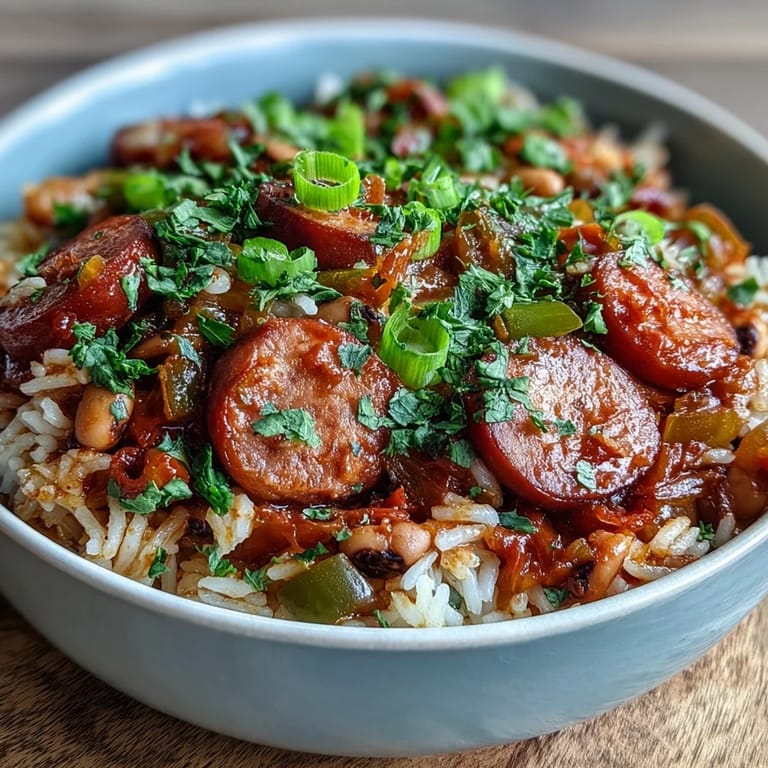
 This jambalaya has a way of turning an ordinary dinner into something worth remembering. It's the kind of dish you make when you want to feel like you've done something good for the people around you.
Common Questions
- → What makes this jambalaya different from traditional versions?
This version incorporates black-eyed peas, adding protein and a creamy texture that complements the smoky sausage. The peas also make this dish more filling while maintaining authentic Cajun flavors.
- → Can I make this vegetarian?
Absolutely. Simply omit the sausage and substitute vegetable broth for chicken broth. Add extra vegetables like mushrooms or additional beans to maintain heartiness and protein content.
- → How spicy is this jambalaya?
The heat level is medium with Cajun seasoning and optional cayenne. Adjust by reducing Cajun seasoning to 1 teaspoon or omitting cayenne for milder flavor, or add hot sauce at the table for extra kick.
- → What type of rice works best?
Long-grain white rice is traditional as it stays fluffy and absorbs liquid well. Avoid converted or instant rice, which won't cook properly with this method.
- → Can I use dried black-eyed peas instead of canned?
Yes, but you'll need to cook them separately first. Soak dried peas overnight, then simmer until tender before adding them during the last 10 minutes of cooking time.
- → How should I store leftovers?
Refrigerate in an airtight container for up to 4 days. The flavors continue to develop, making it even better the next day. Reheat with a splash of broth to restore moisture.