 Save to Pinterest
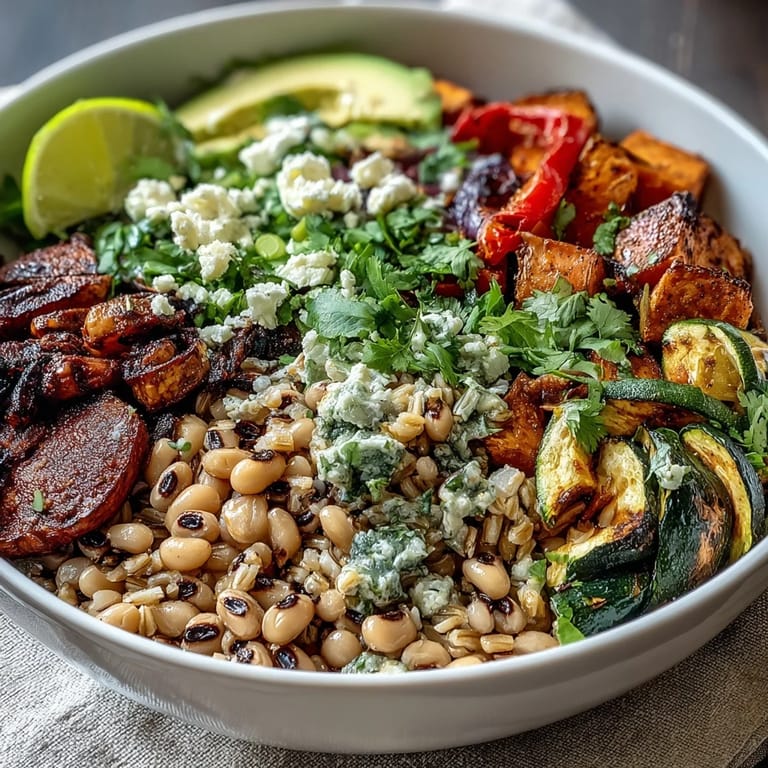
 My coworker Sarah brought one of these bowls to lunch last Tuesday, and the whole office smelled like roasted cumin and caramelized sweet potato—suddenly everyone wanted to know her secret. Turns out, she'd discovered that layering grains with legumes and vegetables wasn't just nutritious, it was deeply satisfying in a way that made you feel genuinely good afterward. That afternoon, I went home and recreated it, and honestly, it's become my go-to meal when I want something that feels both comforting and alive on the plate.
I made this for my sister's potluck dinner in October, and she actually asked if I'd catered it, which made me laugh until I realized she was half serious. Watching people come back for seconds and asking for the recipe felt like a small kitchen victory, especially because it's genuinely easy to pull off and looks far more impressive than the effort requires.
Ingredients
- Farro or wild rice: The nutty backbone of this bowl—farro cooks faster and has a tender chew, while wild rice takes longer but feels more luxurious and holds its texture beautifully.
- Water or vegetable broth: Broth adds subtle flavor that makes the grains taste less plain, though water works perfectly fine in a pinch.
- Salt: Essential for seasoning the grains as they cook, not just after.
- Black-eyed peas: Canned works wonderfully here and saves you from soaking and cooking dried ones; just rinse them well to remove excess sodium.
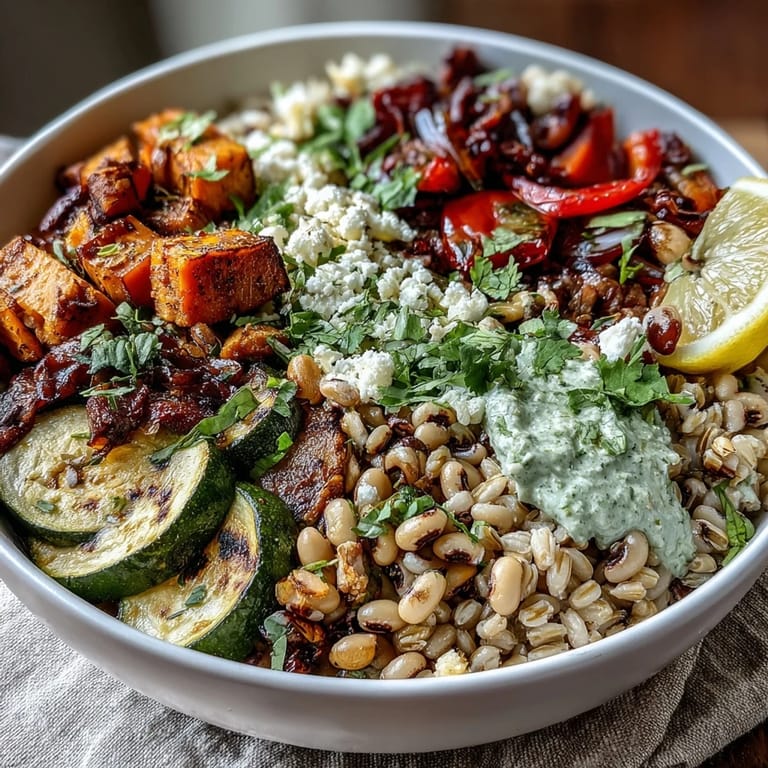
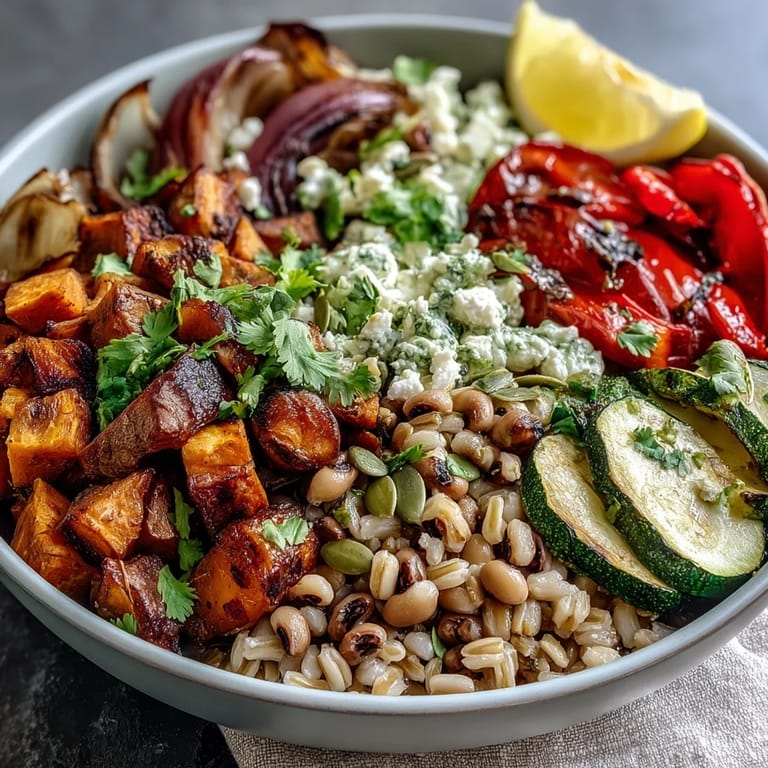
- Sweet potato, bell pepper, zucchini, red onion: These roast into golden, slightly caramelized pieces that taste almost candied—choose vegetables that appeal to you, and don't be afraid to swap in whatever's fresh.
- Olive oil: The vehicle that helps everything caramelize and picks up the spice flavors.
- Smoked paprika and cumin: These two spices are what make the roasted vegetables taste unexpectedly warm and complex rather than just roasted.
- Fresh parsley or cilantro: A final brightness that cuts through the richness and makes the whole bowl feel fresher.
- Feta cheese: Optional but genuinely transformative—it adds tang and creaminess; skip it for vegan.
- Toasted pumpkin seeds or sunflower seeds: Crunch and protein in one, plus they look beautiful scattered on top.
- Lemon wedges: The final squeeze brings everything into focus and ties all the flavors together.
Tired of Takeout? 🥡
Get 10 meals you can make faster than delivery arrives. Seriously.
One email. No spam. Unsubscribe anytime.
Instructions
- Heat your oven and start the grains:
- Set the oven to 425°F, then combine your grains, liquid, and salt in a saucepan and bring it to a boil—you'll hear the water bubbling up. Reduce the heat to low, cover, and let it simmer quietly while you prep the vegetables.
- Toss and roast the vegetables:
- While the grains cook, cut all your vegetables into bite-sized pieces and toss them with olive oil, smoked paprika, cumin, salt, and pepper until everything's evenly coated. Spread them on a baking sheet in a single layer and slide them into the oven; they'll need about 20 to 25 minutes, and stirring them halfway through ensures they roast evenly rather than browning on one side.
- Warm the peas gently:
- About 10 minutes before serving, heat your black-eyed peas in a small saucepan over medium-low heat or in the microwave so they're warm but not steaming. This small step makes them taste fresher and more intentional.
- Assemble your bowls:
- Divide the cooked grains among four bowls as your base, then pile the roasted vegetables on top and spoon the warm peas over everything. The layering matters because it keeps each component distinct rather than becoming a jumbled mush.
- Finish with brightness:
- Scatter fresh herbs, crumbled feta if you're using it, and toasted seeds across the top, then serve with lemon wedges so people can squeeze their own. This final step is where the bowl transforms from good to genuinely craveable.
 Save to Pinterest
 One evening, my partner came home to find me on the kitchen floor reorganizing the spice cabinet—apparently, I'd gotten very passionate about finding my smoked paprika—and when I finally made these bowls for dinner, he took a bite and said, 'This is why you were on the floor?' It became a running joke, but also it reminded me that food doesn't need to be complicated to make people happy.
Making the Grains Count
The grain is honestly the foundation of everything, and it's worth taking a moment to choose the right one for your mood. Farro has this tender, slightly chewy texture that feels almost creamy, while wild rice is more assertive and nutty—brown rice and barley work beautifully too if you want something faster or more familiar. The secret is cooking it in broth instead of plain water when you can, because that flavor gets absorbed into every kernel and means your bowl tastes intentional from the very first bite.
The Roasting Moment
Roasting vegetables is where the quiet magic happens, and honestly, it's one of my favorite sounds in the kitchen—that gentle sizzle of oil and vegetables hitting the hot sheet, then the smell of caramelization that fills the whole house. You'll notice around the 15-minute mark that the edges start turning golden and the whole kitchen smells incredible, and that's when you know it's working. Don't stir too early or too often; let them sit for at least 10 to 12 minutes before turning them so they develop that slight char.
Building Your Bowl and Variations
The beautiful thing about this bowl is that it's endlessly customizable depending on what you have in your kitchen or what your body is craving that day. I've made it with quinoa instead of farro on nights when I wanted something lighter, and I've added avocado slices on mornings when I wanted extra richness. The structure stays the same—grains, legumes, vegetables, fresh herbs, crunch—but the individual players can change and it still feels like itself.
- Drizzle finished bowls with tahini-lemon dressing or a simple red wine vinaigrette for brightness and moisture.
- Top with a poached or fried egg if you want protein and richness, or add a dollop of hummus for creaminess.
- Fresh mint, dill, or basil work as well as parsley if cilantro isn't your thing, and don't hesitate to mix herbs together.
 Save to Pinterest
 These bowls have become my answer to that everyday question of what to make when you want something nourishing that doesn't feel like a compromise. They're the kind of meal that leaves you feeling satisfied rather than stuffed, which is honestly the best compliment any food can get.
Common Questions
- → What grains can I use as a base?
Farro and wild rice are great for their nutty texture, but you can substitute with brown rice, quinoa, or barley to suit your preference.
- → How do I roast the vegetables evenly?
Toss the chopped vegetables with oil and spices, spread them out on a baking sheet in a single layer, and stir halfway through to ensure even roasting and caramelization.
- → Can I make this ahead of time?
Yes, both grains and roasted vegetables can be prepared in advance and stored separately in the fridge. Reheat gently before assembling the bowls.
- → What adds crunch and freshness to the bowl?
Toasted pumpkin or sunflower seeds bring a delightful crunch, while fresh parsley or cilantro adds a bright, herbal note to balance the roasted flavors.
- → How can I add more protein to this dish?
Including feta cheese increases protein and creaminess, or try topping with a poached egg or avocado slices for additional richness and nutrients.