 Save to Pinterest
 There's something about the sizzle of chicken hitting a hot wok that makes me feel instantly transported to a bustling night market, even though I'm standing in my own kitchen at 6 PM on a Tuesday. My neighbor once mentioned offhandedly that she made noodle bowls when she wanted something that tasted like a restaurant but didn't require ordering out, and that stuck with me. The first time I tried layering everything into bowls instead of tossing it all together, I realized how much more fun it became—everyone could adjust their own sauce ratio, pile on extra vegetables, squeeze their own lime. It became less about following a recipe and more about creating something that felt personalized, vibrant, and ready in under an hour.
I made this for my partner on a night when we were both exhausted and didn't want to resort to takeout again, and watching them close their eyes after the first bite—just a moment of quiet appreciation—made me understand why this bowl became something I keep coming back to. There's a kind of magic in how fresh vegetables, tender chicken, and a balanced sauce can turn a weeknight into something that feels almost celebratory, even if it's just the two of us eating at the kitchen counter.
Ingredients
- Boneless, skinless chicken breast or thighs (500 g): Thighs are more forgiving and stay juicier, but breasts work fine if you slice them thin and don't overcook them.
- Tamari or low-sodium soy sauce (3 tbsp): Tamari gives a cleaner, slightly less salty taste, but regular soy sauce is a perfectly fine substitute.
- Fish sauce (1 tbsp): This is the umami backbone that makes the sauce taste complex and authentic—don't skip it, even though the smell is funky.
- Rice vinegar (2 tbsp): The acidity brightens everything; white vinegar works in a pinch, but rice vinegar's gentleness matters here.
- Honey (1½ tbsp): This balances the saltiness and acidity into something rounded and craveable.
- Toasted sesame oil (2 tbsp): Use the dark, aromatic kind—it's the difference between good and unforgettable.
- Neutral oil (2 tbsp): This helps distribute the flavor without competing with the sesame oil's intensity.
- Garlic and ginger (3 cloves and 1 tsp): Fresh is non-negotiable; they add brightness and a slight warmth that lifts the whole bowl.
- Chili flakes or Sriracha (1 tsp): Optional, but honestly, a little heat makes everything sing.
- Rice noodles (250 g): These are delicate and absorb sauce beautifully; wheat noodles are sturdier if you prefer that texture.
- Fresh vegetables (carrot, cucumber, bell pepper, spring onions, bean sprouts): Buy them as fresh as possible—they're raw, so their crunch and color matter enormously.
- Cilantro and sesame seeds: These are the finishing touches that make it look and taste restaurant-quality.
Tired of Takeout? 🥡
Get 10 meals you can make faster than delivery arrives. Seriously.
One email. No spam. Unsubscribe anytime.
Instructions
- Make the sauce and marinate the chicken:
- Whisk together the tamari, fish sauce, rice vinegar, honey, sesame oil, neutral oil, minced garlic, and ginger in a medium bowl until the honey dissolves completely. Split this mixture in half—one half becomes your marinade, the other your finishing sauce. Toss the thinly sliced chicken in the marinade and let it sit for 15 minutes while you prep everything else.
- Cook the noodles:
- Bring a large pot of water to a boil and cook the rice noodles according to the package instructions, usually 4 to 8 minutes depending on thickness. The moment they're tender, drain them in a colander and rinse under cold water to stop the cooking and prevent sticking.
- Sear the chicken until golden:
- Heat your largest skillet or wok over medium-high heat until it's genuinely hot—you want to hear a sizzle the moment the chicken hits the pan. Cook the marinated chicken for 5 to 7 minutes, stirring occasionally, until it's cooked through and the edges are lightly browned and caramelized. Don't crowd the pan; if your pieces overlap too much, they'll steam instead of sear.
- Assemble the bowls:
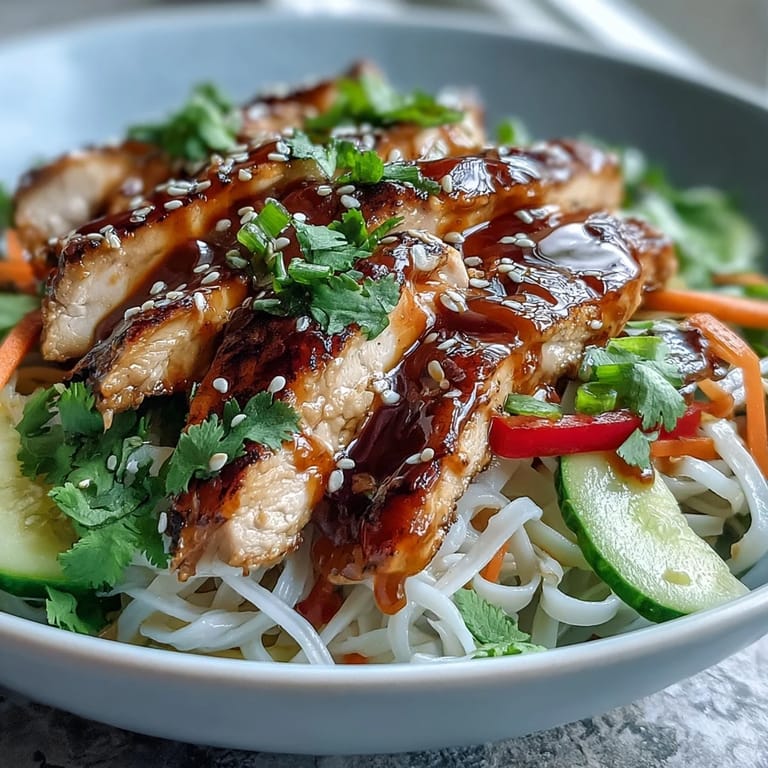
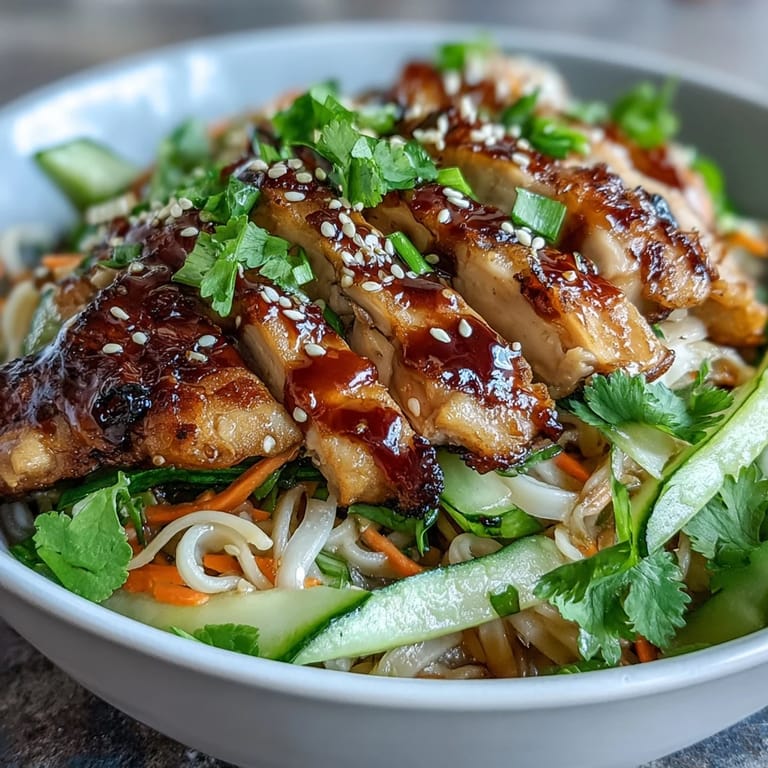
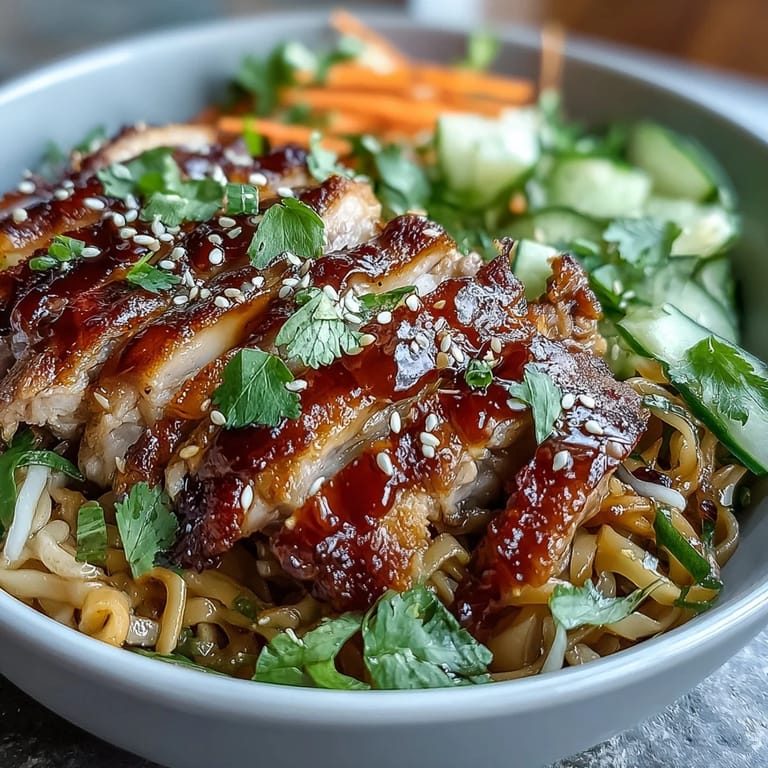
- Divide the cooled noodles among four bowls, then arrange the cooked chicken, julienned carrot, sliced cucumber, bell pepper, bean sprouts, and spring onions on top in neat little piles. This visual arrangement is part of the appeal—it invites people to take what they want in each bite.
- Dress and garnish:
- Drizzle the reserved sauce over each bowl, then shower everything with fresh cilantro, toasted sesame seeds, and a generous squeeze of lime juice. Serve immediately with extra chili flakes or Sriracha on the side for anyone who wants to turn up the heat.
 Save to Pinterest
 There was a moment last spring when my young niece came over and helped me slice all the vegetables into ribbons, and instead of treating it like a chore, she turned it into her own little meditation. By the time we'd built our bowls and sat down, she was so proud of what we'd made together that she actually put down her phone and just ate, present and happy. That's when I realized this recipe isn't really about speed or simplicity—it's about creating something colorful and nourishing that brings people to the table without stress.
The Magic of the Sauce
The real heart of this bowl is the sauce—that perfect marriage of savory, sweet, tangy, and nutty that makes you want to drink it straight from the bowl (I've done this, no judgment). The fish sauce might smell aggressive going in, but it dissolves into the background and adds an umami depth that makes the whole thing taste sophisticated without being complicated. I learned early on that balancing the tamari, vinegar, and honey matters more than exact measurements; taste as you go, and don't be afraid to adjust if something feels off.
Why Fresh Matters Here
Since most of the vegetables are served raw, their quality and freshness directly affect how good this bowl tastes and feels to eat. The crunch of a fresh cucumber slice, the snap of bean sprouts, the crisp sweetness of a just-cut carrot—these textures are what make the bowl exciting rather than just nutritious. I once made this with vegetables that had been sitting in my fridge for a week, and while it was still edible, it lost that restaurant-quality brightness that's the whole reason to make it in the first place.
Customization and Flexibility
The beauty of building individual bowls is that everyone can have exactly what they want without you making multiple versions of dinner. My partner loads up on the cilantro and lime, my friend who visits adds extra chili flakes and sesame seeds, and my sister sometimes swaps in avocado or adds shredded cabbage for even more crunch. This is the kind of recipe that gets better the more times you make it, because you learn what proportions sing for your own palate and what additions make it feel like your own creation.
- Tofu, shrimp, or even leftover rotisserie chicken work beautifully as protein swaps.
- Edamame, snap peas, snap peas, shredded cabbage, or thinly sliced radishes add extra vegetables without changing the balance.
- Drizzle extra sesame oil or add a splash of lime juice directly into your sauce if you want it more intense.
 Save to Pinterest
 This bowl has become my answer to wanting something that tastes indulgent and restaurant-quality but doesn't require ordering out or spending an evening in the kitchen. Make it once, and I promise it'll become something you reach for again and again.
Common Questions
- → Can I make this ahead of time?
Prepare components separately in advance. Marinate chicken up to 24 hours ahead, chop vegetables, and mix the sauce. Assembly takes just minutes when ready to serve.
- → What noodles work best?
Rice noodles are traditional and gluten-free, but wheat noodles, soba, or even spaghetti work well. Choose noodles that hold up well against the sauce without becoming mushy.
- → Is this suitable for meal prep?
Yes. Store cooked chicken, noodles, vegetables, and sauce in separate containers. Reheat chicken gently and toss everything together when ready to eat for best texture.
- → How can I add more heat?
Increase chili flakes, add fresh sliced chilies, or drizzle with Sriracha. Sambal oelek or chili garlic paste also work beautifully in the sauce.
- → Can I use other proteins?
Thinly sliced beef, shrimp, or firm tofu all work well. Adjust cooking time accordingly—shrimp cook in just 2-3 minutes, while beef may need slightly longer than chicken.
- → What vegetables can I substitute?
Snap peas, shredded cabbage, bok choy, mushrooms, or julienned snow peas all complement the flavors. Use what's fresh and available for the best results.