 Save to Pinterest
 There's something about early March when you realize the farmers market suddenly has both root vegetables and fresh greens at the same stand, and you think, why not celebrate both seasons in one bowl? I grabbed a leek that still had dirt clinging to it, some spinach that practically glowed, and a rutabaga the size of my fist, all before I had any real plan. That soup taught me that the space between winter and spring isn't just a calendar date—it's a flavor moment waiting to happen.
My neighbor knocked on the door one chilly evening, and I ladled her a bowl of this soup still steaming from the pot. She sat at my kitchen counter for two hours, and we barely talked about anything important—just about how good warm food tastes when you're not expecting it, and how the barley had this almost creamy texture that made the whole thing feel luxurious. That bowl became our ritual.
Ingredients
- Leek, white and light green parts only: The sweet, gentle cousin of onion that doesn't overpower—slice it crosswise so each piece catches the heat evenly.
- Carrots and parsnips: One's bright and familiar, the other's earthy and unexpected; together they're a conversation.
- Rutabaga or turnip: Don't skip this if you can find it—it dissolves slightly and gives the broth a faint sweetness that changes everything.
- Green cabbage and baby spinach: The cab goes in early and becomes almost invisible, while spinach stays bright and tender if you add it at the very end.
- Celery, garlic, and herbs: These three are your flavor foundation; dried thyme and marjoram work because they're gentle enough not to overshadow the vegetables.
- Pearl barley, rinsed: This grain was a revelation to me—it gets tender without falling apart, and it absorbs flavor like a sponge while keeping its slight chew.
- Low-sodium vegetable broth: The base that carries everything; taste it first so you know what you're working with.
- Olive oil and salt: Never rush the seasoning at the end; taste and adjust, because broth varies and vegetables release their own salt as they cook.
Tired of Takeout? 🥡
Get 10 meals you can make faster than delivery arrives. Seriously.
One email. No spam. Unsubscribe anytime.
Instructions
- Warm the pot and soften the roots:
- Pour olive oil into a large soup pot and let it shimmer over medium heat, then add your leek, carrots, parsnips, rutabaga, and celery. You'll hear them sizzle gently as they hit the pan—this is the sound of flavor building. Let them soften for 5 to 7 minutes, stirring every so often, until the vegetables start to release their sweetness.
- Welcome the garlic:
- Add your minced garlic and stir constantly for about a minute until the smell fills your kitchen—that's when you know it's ready. Don't let it brown or it turns bitter.
- Bring the barley and broth together:
- Stir in the rinsed barley, then pour in your vegetable broth. Add the bay leaf, thyme, and marjoram, then turn up the heat just enough to bring everything to a gentle boil. You'll see the broth go from cloudy to clear as the barley releases its starches.
- Let time and heat do the work:
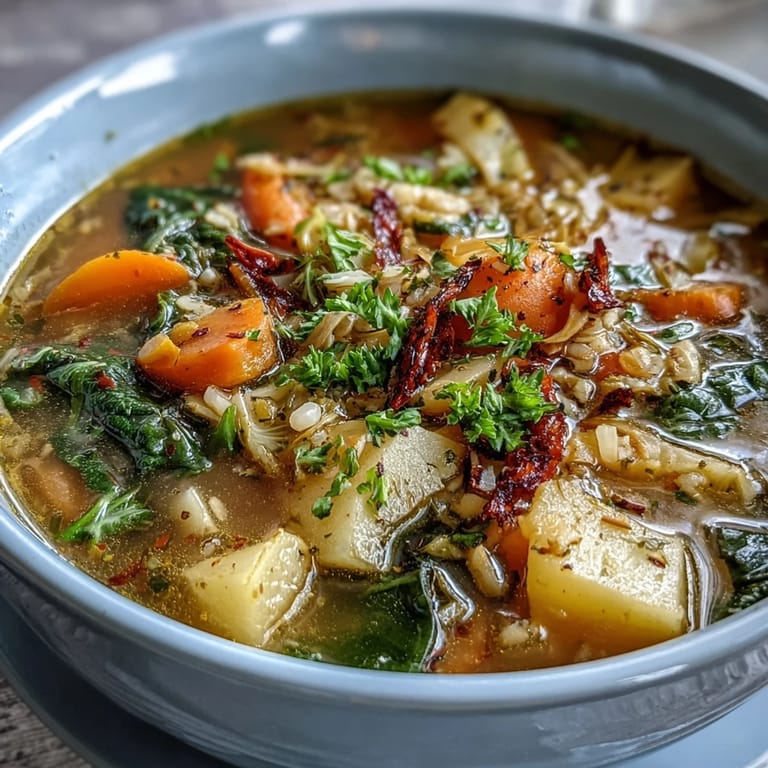
- Once it reaches a boil, drop the heat to a simmer, cover the pot, and let it cook for 35 minutes, stirring occasionally. The barley and root vegetables will soften into something almost creamy, and the broth will turn a warm golden brown.
- Add the greens and awaken the soup:
- Uncover the pot, add your shredded cabbage and chopped spinach, and let them simmer uncovered for another 5 to 7 minutes. The green will brighten and wilt, and the whole soup will suddenly taste both earthier and fresher at the same time.
- Taste, adjust, and finish:
- Remove the bay leaf, then taste carefully. Grind in black pepper, add salt if it needs it—remember the broth was already salted, so go slow. Ladle into bowls and scatter fresh parsley over the top.
 Save to Pinterest
 This soup became my go-to when friends were going through hard times, not because it fixes anything, but because it shows up and stays warm. There's something about a bowl that's both hearty and healthy that makes people feel less alone.
Why Barley Is the Secret
Pearl barley isn't just a filler grain—it's a texture shifter. It absorbs broth the way bread absorbs water, but it keeps its integrity, so the soup feels creamy without any cream. The first time I made this, I used rice instead because I couldn't find barley, and the soup felt thin and forgettable. When I went back to barley, it was like someone had turned up the volume on everything.
Adapting Through the Seasons
This soup exists in that liminal space where you can keep leaning into what's fading (roots, hardy greens, dried herbs) and what's arriving (fresh spinach, brighter colors). In late spring, add more herbs and less barley. In deep winter, stick closer to the roots and go heavier on the barley. The formula stays the same, but the soul of the soup shifts with what your market has.
Serving and Keeping
Serve this hot with a thick slice of whole-grain bread and maybe a drizzle of good olive oil over the top if you're feeling generous. The soup keeps beautifully in the refrigerator for up to 4 days, and it actually tastes deeper and more settled on day two or three, as if the flavors have had time to get to know each other.
- A squeeze of lemon juice brightens everything if it tastes a bit flat after reheating.
- Stir in white beans or chickpeas if you want to add protein and make it feel even more substantial.
- A small shower of grated Parmesan or a dollop of sour cream changes the whole experience if you want richness.
 Save to Pinterest
 This soup is the kind of dish that makes you feel capable in the kitchen—not because it's complicated, but because it reminds you that good food comes from paying attention and letting ingredients speak for themselves. Make it once and it becomes yours.
Common Questions
- → What vegetables work best in this dish?
Root vegetables like carrots, parsnips, rutabaga, and leek create a rich base, complemented by leafy greens such as cabbage and spinach added near the end.
- → How do you cook the barley properly?
Rinse pearl barley before adding it to the sautéed vegetables and broth. Simmer gently for about 35 minutes until tender but not mushy.
- → Can the barley be substituted?
Yes, alternatives like quinoa or farro can be used but will affect cooking times and texture.
- → What herbs enhance the flavors here?
Bay leaf, dried thyme, and marjoram provide earthiness and warm aromatics that deepen the broth's flavor.
- → How to adjust for extra protein?
Adding cooked white beans or chickpeas towards the end boosts protein while maintaining the dish’s comforting texture.