 Save to Pinterest
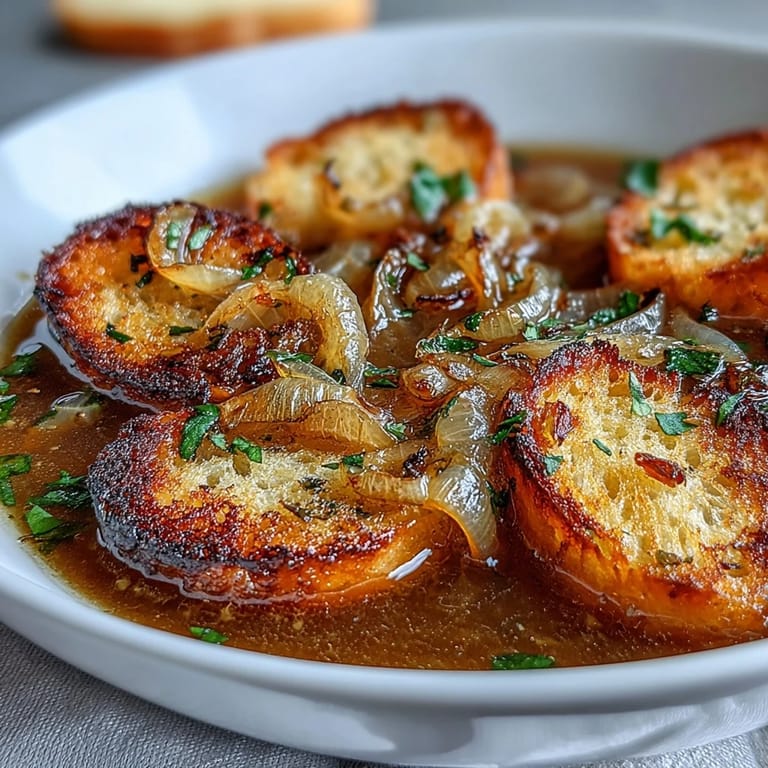
 There's something almost meditative about watching garlic transform in a hot oven, the cloves turning from ivory to golden amber while filling your kitchen with a sweetness that barely resembles the sharp bite of raw garlic. I discovered this soup on a particularly gray October afternoon when I needed comfort but didn't want the heavy richness of cream. What started as an experiment with roasting whole garlic heads became an obsession, and now whenever someone mentions wanting soup that tastes like it took hours, this is what I make. The deep caramel notes from slowly cooking onions alongside pillowy roasted garlic create something unexpectedly elegant for such simple ingredients.
I made this for my neighbor last winter after she'd mentioned craving French onion soup but worrying it was too involved. When she tasted it and sighed that deep, satisfied sigh, then asked for the recipe with her spoon still in her bowl, I knew I'd found something special. The way her eyes lit up when she bit into a crouton while sipping the broth taught me that the details really do matter in soup.
Ingredients
- Yellow onions: Three large ones provide the sweet, caramelized backbone of this soup, so don't skip the slow cooking that brings out their natural sugars.
- Garlic heads: Two whole heads roasted become the soul of the dish, transforming into something almost creamy and sweet.
- Olive oil and butter: The combination gives you rich flavor and helps with that perfect caramelization of the aromatics.
- Leek, celery, and carrot: This classic trio builds aromatic depth without overpowering the starring garlic and onions.
- Dry white wine: A half cup adds brightness and helps lift the soup from one-note to complex.
- Vegetable broth: Five cups creates the liquid base, and good broth makes a noticeable difference here.
- Fresh thyme and bay leaf: These herbs infuse the broth with a subtle earthiness that whispers rather than shouts.
- Soy sauce: Just a teaspoon is optional but adds an umami depth that makes people wonder what your secret ingredient is.
- Day-old baguette: Older bread crisps better than fresh, so don't use a loaf straight from the bakery.
- Fresh parsley, dried thyme, and garlic powder: These flavor the croutons and should be added right before baking for maximum freshness.
Tired of Takeout? 🥡
Get 10 meals you can make faster than delivery arrives. Seriously.
One email. No spam. Unsubscribe anytime.
Instructions
- Roast your garlic while prep happens:
- Preheat your oven to 400°F, then slice the tops off both garlic heads to expose the cloves. Drizzle with olive oil, wrap in foil, and let them roast for forty minutes until they've turned golden and smell almost caramel-like. This is when your kitchen starts smelling like something special.
- Begin the long caramelize:
- While garlic roasts, heat olive oil and butter in a large pot over medium-low heat, then add your sliced onions, leek, celery, and carrot. This is the moment that requires patience—stir frequently for twenty-five to thirty minutes as the onions slowly turn from translucent to deep golden brown. Rushing this step shortcuts the whole flavor of the soup.
- Deglaze with wine:
- Pour in your dry white wine and use a wooden spoon to scrape up all those flavorful browned bits stuck to the pot. Simmer until the liquid reduces by about half, concentrating those sweet, caramelized flavors.
- Build your broth:
- Squeeze the soft roasted garlic from its skins directly into the pot, then add your vegetable broth, the optional soy sauce, thyme sprigs, bay leaf, and oregano. Bring everything to a boil, then lower the heat and let it simmer uncovered for twenty-five minutes, allowing the flavors to marry.
- Toast your croutons:
- While the soup simmers, toss bread cubes with olive oil, fresh parsley, dried thyme or Italian herbs, garlic powder, and a pinch of salt. Spread on a baking sheet and bake at 400°F for ten to twelve minutes, stirring halfway through, until they're golden and crisp enough to crack between your teeth.
- Finish and adjust:
- Remove the thyme sprigs and bay leaf from your soup, then taste and adjust seasoning with salt and pepper. If you prefer a smoother texture, use an immersion blender to partially or fully puree the soup—I usually leave it a bit chunky.
- Serve with celebration:
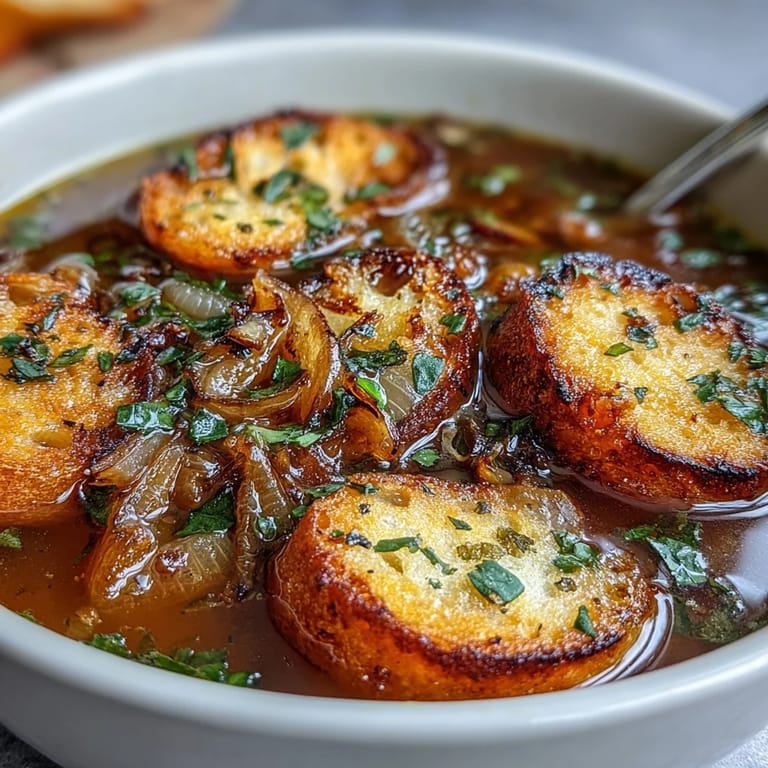
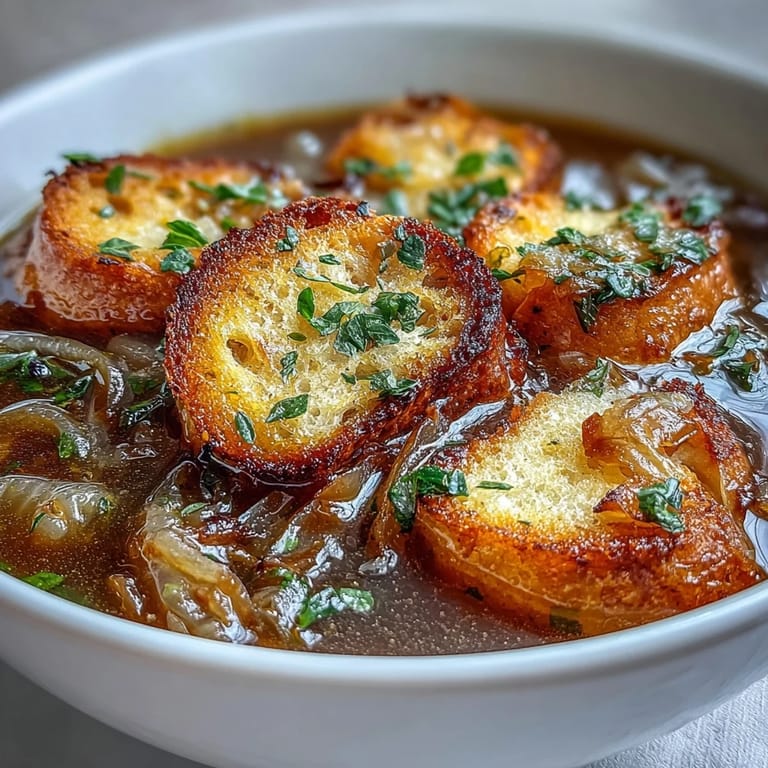
- Ladle the soup into bowls and crown each serving with a generous handful of herb croutons. A fresh parsley garnish adds a bright finishing touch.
 Save to Pinterest
 I remember serving this to my mother on a morning when she wasn't feeling well, and she ate the entire bowl without saying much, then asked me to make it again the next week. That's when I realized soup isn't just about nourishment—it's about wrapping someone in warmth and saying you care without needing words.
The Magic of Roasted Garlic
Roasting entire heads of garlic is transformative in ways raw garlic can never be. The heat mellows the sulfur compounds that make raw garlic sharp, replacing them with a sweet, almost nutty flavor that feels luxurious in a simple soup. I've started roasting extra heads just to have on hand for spreading on bread or mashing into vinaigrettes, which means I always have some ready when soup-making inspiration strikes.
Why Caramelization Takes Time
Those thirty minutes of stirring onions might feel tedious, but that's when their natural sugars are slowly browning through the Maillard reaction, creating complex flavors that you simply cannot achieve by cranking up the heat. I used to try rushing it with higher temperatures, and the onions would brown too fast on the outside while staying translucent inside. Now I trust the process, knowing that patience is the actual secret ingredient in this soup.
Customizing Your Bowl
This soup is wonderful on its own, but it also welcomes additions and variations depending on what you have or what mood you're in. The croutons are where you can really have fun—swap the herbs, add a little Parmesan to the bread mixture, or make them spicy with a pinch of cayenne.
- A sprinkle of grated Gruyère or Parmesan on top creates that classic French onion soup feeling without overwhelming the delicate roasted garlic flavor.
- If you want to make it vegan, simply skip the butter and use only olive oil, and you'll lose nothing in flavor or satisfaction.
- A small splash of cream stirred in at the end adds richness, though the soup is deeply satisfying without it.
 Save to Pinterest
 This soup reminds me that the best food comes from respecting simple ingredients and taking your time with them. Once you've made it, you'll understand why people keep coming back to it again and again.
Common Questions
- → How do you roast garlic for the soup?
Slice the tops off whole garlic heads, drizzle with olive oil, wrap in foil, and roast at 400°F for about 40 minutes until soft and golden.
- → What vegetables enhance the soup’s flavor?
Yellow onions, leek, celery, and carrot are slowly caramelized to build a rich, sweet foundation.
- → Can the croutons be made ahead of time?
Yes, herb-seasoned bread cubes can be toasted ahead and stored in an airtight container to maintain crispness.
- → What’s a good substitute for white wine in this soup?
Vegetable broth or a splash of apple cider vinegar can add acidity and depth without alcohol.
- → How can the soup be made vegan?
Omit butter and use olive oil exclusively; ensure the croutons don’t contain dairy ingredients.
- → Why blend part of the soup?
Blending creates a smoother texture while leaving some chunky elements for balance and heartiness.