 Save to Pinterest
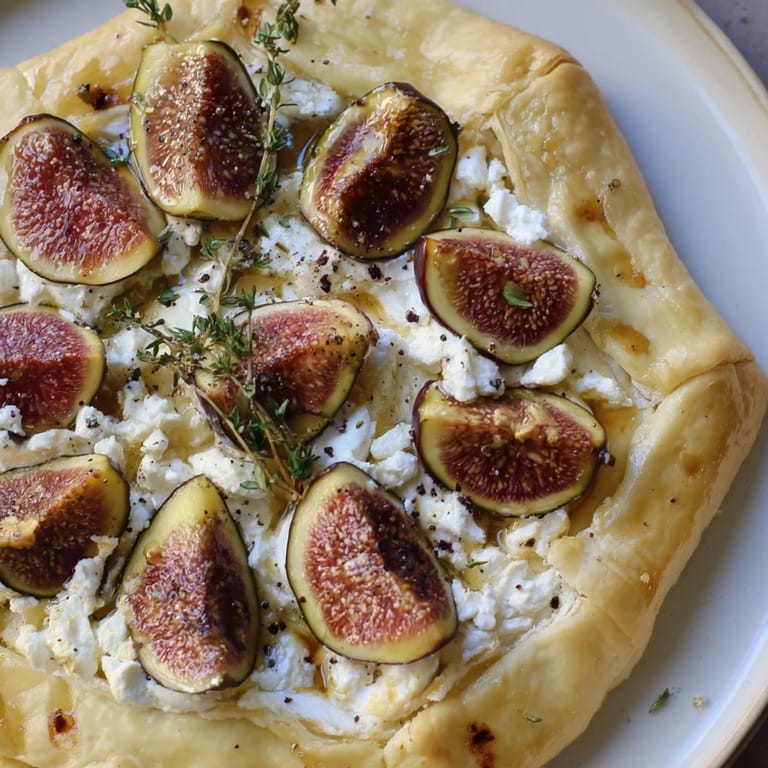
 There's something magical about the moment puff pastry hits a hot oven—that unmistakable sound of butter and dough expanding into golden clouds. I discovered this particular combination while rummaging through my fridge on a Friday evening, realizing I had fresh figs, a small tub of goat cheese, and a dusty bottle of truffle oil from some forgotten special occasion. What started as improvisation became something I now make whenever I want to feel a little fancy without the stress.
I made this for my partner's parents when they visited unexpectedly, and watching them take that first bite—the way their eyes lit up—I realized how a few good ingredients and a little thoughtfulness can turn an ordinary Friday dinner into something memorable. It wasn't complicated or pretentious, just genuinely delicious.
Ingredients
- Puff pastry sheet (about 250 g): Use thawed pastry from the freezer section; room temperature is your friend here because cold pastry tears and fights you, but thawed pastry is forgiving and puffs beautifully.
- Fresh figs (4–5 sliced): The sweetness of ripe figs is non-negotiable—if they're hard or mealy, they won't sing against the goat cheese, so choose ones that give slightly to gentle pressure.
- Goat cheese (120 g crumbled): The tanginess cuts through the richness perfectly; if you only have it in a log, just break it into rustic chunks rather than over-crumbling it.
- Truffle oil (1 tbsp): This isn't the time to cheap out—good truffle oil has a perfumy, earthy depth that transforms the whole dish, while the cheap stuff tastes like disappointment.
- Honey (2 tbsp): Drizzle it warm from the jar, or gently warm it first so it flows like liquid gold across the hot pastry.
- Olive oil (1 tbsp): Use something you like the taste of; this oil gets tasted directly, not hidden in cooking.
- Fresh thyme (1 tbsp leaves, optional): If you have it, strip the leaves from the stems—they add an herbal note that makes people ask what the secret ingredient is.
- Sea salt and black pepper: Freshly ground pepper matters more than you'd think; it brings a little heat and brightness that the other flavors need.
Tired of Takeout? 🥡
Get 10 meals you can make faster than delivery arrives. Seriously.
One email. No spam. Unsubscribe anytime.
Instructions
- Prep your oven and workspace:
- Set your oven to 200°C (400°F) and line a baking sheet with parchment paper—this prevents sticking and gives you a little cushion if anything drips. A cold baking sheet and room temperature pastry are the winning combination.
- Set up the pastry canvas:
- Roll out your thawed puff pastry directly onto the parchment paper, then use a sharp knife to score a border about 1 cm from the edges without cutting all the way through. That border is what rises up and contains all your toppings, so be gentle and deliberate.
- Brush and layer the base:
- Lightly brush the entire pastry with olive oil, staying clear of that scored border—the exposed pastry around the edges is what gets that golden, puffed crust you're after. Skip the border and you'll thank yourself later.
- Arrange your toppings:
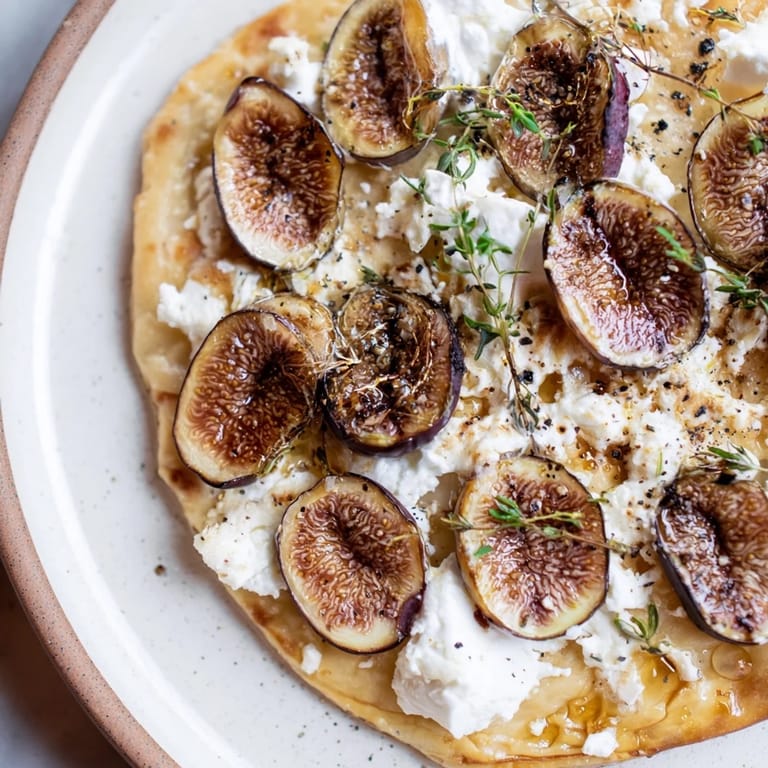
- Scatter the sliced figs across the oiled pastry, leaving that border bare, then crumble the goat cheese evenly over them. The figs and cheese should touch in places, creating little pockets of flavor.
- Season before the oven:
- Drizzle half of the truffle oil over everything, then sprinkle with a pinch of sea salt, black pepper, and thyme if you're using it. Don't oversalt—the goat cheese and truffle oil are already bringing plenty of flavor.
- Bake until golden:
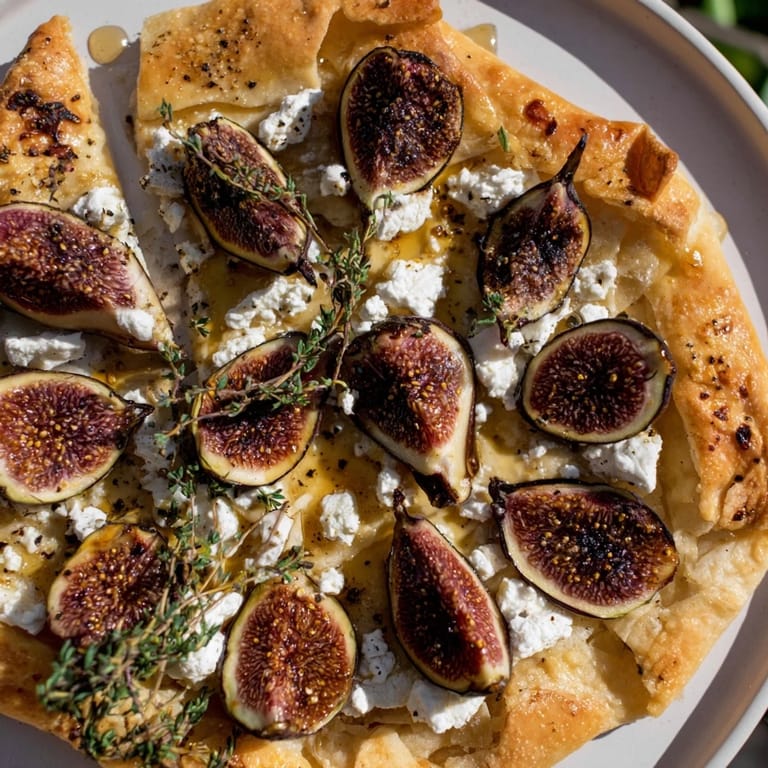
- Slide into the oven for 18–20 minutes, watching for the pastry to puff and turn golden brown at the edges and along that border. The kitchen will smell incredible, which is your cue that it's almost ready.
- Finish with the luxury touch:
- Pull it from the oven while it's still steaming, then drizzle the remaining truffle oil and the honey over the hot pastry—the heat helps them settle into all the crevices and brings out their fragrances.
- Slice and serve:
- Use a sharp knife or pastry cutter to divide into four generous pieces, then get it to the table while it's still warm and the pastry is at its crispiest.
 Save to Pinterest
 What strikes me most about this recipe is how it turned into a regular request from friends, even though I initially made it as a one-time improvisation. It proved to me that the most impressive meals often come from working with what you have and trusting that good ingredients don't need much fussing.
Swapping Flavors Without Losing the Magic
The beauty of this pizza is that it's more of a framework than a rigid formula. I've made it with blue cheese when goat cheese wasn't in the house, and the sharper bite actually paired beautifully with the sweetness of the figs and honey. Walnuts or candied pecans scattered on top add a textural contrast that the original version doesn't have, though you'll want to add them before baking so they warm through and toast slightly.
Timing and Temperature Matter More Than Technique
One evening I got distracted by a phone call and nearly overbaked the pastry—I'd stepped away for what felt like two minutes. It taught me that ovens are all different, and knowing your own oven's temperament is worth paying attention to. Start peeking at 16 minutes and get familiar with what your particular oven does. The pastry should be golden and puffed, not brown or crispy-looking; there's a sweet spot in between that lasts about four minutes, so timing is everything.
Pairing and Presentation
Serve this while it's still warm—the contrast between crispy pastry and the soft cheese is what makes it sing. A crisp Sauvignon Blanc or sparkling wine cuts through the richness and complements the truffle and fig notes perfectly. If you're plating it for guests, slice it into four pieces but keep it on the baking sheet as you transfer; the parchment paper becomes a serving vessel, which looks casual and sophisticated at the same time.
- Let the pastry cool for two minutes before slicing so you don't burn your fingers and the hot cheese doesn't ooze out onto the cutting board.
- If you're making this ahead of serving, bake it completely, then gently reheat in a 160°C oven for five minutes to restore some crispness before finishing with the truffle oil and honey.
- Leftover pizza is honestly still delicious cold the next day with a cup of coffee, though it loses the crispy magic that makes it special.
 Save to Pinterest
 This pizza reminds me that some of the most luxurious food comes not from complicated techniques but from respecting good ingredients and giving them room to shine. It's the kind of dish that makes people feel celebrated without making you feel stressed.
Common Questions
- → Can I use blue cheese instead of goat cheese?
Yes, substituting blue cheese introduces a bolder flavor that complements the sweetness of figs and the earthiness of truffle oil.
- → How do I keep the puff pastry crisp?
Ensure the oven is fully preheated and avoid adding too much moisture on top. Baking on parchment paper helps maintain crunch.
- → Can I add nuts for extra texture?
Sprinkling chopped walnuts before baking adds a pleasant crunch and enhances flavor contrast.
- → What wine pairs well with this dish?
A crisp Sauvignon Blanc or sparkling wine balances the richness and elevates the fruity notes.
- → Is fresh thyme necessary?
Fresh thyme adds subtle herbal depth, but it’s optional depending on your flavor preference.