 Save to Pinterest
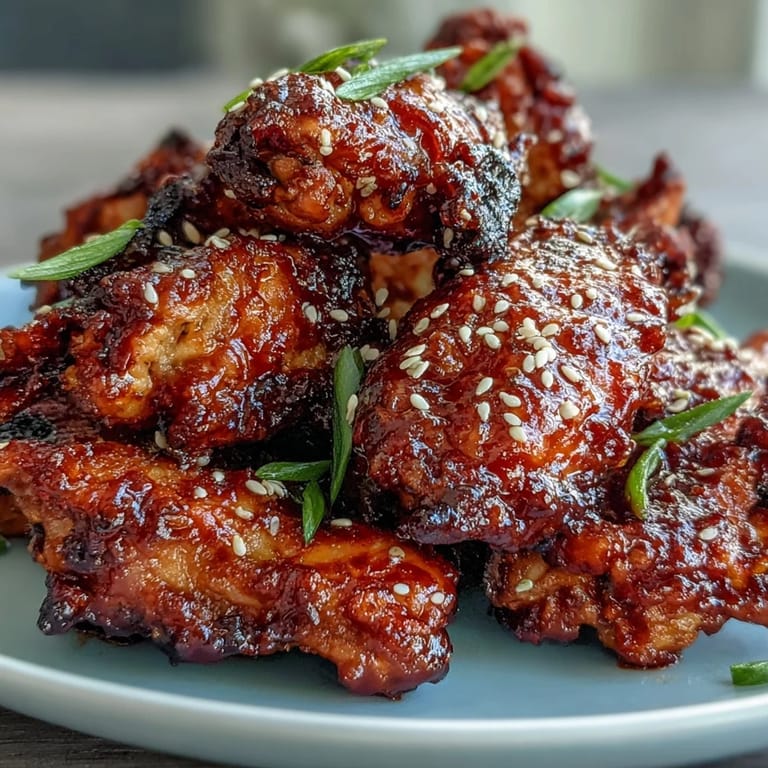
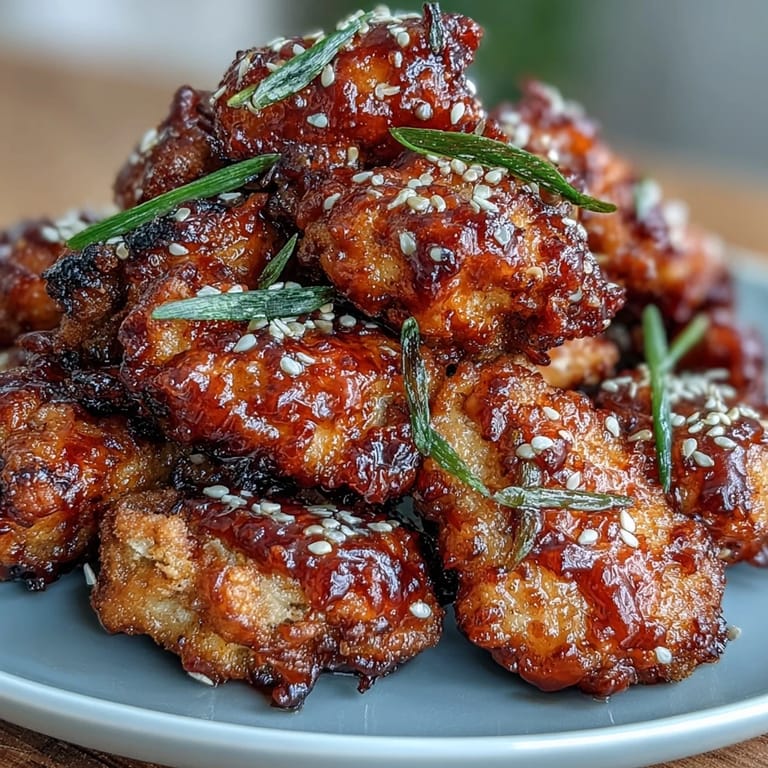
 Korean fried chicken has long held a beloved place in the bustling street-food stalls of Seoul, where the air crackles with the scent of sizzling oil and sticky, fiery sauces. This Air Fryer Korean Fried Chicken with Gochujang Glaze brings that same bold, addictive energy right into your kitchen—without the deep fryer. Bite-sized boneless chicken thighs are marinated in soy sauce, rice wine, garlic, and ginger, then double-coated in potato starch for a shatteringly crisp exterior. The air fryer works its magic, delivering golden, juicy pieces in just 25 minutes. The real showstopper, however, is the gochujang glaze—a luscious, spicy-sweet sauce built from Korean chili paste, honey, brown sugar, soy sauce, rice vinegar, garlic, and sesame oil that clings to every craggy crevice of the chicken. Finished with toasted sesame seeds and fresh green onions, this is a lighter twist on a Korean classic that never sacrifices flavor.
Save to Pinterest What makes this recipe truly special is the interplay between texture and flavor. The double-dredge technique—potato starch, then egg, then potato starch again—creates a crust that the air fryer transforms into something remarkably close to its deep-fried counterpart. Meanwhile, the gochujang glaze simmers down to a glossy, thick coating that clings and caramelizes slightly on contact with the hot chicken. Marinating the thighs in soy sauce, rice wine, garlic powder, and ginger powder first ensures that the flavor penetrates deep into the meat, so every bite is seasoned from the inside out. Whether you're cooking for a family dinner or hosting a casual gathering, this dish brings the vibrant energy of Korean street food to your table.
Ingredients
Tired of Takeout? 🥡
Get 10 meals you can make faster than delivery arrives. Seriously.
One email. No spam. Unsubscribe anytime.
- Chicken: 1.5 lbs (680 g) boneless, skinless chicken thighs, cut into bite-sized pieces
- 1 teaspoon salt
- 1/2 teaspoon black pepper
- 1 tablespoon soy sauce
- 1 tablespoon rice wine (mirin or sake)
- 1 teaspoon garlic powder
- 1 teaspoon ginger powder
- Coating: 1 cup (120 g) potato starch (or cornstarch)
- 2 large eggs, beaten
- Cooking spray or neutral oil (for air fryer basket)
- Gochujang Glaze: 1/4 cup (60 g) gochujang (Korean chili paste)
- 2 tablespoons honey
- 2 tablespoons brown sugar
- 2 tablespoons soy sauce
- 1 tablespoon rice vinegar
- 2 garlic cloves, minced
- 1 teaspoon sesame oil
- Garnish: 1 tablespoon toasted sesame seeds
- 2 green onions, thinly sliced
Instructions
- Step 1: Marinate the Chicken
- In a large bowl, combine the chicken pieces with salt, pepper, soy sauce, rice wine, garlic powder, and ginger powder. Mix well and marinate for 10–15 minutes.
- Step 2: Preheat the Air Fryer
- Preheat the air fryer to 400°F (200°C).
- Step 3: Coat the Chicken
- Dredge each chicken piece in potato starch, dip into the beaten eggs, then dredge again in potato starch for extra crispiness.
- Step 4: Load the Air Fryer
- Lightly spray the air fryer basket with oil. Arrange chicken in a single layer without overcrowding (work in batches if needed).
- Step 5: Air Fry
- Spray the tops of the chicken pieces with oil. Air fry for 10 minutes, flip, then spray again and air fry for another 8–10 minutes until golden and cooked through.
- Step 6: Make the Gochujang Glaze
- While the chicken cooks, prepare the glaze: In a small saucepan, combine gochujang, honey, brown sugar, soy sauce, rice vinegar, garlic, and sesame oil. Bring to a gentle simmer over medium heat, stirring frequently until thickened (about 3–4 minutes). Remove from heat.
- Step 7: Toss in the Glaze
- Toss the hot chicken pieces in the gochujang glaze until well coated.
- Step 8: Garnish and Serve
- Transfer to a serving platter and garnish with sesame seeds and sliced green onions.
Zusatztipps für die Zubereitung
Für ein besonders knuspriges Ergebnis ist die doppelte Panade aus Kartoffelstärke entscheidend. Achte darauf, die Hähnchenstücke nach dem ersten Stärkebad vollständig in das Ei zu tauchen, bevor du sie erneut in die Stärke drückst—nur so entsteht die charakteristische, krachende Kruste, die die Sauce perfekt aufnimmt. Gib die Stücke nicht zu dicht in den Frittierkorb: Überfüllung verhindert die gleichmäßige Heißluftverteilung und führt zu ungleichmäßig gegartem Fleisch. Das Besprühen der Oberfläche mit Öl vor und nach dem Wenden ist ebenfalls kein optionaler Schritt—es fördert die Bräunung und sorgt dafür, dass die Panade nicht austrocknet. Die Glasur sollte erst kurz vor dem Servieren aufgetragen werden, damit die Kruste möglichst lange ihre Textur behält.
Varianten und Anpassungen
Für alle, die mehr Schärfe bevorzugen, lässt sich eine Prise koreanischer Chiliflocken (Gochugaru) direkt in die Glasur einrühren, um die Hitze zu intensivieren. Wer Hühnerschenkel gegen Hühnerbrust tauschen möchte, kann dies problemlos tun—rechne jedoch mit einer kürzeren Garzeit, da Brustfleisch magerer ist und schneller gar wird. Für eine glutenfreie Variante empfiehlt sich die Verwendung von Tamari anstelle von Sojasoße sowie eines zertifiziert glutenfreien Gochujang. Das Rezept ist von Haus aus milchfrei und eignet sich daher gut für entsprechende Ernährungsformen. Kartoffelstärke kann bei Bedarf durch Maisstärke ersetzt werden, wobei Kartoffelstärke tendenziell eine etwas luftigere Kruste erzeugt.
Serviervorschläge
Dieses Gericht entfaltet sein volles Potenzial als Teil eines koreanisch inspirierten Menüs. Serviere das glasierte Hähnchen mit eingelegtem Rettich (Danmuji), der die Schärfe der Glasur wunderbar ausbalanciert, und gedämpftem weißen Reis, der die kräftige Sauce aufsaugt. Für ein Streetfood-Feeling kann das Hähnchen auch in kleinen Schüsseln oder auf Bambusspießen serviert werden. Als Beilage passen einfache koreanische Banchan wie Kimchi oder ein frischer Gurkensalat mit Sesamöl hervorragend dazu. Ein kühles koreanisches Bier oder ein erfrischender Yuzu-Soda runden das Erlebnis perfekt ab.
 Save to Pinterest
 Air Fryer Korean Fried Chicken with Gochujang Glaze is the kind of recipe that quietly becomes a household staple—easy enough for a weeknight, impressive enough for guests, and packed with the kind of bold, layered flavor that keeps everyone reaching back for more. The spicy-sweet gochujang glaze, the satisfying crunch of the double-coated thighs, and the fresh brightness of sesame and green onion make every bite a complete experience. At 420 calories per serving with 30 grams of protein, it's a dish that satisfies both the appetite and the conscience. Once you've made this, the deep fryer may start to feel like an unnecessary step in the pursuit of truly great Korean fried chicken.
Common Questions
- → What cut of chicken works best for this dish?
Boneless, skinless chicken thighs are ideal due to their tenderness and juiciness, which hold up well to air frying and glazing.
- → Can I make the glaze spicier?
Yes, adding Korean chili flakes (gochugaru) to the glaze will boost the heat without overpowering the flavor.
- → How do I ensure extra crispiness when air frying?
Double coating the chicken in potato starch and eggs creates a crunchy exterior, while lightly spraying oil before air frying helps achieve a golden finish.
- → Is there a gluten-free option for this dish?
Using tamari instead of soy sauce and confirming that the gochujang is gluten-free will make this suitable for gluten-sensitive diets.
- → What sides pair well with this dish?
Pickled radish, steamed rice, or simple vegetable sides complement the bold flavors and balance the meal.