 Save to Pinterest
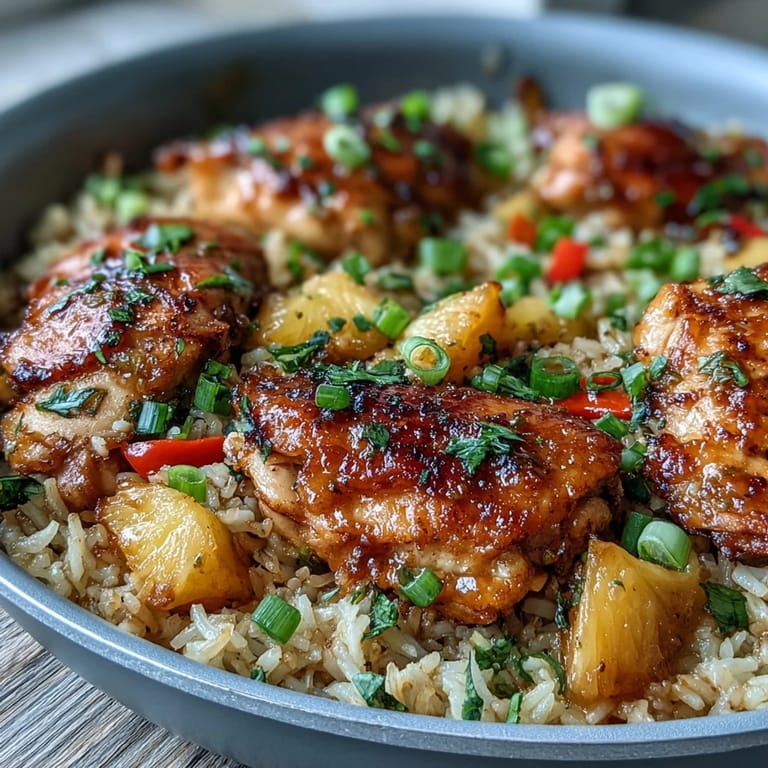
 One summer afternoon, my neighbor showed up with a basket of fresh pineapples from their garden, and I had exactly one hour to figure out what to do with them before dinner guests arrived. I'd never made a one-pan pineapple chicken dish before, but something about the combination of sweet fruit, tender chicken, and the warm spices lingering in my kitchen that day just clicked. That evening, watching everyone go back for seconds while the golden rice absorbed all those savory-sweet juices felt like I'd stumbled onto something special. This became the dish I turn to whenever I want impressive but effortless, when I need something that looks more complicated than it actually is.
I made this for my partner on a Tuesday when they'd had a rough day, and I remember how their shoulders visibly relaxed at the dinner table when they tasted that first bite. There's something about the combination of tender chicken and bright pineapple chunks that just makes people smile, like the sweetness cuts through whatever stress they're carrying. It became our go-to comfort meal—not in a heavy way, but in a way that feels nourishing and unexpectedly joyful.
Ingredients
- Boneless, skinless chicken breast or thighs (1 lb): Thighs are more forgiving if you accidentally overcook them, but breasts give you leaner, cleaner bites; I usually mix both for the best of everything.
- Long-grain white rice (1 cup): Rinsing it first removes the starch, so your grains stay separate and fluffy instead of clumping together like they're glued.
- Red and yellow bell peppers (1 of each): The red ones are sweeter and add a gorgeous color; yellow brings a subtle earthy note that balances the pineapple beautifully.
- Fresh pineapple chunks (1 cup): Fresh tastes brighter and less syrupy than canned, but honestly, canned works in a pinch—just drain it well so you control the liquid.
- Yellow onion and garlic (1 small onion, 2 cloves): These two create the aromatic base that makes the whole skillet smell like something worth looking forward to.
- Low-sodium soy sauce (1/4 cup): Low-sodium lets the other flavors shine instead of making everything taste salty; it's a small swap that changes everything.
- Pineapple juice (1/4 cup): This is the secret weapon—it sweetens and tenderizes the chicken while keeping the sauce balanced and bright.
- Honey or brown sugar (2 tbsp): Honey dissolves more smoothly and adds a subtle floral note, but brown sugar works if that's what you have.
- Rice vinegar (1 tbsp): Just a small amount cuts through the sweetness and adds a gentle tang that keeps the whole dish from feeling cloying.
- Sesame oil (1 tsp): One teaspoon is all you need to add that toasted, nutty aroma that makes people ask what smells so good.
- Chicken broth (2 cups): Low-sodium broth gives you control over the final salt level, which matters more than you'd think.
- Vegetable oil (2 tbsp): For searing the chicken and sautéing vegetables without burning or adding unwanted flavors.
- Cornstarch slurry (1 tbsp cornstarch mixed with 2 tbsp water): Optional, but if you like a thicker sauce that clings to the rice, this does the job elegantly in just a minute or two of cooking.
Tired of Takeout? 🥡
Get 10 meals you can make faster than delivery arrives. Seriously.
One email. No spam. Unsubscribe anytime.
Instructions
- Sear the chicken until it's golden:
- Heat 1 tablespoon of vegetable oil in your skillet over medium-high heat until it shimmers, then add the chicken pieces and let them sit without stirring for about 2 minutes so they get a beautiful caramelized crust. Stir, season with salt and pepper, and cook for another 3 minutes until they're browned on all sides, then transfer to a plate.
- Build the flavor base:
- Pour the remaining oil into the skillet, add your diced onion and garlic, and let them sizzle for about 2 minutes—you'll know they're ready when the kitchen smells absolutely incredible. Toss in your bell pepper strips and let them soften slightly for 3 to 4 minutes, stirring occasionally so they cook evenly.
- Toast the rice and bring everything together:
- Toast the rice and bring everything together:
- Add the rinsed rice to the skillet and stir it constantly for about 1 minute so each grain gets coated in oil and the rice releases a subtle toasted aroma. Return the cooked chicken to the pan.
- Mix the sauce and pour it in:
- In a separate bowl, whisk together the soy sauce, pineapple juice, honey, rice vinegar, sesame oil, and black pepper until the honey dissolves completely, then pour this over the chicken and vegetables.
- Simmer everything until the rice is tender:
- Add the chicken broth and pineapple chunks, bring the whole thing to a boil, then cover the skillet, reduce the heat to low, and let it simmer for 18 to 20 minutes. You'll know it's done when the rice is tender and the liquid has been absorbed, and the kitchen smells like a tropical getaway.
- Thicken the sauce if you'd like:
- If you want a saucier finish, stir in the cornstarch slurry and cook for 1 to 2 minutes, stirring constantly until the sauce coats the back of a spoon in a glossy way. This step is completely optional, but it makes the dish feel extra special.
- Finish with a flourish:
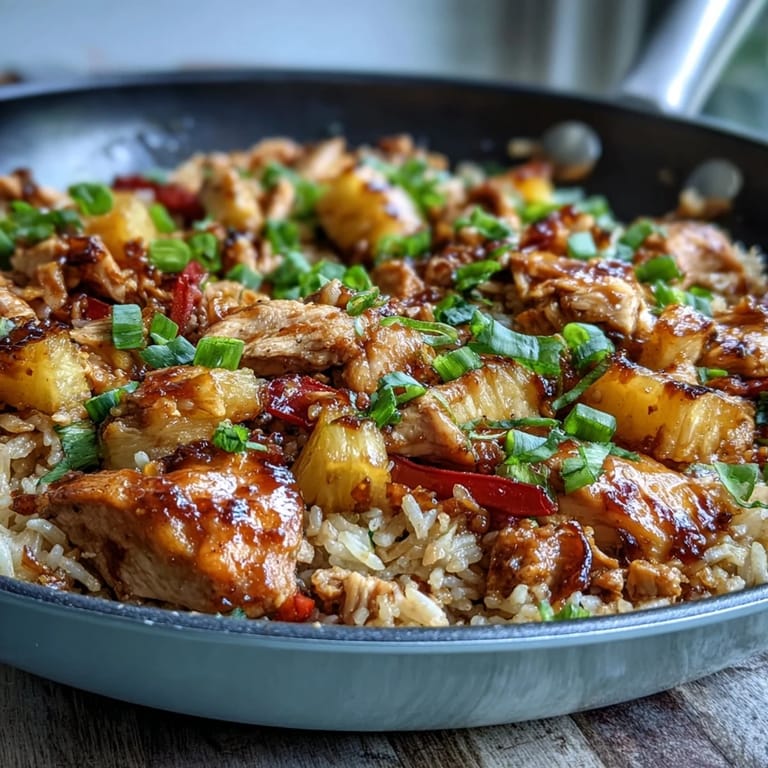
- Remove the skillet from heat, fluff the rice gently with a fork so the grains separate, scatter the sliced green onions over the top, and serve while everything is still steaming hot.
 Save to Pinterest
 I've made this dish at least a dozen times now, and what strikes me most is how it brings people together without demanding anything from them—no complicated techniques, no long ingredient lists, just honest, delicious food that nourishes both body and mood. There's something deeply satisfying about serving a meal where every component actually belongs, where the sweetness and savory notes dance together instead of competing, and where everyone at the table feels genuinely cared for.
When You Want to Play with Heat
If you're someone who likes a little kick in your food, add 1/2 teaspoon of crushed red pepper flakes or a thinly sliced Thai chili to the skillet right when you add the garlic. The heat builds slowly and beautifully, complementing the sweetness instead of overwhelming it, and it's a trick I've used when cooking for guests who appreciate more complexity. Just taste as you go and add gradually—you can always add more heat, but you can't take it out once it's in.
Making It Your Own
This recipe is genuinely flexible because the foundation is strong enough to handle variations without falling apart. I've swapped in brown rice when I wanted something earthier (just add an extra 10 minutes to the simmering time and a splash more broth), tossed in snap peas or broccoli for extra vegetables, and even used coconut broth once when I was out of chicken broth and ended up with something unexpectedly beautiful. The beauty of one-pan meals is that you're the boss—if you have vegetables you want to use up, if you prefer thighs to breasts, if you want to experiment with different vinegars, the dish can accommodate your creativity.
Storage and Reheating Tips
This dish keeps beautifully in the refrigerator for up to 3 days, and I've found that the flavors actually deepen as it sits, so leftovers are sometimes even better than the first night. When you reheat it, add a splash of broth or water and warm gently on the stovetop over medium heat, stirring occasionally, so the rice doesn't dry out and the chicken stays tender.
- Store in an airtight container and let it cool to room temperature before refrigerating.
- Freeze for up to 2 months if you want to make a double batch for future busy nights.
- If reheating from frozen, thaw overnight in the fridge first, then warm gently on the stovetop with a little extra liquid.
 Save to Pinterest
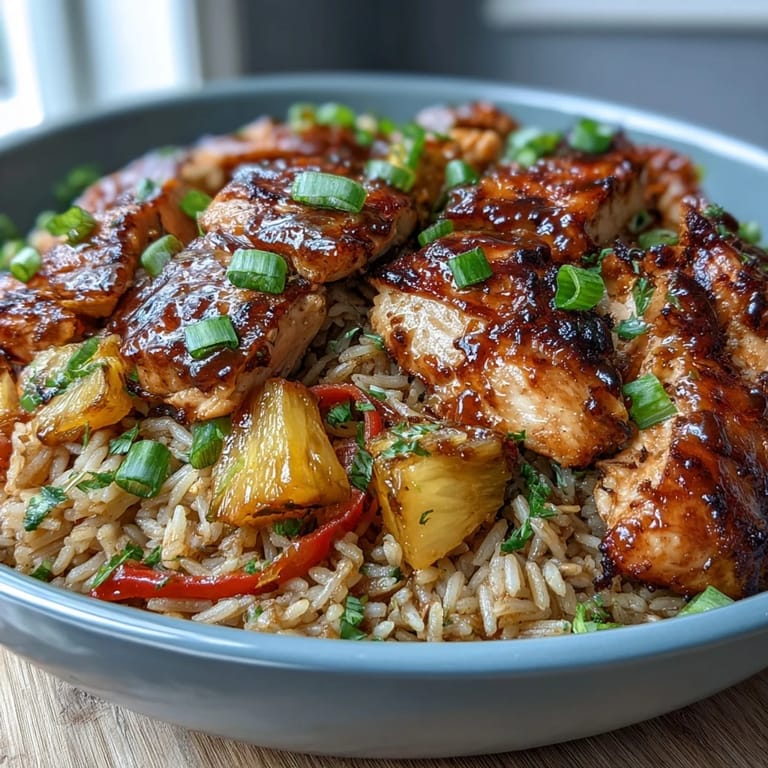
 This is the kind of meal that makes you feel capable in the kitchen even if you're just beginning, and it's impressive enough to serve when you want to show someone you care. Every time I make it, I'm grateful for that summer afternoon when I took a chance and created something that's become part of our regular rotation.
Common Questions
- → Can I use brown rice instead of white rice?
Yes, brown rice can be used, but it requires more liquid and a longer cooking time. Adjust broth quantity and simmer accordingly for tender grains.
- → How do I thicken the sauce?
Mix cornstarch with water to create a slurry and stir it in during the last few minutes of cooking. Allow it to simmer until the sauce thickens.
- → Can I make this dish spicier?
Add crushed red pepper flakes or a sliced chili along with the garlic during sautéing to introduce heat and spice.
- → Is this dish suitable for dairy-free diets?
Yes, the ingredients contain no dairy, making it suitable for those avoiding dairy products.
- → What are good vegetable additions for extra nutrition?
Snap peas, carrots, or broccoli can be added to boost the vegetable variety and nutritional value.
- → What is the best cooking vessel for this dish?
A large skillet or sauté pan with a lid works best to brown the chicken and simmer the rice evenly.