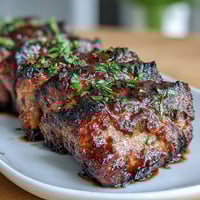
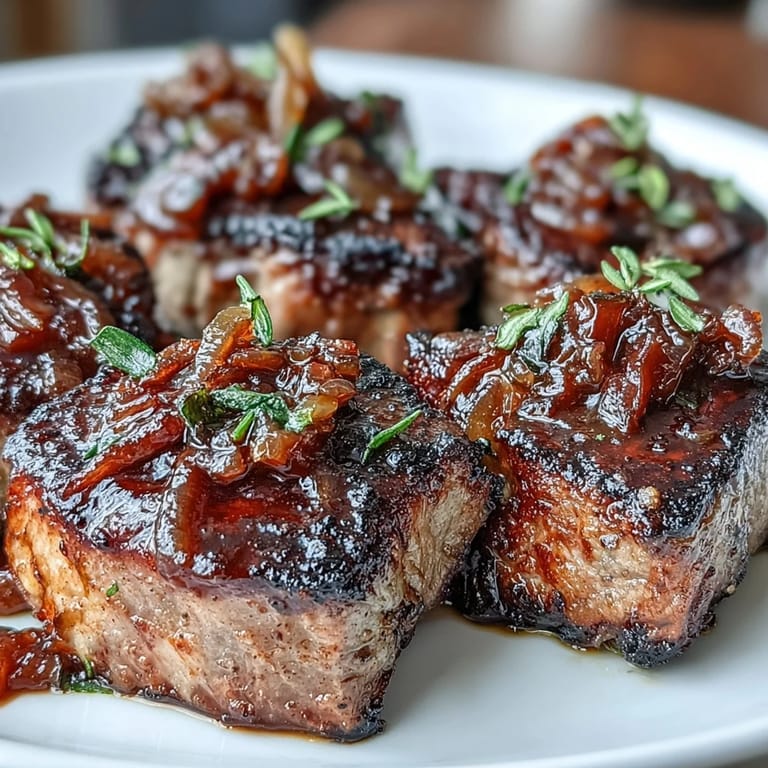
 Save to Pinterest
 There's something about the smell of caramelizing onions that stops me mid-thought every single time. Years ago, my neighbor knocked on my door asking if something was burning, only to find me standing there mesmerized by the golden sweetness filling my kitchen. That's when I learned that patience with onions unlocks something almost magical, and when you pair that with lamb chops seared until they're golden and tender, you've created something restaurant-worthy without the pretense. This dish emerged from that accidental discovery, and it's been a quiet favorite ever since.
I cooked this for my sister's birthday dinner, and watching her eyes light up after that first bite reminded me why cooking for people matters. She actually paused mid-conversation, which if you know her, is basically a standing ovation. That small moment—just her fork meeting the plate and the quiet appreciation—made every minute of the prep worth it.
Ingredients
- Lamb chops (8, about 1-inch thick, trimmed): Look for chops with some marbling but not excessive fat on the edges, which helps them sear beautifully and cook evenly.
- Olive oil (1 tablespoon): Use something you actually like tasting, not the cheapest bottle, because it's the only oil carrying the lamb's flavor to the pan.
- Kosher salt (1 teaspoon) and freshly ground black pepper (1/2 teaspoon): Grinding your pepper fresh makes a real difference here—it tastes brighter and less dusty.
- Unsalted butter (2 tablespoons): This is where the onion jam gets its richness, so don't skip it or substitute it with oil.
- Yellow onions (2 large, thinly sliced): Yellow onions caramelize better than white ones and develop a sweeter, more complex flavor.
- Brown sugar (2 tablespoons): This accelerates caramelization and balances the vinegar's tang in a way white sugar can't quite match.
- Balsamic vinegar (1/4 cup): Buy the real thing if you can—cheap balsamic tastes thin and one-dimensional compared to aged versions.
- Dijon mustard (2 teaspoons): Dijon's creamy texture and mild sharpness keeps the glaze smooth instead of making it taste mustardy and harsh.
- Fresh thyme (1/2 teaspoon) or dried (1/4 teaspoon): Thyme brings an earthy note that makes lamb taste more like itself, so don't leave it out.
Tired of Takeout? 🥡
Get 10 meals you can make faster than delivery arrives. Seriously.
One email. No spam. Unsubscribe anytime.
Instructions
- Dry your chops and season generously:
- Pat the lamb completely dry with paper towels because moisture is the enemy of a good sear. Season both sides with salt and pepper right before the pan goes hot, which means the seasoning stays where it belongs instead of drawing out moisture.
- Sear the lamb until the crust forms:
- Get your oil shimmering in a large skillet over medium-high heat, then lay the chops down and don't move them for 2 to 3 minutes—that's how you build that burnished, golden crust that tastes incredible. Flip once and repeat on the other side, then transfer them to a plate and tent loosely with foil to keep them warm without trapping steam.
- Begin the onion jam by cooking low and slow:
- In the same skillet where the lamb lived, reduce the heat to medium and add butter and your sliced onions. Stir them frequently, letting them soften and turn golden over about 10 to 12 minutes—this is not a race, and rushing this step is the biggest mistake most people make.
- Deepen the color and sweetness:
- Once the onions are soft and golden, stir in the brown sugar and let it cook for another 2 to 3 minutes. You're looking for the onions to take on a deeper amber color and smell almost jammy, which is your signal that the sugars have started to caramelize.
- Build the glaze with vinegar and mustard:
- Pour in the balsamic vinegar, add the Dijon mustard, and scatter the thyme over everything. Simmer for 2 to 3 minutes until the mixture thickens and looks glossy, then taste it and adjust the salt and pepper to your preference—this is your moment to make it taste exactly right to you.
- Reunite the lamb with the glaze:
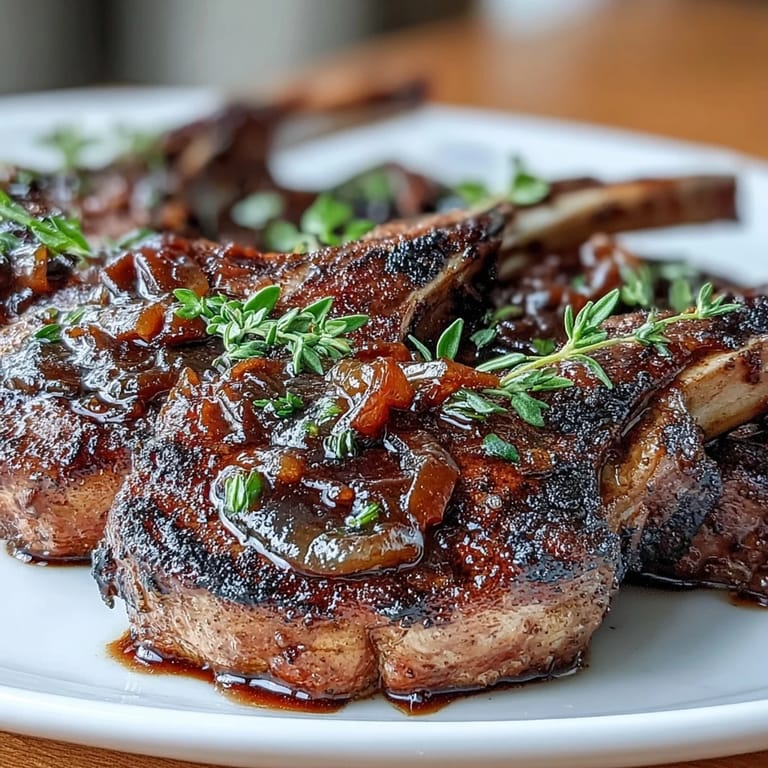
- Return those rested lamb chops to the skillet, nestling them into the onion jam and spooning the glaze over each chop. Cook for 2 to 3 minutes, turning once, just until the lamb is warmed through and glazed with that gorgeous jammy coating.
- Plate and serve immediately:
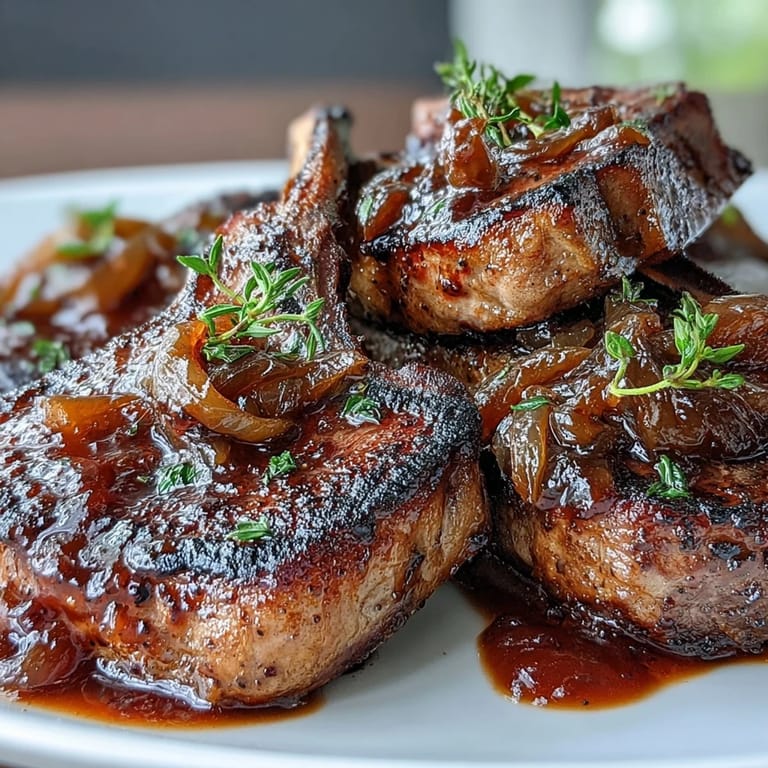
- Transfer the chops to serving plates and spoon extra onion jam over the top of each one, because that jam is the star of this dish and you want plenty of it with every bite.
 Save to Pinterest
 What strikes me most about cooking lamb is how it brings people together in a way that chicken or beef sometimes doesn't—there's an elegance to it that feels both celebratory and comforting at the same time. Serving this to someone and watching them truly enjoy it creates a small moment of connection that lingers longer than the meal itself.
Why Lamb Chops Deserve a Place at Your Table
Lamb chops have this reputation for being intimidating, but honestly, they're some of the easiest proteins to cook if you respect their leanness and their quick cooking time. Once you nail the sear on your first batch, you'll realize that what feels fancy is actually just good technique meeting good ingredients. The flavor is rich and distinctive without being gamey if you source decent meat from a butcher who knows their lamb.
The Magic of Caramelized Onions as a Glaze
I used to think onion jam was something you had to buy from specialty shops, until I realized that caramelized onions with a little vinegar and mustard is basically the same thing, just fresher and tasting like your own kitchen. The balsamic vinegar adds a dark, sweet-tart complexity that makes the glaze feel sophisticated, while the Dijon keeps it from becoming one-dimensional or overly sweet. What transforms it from just caramelized onions into actual jam is the thickening that happens when you let everything simmer together for those last few minutes.
Serving Suggestions and Why They Matter
The richness of lamb with this dark, savory glaze pairs beautifully with something creamy or starchy to balance the intensity. Mashed potatoes are the obvious choice because they give you something to soak up every last bit of that onion jam, while polenta offers a lighter alternative if you're feeling less indulgent. Roasted vegetables work too, especially if you roast them in the same oven as your lamb, pulling them out with crispy, caramelized edges that echo the same flavors happening in your skillet.
- Creamy mashed potatoes are the classic pairing because they literally ask for this glaze.
- A simple arugula salad with lemon dressing adds brightness that cuts through the richness beautifully.
- Consider roasting root vegetables tossed in olive oil and thyme in the oven while your lamb cooks, so everything finishes at the same time.
 Save to Pinterest
 This dish reminds me that cooking doesn't have to be complicated to feel special, and that sometimes the best meals come from patient attention to simple things. Serve it with confidence, knowing that you're creating something genuinely delicious.
Common Questions
- → How do I get the lamb chops tender?
Pat them dry before cooking and sear each side on medium-high heat to lock in juices and ensure tenderness.
- → What’s the purpose of the caramelized onion jam?
The jam adds a sweet and tangy glaze that complements the rich, savory flavor of the lamb chops.
- → Can I prepare the onion jam in advance?
Yes, the onion jam can be made ahead and gently reheated before glazing the lamb chops.
- → What herbs work best with this dish?
Fresh thyme is ideal as it provides a subtle, earthy aroma that enhances the glaze and lamb.
- → What sides pair well with this glazed lamb?
Mashed potatoes, polenta, or roasted vegetables complement the rich flavors wonderfully.
- → Is there a way to add more depth to the glaze?
Try marinating the lamb with olive oil, garlic, and rosemary before cooking to boost flavor complexity.