 Save to Pinterest
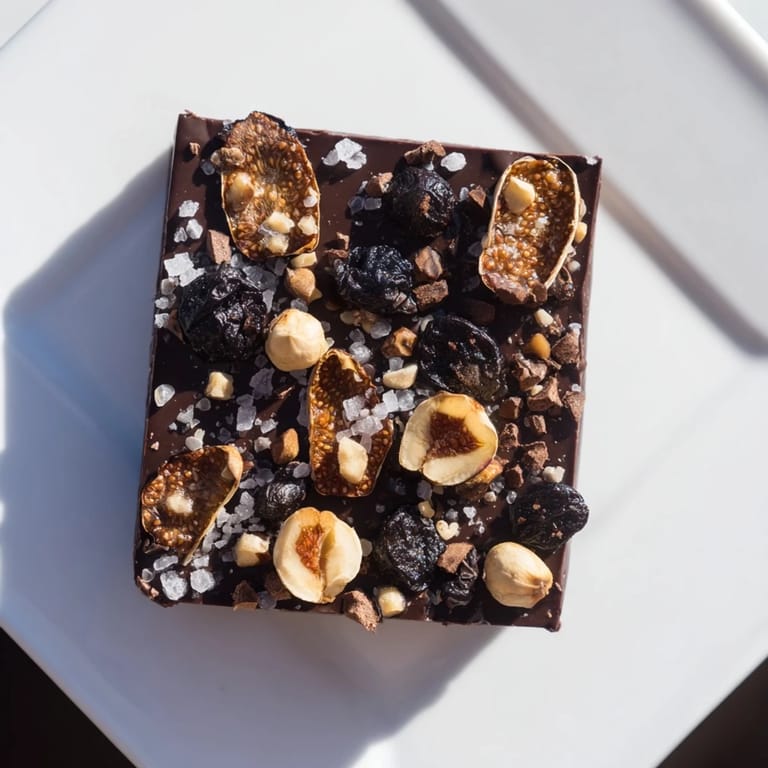
 I discovered this combination entirely by accident one midnight while restocking my pantry—a jar of oil-cured olives caught my eye next to dried figs I'd been saving, and the idea struck me so suddenly that I had to make it that very night. The result was this glossy, jewel-like slab that looked almost too bold to eat, but tasted like someone had finally given chocolate permission to be mysterious. It's become my favorite thing to pull out when conversation needs a little spark.
A friend visited on a chilly November evening, skeptical about the whole concept, and after one bite she went quiet in that particular way that means everything. She ended up taking half the slab home wrapped in foil, and texted me three days later asking if I could teach her—not just how to make it, but why it works. That's when I knew this wasn't just a dessert; it was something that shifted how people think about flavor.
Ingredients
- Dark chocolate (200 g, 70% cocoa), chopped: The higher cocoa percentage keeps this from becoming saccharine; it's the backbone that lets everything else shine.
- Unsalted butter (60 g, cubed): This emulsifies the chocolate and adds silkiness—use real butter, not coconut oil, if you want that genuine, luxurious feel.
- Honey (1 tbsp): A touch of honey adds depth and prevents the chocolate from tasting harsh; you'll notice the difference after chilling.
- Sea salt (pinch): Don't skip this—it amplifies every other flavor in ways that feel almost magical.
- Dried figs (120 g), stems removed, finely sliced: Look for figs that are supple, not hard; they should bend without cracking or they'll be unpleasant to bite through in the finished slab.
- Pitted black olives (80 g, oil-cured), thinly sliced: Oil-cured olives are essential here—they're meaty and complex, not the briny supermarket kind.
- Roasted hazelnuts (50 g), chopped: Roasting brings out nuttiness; if you buy them already roasted, you're already halfway there.
- Cocoa nibs (30 g): These add texture and reinforce the chocolate note without adding more sugar.
- Flaky sea salt and edible gold leaf or dried rose petals (optional garnish): The salt is practical; the gold or petals are pure theater, and sometimes dessert deserves a little drama.
Tired of Takeout? 🥡
Get 10 meals you can make faster than delivery arrives. Seriously.
One email. No spam. Unsubscribe anytime.
Instructions
- Prepare your canvas:
- Line that 8x8 square tin with parchment, leaving enough overhang on two sides so you can lift the whole thing out later—this is your exit strategy, and it saves you from frantically trying to scrape chocolate off metal.
- Melt with intention:
- Set your heatproof bowl over barely simmering water—not boiling, because chocolate scalded over direct heat becomes grainy and bitter. Stir until the chocolate and butter surrender into a silky pool, then add honey and salt, which bloom into the mixture and deepen everything.
- Pour and smooth:
- The melted chocolate should be warm but not hot when it hits the tin; pour it out and use your spatula to create an even layer, working quickly but not frantically because chocolate forgives a few imperfections.
- Build the mosaic:
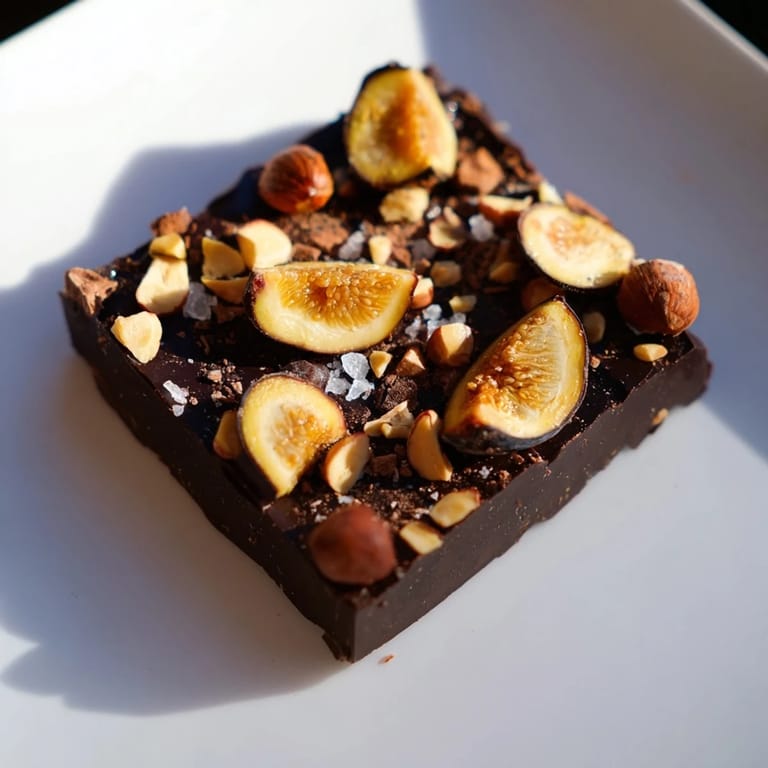
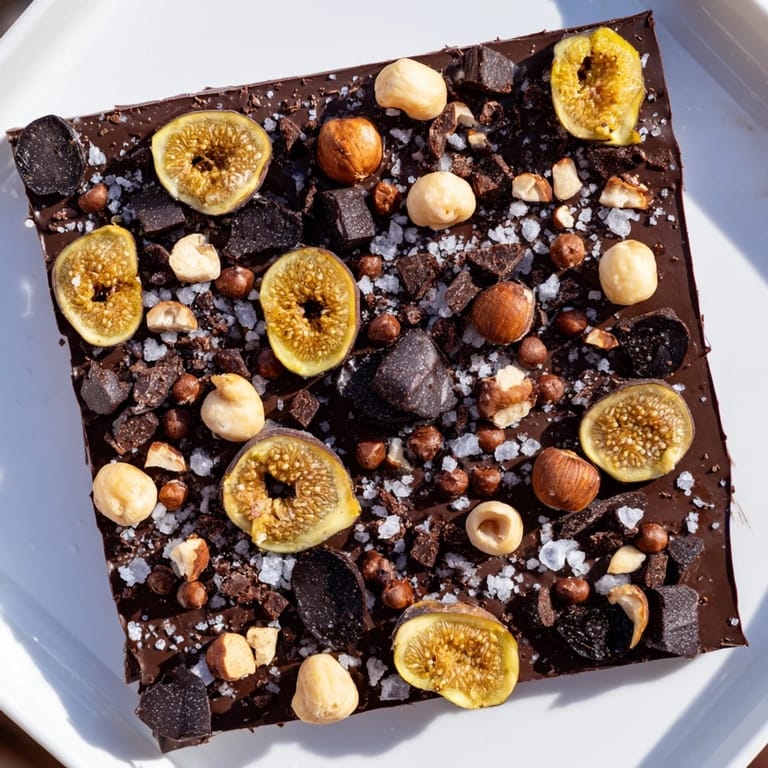
- Scatter your figs, olives, hazelnuts, and cocoa nibs across the surface, then press them gently down with your fingertips so they sink just enough to stay put. This is meditative work—think of it as arranging something that looks as good as it tastes.
- Top with intention:
- A pinch of flaky sea salt and your optional garnish transforms this from dessert into art; if you're using them, this is where they do their best work.
- Wait with patience:
- Two hours in the refrigerator sets everything firmly; you can check on it after ninety minutes, but don't rush it because a partially set slab will crumble when you cut it.
- Slice and serve:
- Use a sharp knife warmed under hot water between cuts—the heat helps the blade glide through without dragging the toppings. Serve chilled if you want crisp chocolate, or at room temperature if you want it to melt luxuriously on your tongue.
 Save to Pinterest
 What surprised me most was how this dessert became a conversation about risk and tradition, about what chocolate is allowed to be. A traditionally trained pastry chef tasted it and admitted she'd never considered olives in chocolate, and then couldn't stop thinking about why that was. It's rare when something small changes how people approach cooking.
The Math Behind the Mystery
Every flavor here plays a specific role: the dark chocolate provides bitterness and richness, the honey softens that bitterness with a floral note, the salt amplifies everything else, the figs add sweetness and chewiness, and the olives—the olives contribute a briny umami that makes your brain pause and recalibrate. Together, they create a flavor profile that shouldn't work but does, the way some unlikely friendships just click. This is less about following a recipe and more about understanding that contrasts in dessert can feel as sophisticated as they do in a fine dining course.
Storage and Keeping
Keep this wrapped tightly in the refrigerator for up to five days; the chocolate will stay set, and the flavors will actually deepen slightly as they meld. You can freeze it for a month if you're the planning-ahead type, though there's something about serving it fresh that feels right. Let it rest at room temperature for ten minutes before serving if you've kept it cold—that brief warmup releases the aromas and makes each bite taste fuller.
Beyond the Recipe
This is a dessert that rewards customization while keeping its soul intact. The hazelnuts can become almonds or pistachios, the figs can share space with dried apricots or cherries, and you can scale it up in a rectangular tin if you're feeding a crowd. I've made versions with white chocolate for friends who find dark chocolate too intense, and I've omitted the olives for traditionalists—but I always encourage people to try it as written first, because that's where the magic lives.
- If you find the olives too strong, use half the amount—you can always add more complexity next time.
- Cocoa nibs can be swapped for crushed freeze-dried raspberries if you want brightness instead of depth.
- This pairs beautifully with cold milk, hot espresso, or that glass of port mentioned in the original notes—don't skip the pairing suggestions because dessert tastes different depending on what you drink alongside it.
 Save to Pinterest
 This dessert taught me that the best recipes aren't the ones that follow tradition perfectly—they're the ones that trust you enough to break it. Make it exactly as written first, then make it yours.
Common Questions
- → How do I achieve a dense mosaic topping?
Evenly scatter sliced figs, olives, chopped hazelnuts, and cocoa nibs over the melted chocolate, pressing gently to eliminate gaps and create a seamless layer.
- → Can I make vegan substitutions for this dessert?
Yes, replace butter with plant-based alternatives and honey with maple syrup to make a vegan-friendly version without compromising flavor.
- → What is the best way to melt chocolate and butter together?
Melt them in a heatproof bowl set over barely simmering water, stirring until smooth to avoid burning and achieve perfect consistency.
- → How long should the dessert chill before serving?
Allow at least 2 hours in the refrigerator to let the chocolate set properly and the flavors meld together.
- → What garnishes complement the Midnight Mosaic?
Flaky sea salt enhances texture, while edible gold leaf or dried rose petals add an elegant visual touch.