 Save to Pinterest
 My friend arrived at my apartment with zero notice, and I had exactly fifteen minutes to pull together something that didn't scream "I panicked." A heavy slate board I'd picked up at a market in Barcelona sat on my shelf, beautiful and purposeful, and suddenly it all clicked—cold meats, sharp cheeses, straight lines, confidence. The beauty of this platter is that it requires nothing cooked, nothing fussed over, just intentionality and arrangement. What started as improvisation became my signature move for when people drop by expecting something extraordinary.
The first time I served this on that slate, someone actually gasped—not because the food was fancy, but because of how it was presented. There's something about straight lines and clean separation that makes people slow down and pay attention to what they're eating. That moment taught me that hospitality isn't always about cooking; sometimes it's about arrangement and intention.
Ingredients
- Smoked prosciutto: Buy it sliced but not paper-thin; you want enough body that it doesn't tear when you pick it up.
- Soppressata: The peppery bite cuts through the richness of cheese, so don't skip it thinking it's redundant.
- Coppa: Fattier than most cured meats, which means it's unforgettable—even people who don't think they like charcuterie will reach for it again.
- Mortadella: Its subtle spicing and silky texture add variety that keeps the palate engaged.
- Aged cheddar, sliced: Sharp is non-negotiable; mild cheddar will disappear next to everything else on the board.
- Manchego, sliced: Slightly nutty and firm, it contrasts beautifully with blue cheese's intensity.
- Gruyère, sliced: Adds a sophisticated earthiness that rounds out the flavor story.
- Blue cheese, sliced or crumbled: The wild card that makes people remember this board; don't hold back on the boldness.
- Seedless red grapes: Their sweetness and juiciness are the palate cleanser that makes you want another bite of everything else.
- Cornichons: Small, briny, and crunchy—they add textural contrast that stops the board from feeling one-dimensional.
- Whole grain mustard: The seeds catch between your teeth pleasantly, and the flavor complements every meat and cheese without overwhelming.
- Mixed olives: Use both varieties for visual and flavor contrast; they anchor the board with umami.
- Freshly cracked black pepper: The crack matters; it releases more aroma and looks intentional, not lazy.
Tired of Takeout? 🥡
Get 10 meals you can make faster than delivery arrives. Seriously.
One email. No spam. Unsubscribe anytime.
Instructions
- Set your stage:
- Place the slate board in front of you and take a breath. This isn't rushed; precision makes the magic.
- Line up the meats:
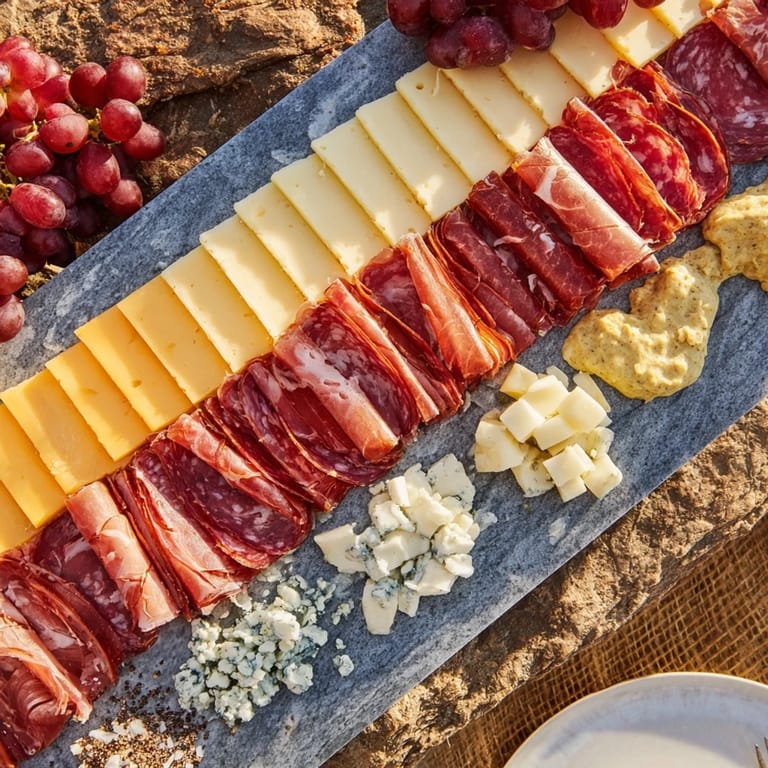
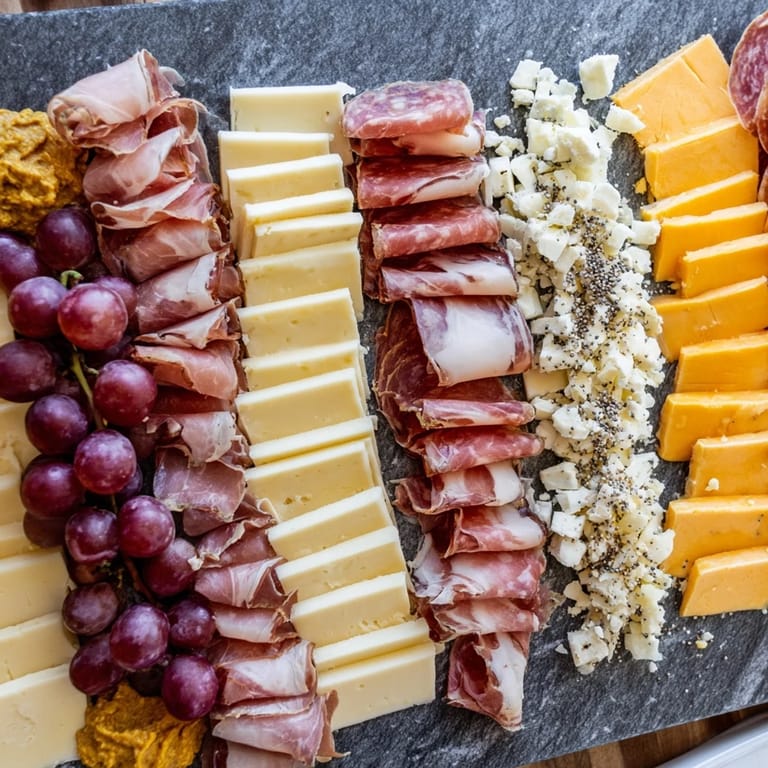
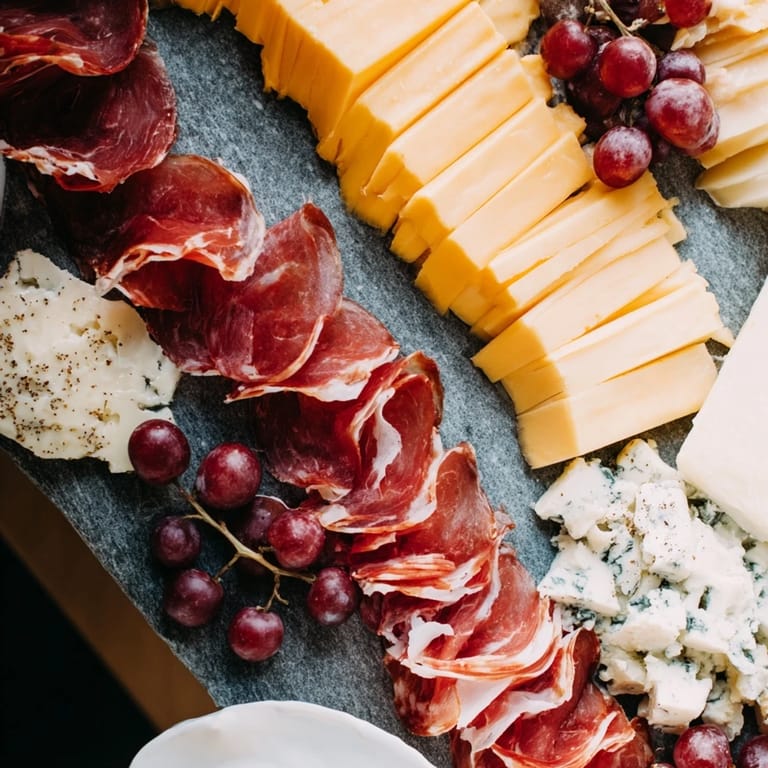
- Arrange each cured meat variety in its own straight line, creating a visual rhythm. Leave even spacing between types so each one reads as distinct.
- Echo with the cheeses:
- On the opposite side, repeat the line approach with your sliced cheeses. The parallel arrangement creates that industrial calm you're after.
- Fill the architecture:
- Nestle grapes, cornichons, and olives in the gaps. These aren't decoration; they're strategic breaks that reset your palate between bites.
- Add mustard moments:
- Dollop mustard in small neat lines or in a corner dish. This is where precision becomes generosity—you're giving people permission to combine flavors however they want.
- Finish with pepper:
- A light scatter of cracked black pepper over the meats and cheese adds aroma and final visual polish. Don't overdo it; you're suggesting, not smothering.
- Serve with presence:
- Place it on the table and let people approach it like the experience it is. Step back and let the arrangement do the talking.
 Save to Pinterest
 A guest once told me this board made them taste flavors they'd walked past a hundred times before. That's when I realized the arrangement wasn't about being fancy—it was about making each ingredient worth noticing.
The Power of Precision
Straight lines are more than aesthetic; they create visual breathing room that makes tasting intentional instead of random. When meats and cheeses are jumbled, your eye doesn't know where to go next, so you grab whatever's closest. Lines create decision-making moments that transform eating into an experience. Your guests will slow down, notice textures and flavors they usually rush through, and ask for the recipe thinking you've done something technical when really you've just been thoughtful.
Wine Pairing Strategy
A crisp Sauvignon Blanc cuts through the richness of mortadella and blue cheese without pretension, while a bold Cabernet holds its own against aged cheddar's intensity. The beauty is that this board doesn't demand a specific wine—it invites people to discover what works for their palate. I've learned that the conversation around pairing matters more than getting it "right," so offer both options and let people play.
Building Your Board Like an Edit
Think of yourself as an editor curating what deserves attention. Every item on the slate is there for a reason, which means buying fewer things at higher quality beats loading up on mediocre options. A small, excellent board stops people from grazing mindlessly and instead invites them to savor. Less is always more, but only when what you choose is worth choosing.
- Buy ingredients the morning of serving for maximum freshness and flavor impact.
- If you can't find true Manchego or Gruyère, ask your cheesemonger what else they'd pair with sharp cheddar; they'll guide you to something equally excellent.
- Leftover slate from your kitchen remodel or a flea market find adds character; a pristine new board works too, but the imperfect ones tell a story.
 Save to Pinterest
 This board taught me that sometimes the most generous thing you can do for people is give them permission to taste slowly. Serve it with intention, and let the arrangement speak for itself.