 Save to Pinterest
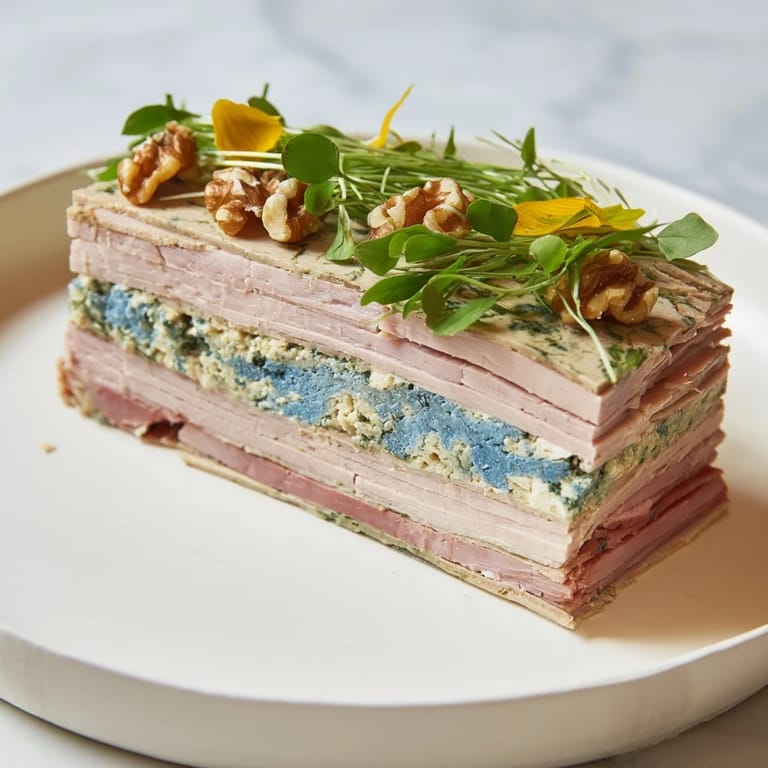
 A few years ago, I visited the Grand Canyon during a particularly gray November, and the moment the sun hit those rust-red cliffs, I couldn't think about anything else for weeks. That visual stayed with me so vividly that when I was planning a dinner for some adventurous friends, I wanted to create something that captured that same sense of geological drama and natural beauty. The idea of a layered terrine struck me as the perfect culinary canvas, and when I imagined a vivid blue cheese running through the center like a river cutting through stone, I knew exactly what I wanted to build.
The first time I made this, my kitchen looked like a butcher's shop had exploded—meat slices everywhere, my cutting board completely overwhelmed. But there was something meditative about arranging those thin layers, and when I finally unmolded it and saw the blue cheese river catching the light, my guests went completely silent for a moment. That silence was worth every second of prep work.
Ingredients
- Beef sirloin, thinly sliced (300g): This forms your deepest canyon layer and provides a rich, earthy base that anchors the whole composition.
- Turkey breast, thinly sliced (250g): The lighter color creates visual contrast and adds a subtle delicacy that prevents the terrine from feeling too heavy.
- Smoked ham, thinly sliced (200g): The smokiness cuts through richness and adds a dimension that makes people taste it and think about what that flavor is.
- Pork loin, thinly sliced (200g): This brings a gentle sweetness that rounds out the savory medley of meats.
- Blue cheese, crumbled (150g): This is your literal river, so don't skip it or substitute with something mild unless you're prepared for a totally different dish.
- Cream cheese, softened (100g): This is what makes the blue cheese mixture silky enough to pipe smoothly without breaking apart during the layering.
- Heavy cream (30ml for mousse, 60ml for binding): The cream cream in the mousse makes it luxurious; the cream in the binding layer helps everything set into a cohesive whole.
- Fresh chives and parsley (1 tbsp each): Fresh herbs keep the river mixture from tasting one-dimensional and add tiny flecks of color that catch the eye.
- Eggs (4 large): These are your invisible glue, binding the meat layers together so the terrine doesn't fall apart when you slice it.
- Whole milk (120ml): This dilutes the egg mixture just enough so it flows into the spaces between meat layers without making them rubbery.
- Salt and pepper: Season generously because once everything's layered, you can't taste as you go.
Tired of Takeout? 🥡
Get 10 meals you can make faster than delivery arrives. Seriously.
One email. No spam. Unsubscribe anytime.
Instructions
- Set up your stage:
- Preheat your oven to 160°C and line your loaf pan with plastic wrap, leaving plenty hanging over the sides so you can seal it later. This prevents the edges from drying out and makes unmolding infinitely easier.
- Make the binding mixture:
- Whisk together eggs, milk, heavy cream, salt, and pepper in a bowl until completely smooth. This is going to be your edible cement, so don't skip whisking it thoroughly.
- Prepare the blue cheese river:
- In a separate bowl, blend crumbled blue cheese, softened cream cheese, heavy cream, chives, parsley, and pepper until you have a smooth, spoonable mousse. Taste it and adjust seasoning if needed.
- Begin the first cliff face:
- Starting at one long side of the pan, arrange thin beef slices overlapping slightly like roof shingles, creating a slope down toward the center. Think of this as the canyon's eastern wall.
- Layer your geological story:
- Add overlapping layers of turkey, ham, and pork, each slanting the same direction to maintain that cliff effect. After every 2-3 meat layers, lightly brush on some of the binding mixture to help everything stick.
- Carve your river:
- Once you're about halfway up the pan, spoon the blue cheese mousse down the center in a thick river, then continue layering meats around it and over it, keeping that sloped canyon wall aesthetic.
- Finish and seal:
- Top with a final layer of meat, fold the plastic wrap over to seal everything in, then cover the whole pan tightly with foil to prevent any moisture loss during cooking.
- Water bath and bake:
- Place the loaf pan inside a larger roasting dish and fill the roasting dish with hot water until it comes halfway up the sides of the loaf pan. This gentle heat keeps the terrine creamy inside instead of rubbery. Bake for 1 hour 15 minutes.
- Chill and set:
- Let it cool completely to room temperature, then refrigerate for at least 4 hours, preferably overnight, so the layers firm up and the flavors marry together into something cohesive.
- Reveal your masterpiece:
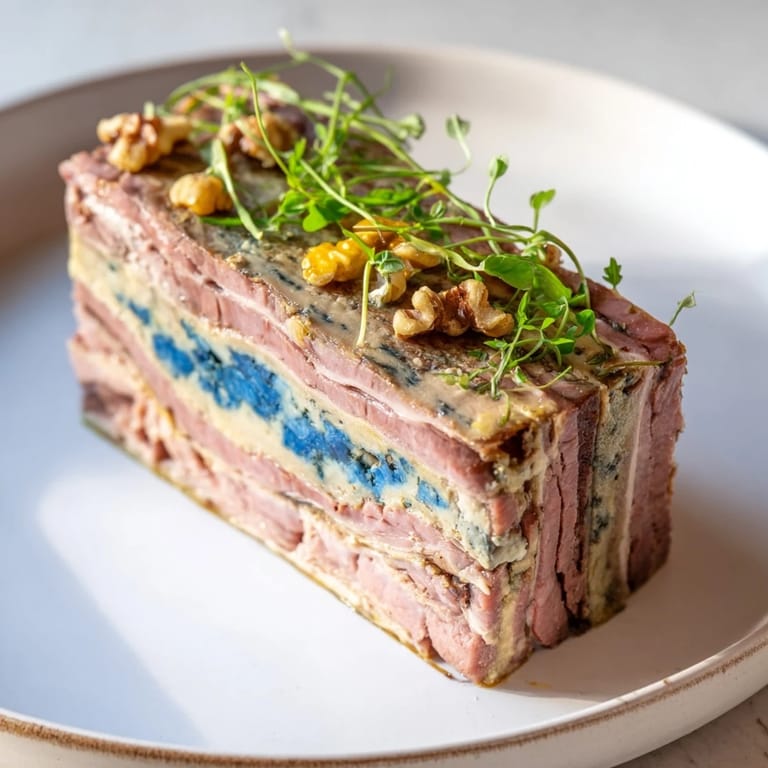
- Carefully unmold onto a serving platter and slice thickly with a sharp, warm knife to reveal your canyon layers and river in all their glory.
 Save to Pinterest
 What struck me most was when someone asked if I'd made this professionally, and I realized that the effort had transformed something conceptual into something real and beautiful enough to make people believe it required professional training. Food does that sometimes—it becomes the container for showing people you care.
Building the Canyon Effect
The key to nailing the visual drama is consistency in how you angle each meat layer. If you start at one long side of the pan and always layer toward the center at the same slope, you'll naturally create that cliff face appearance without overthinking it. Uneven layering creates visual chaos instead of geological authenticity, so take your time here and don't rush.
The Blue Cheese River Moment
Placing the blue cheese mousse is genuinely exciting because it's the moment when your vision shifts from abstract to concrete. Spoon it down the center in a thick, confident line and don't second-guess yourself, because any hesitation will result in a wobbly, broken river instead of a clean geological feature. I've learned that the confidence matters as much as the precision here.
Serving and Pairing Suggestions
Slice this thickly with a knife warmed under hot water between each cut so the layers don't tear or crumble. Serve it with toasted brioche or crusty bread on the side, and a fresh salad to cut through the richness. I always think of the wine pairing as part of the plating—a light red wine or crisp white will elevate the whole experience.
- Warm your knife between cuts to keep slices clean and intact.
- A light Pinot Noir or Sauvignon Blanc complements the blue cheese beautifully.
- Prep the garnishes just before serving so they don't wilt or lose their color.
 Save to Pinterest
 Making this dish is less about following instructions perfectly and more about trusting the process and your own eye for what looks right. It's a terroir of your kitchen, your hands, and the people you're cooking for all at once.
Common Questions
- → What is the purpose of the blue cheese mousse in the terrine?
The blue cheese mousse adds a creamy, tangy contrast that flows through the layers, enhancing flavor and visual appeal.
- → How should the terrine be cooked for best results?
It is baked slowly in a bain-marie (water bath) to ensure gentle, even cooking and to keep the texture tender.
- → Can the meat layers be substituted for other types?
Yes, smoked duck or prosciutto can replace some meats for a smoky or delicate taste variation.
- → How long should the terrine chill before serving?
A minimum of 4 hours chilling is required to allow the layers to set firmly and flavors to develop.
- → What garnishes complement this layered meat dish?
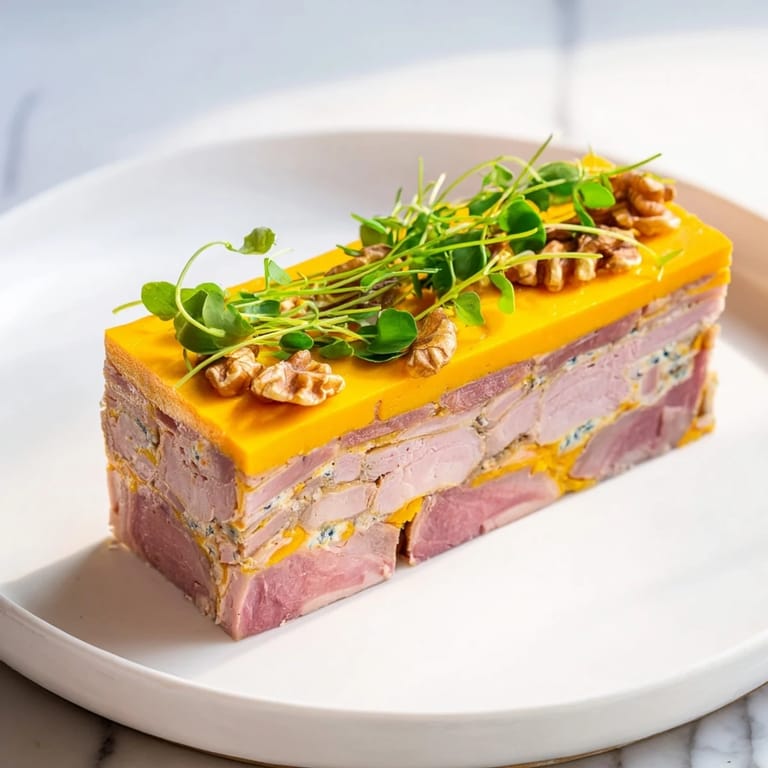
Microgreens, edible flowers, and toasted walnuts add texture and elevate the presentation beautifully.
- → What side dishes pair well with this creation?
Toasted brioche or crusty bread and a light salad balance the richness of the meat layers nicely.