 Save to Pinterest
 My kitchen smelled like toasted chocolate one Tuesday morning when I decided to stop buying those expensive protein bagels from the coffee shop. I'd been curious whether I could actually make something chewy and substantial without yeast or hours of waiting, and the answer turned out to be sitting in my fridge the whole time—Greek yogurt. That first batch came out warm and slightly lopsided, but my roommate ate two before they'd cooled, and I knew I'd stumbled onto something worth perfecting.
I brought these to a Sunday morning gathering at a friend's place, nervous they'd seem too "fitness-y" compared to the regular bagels on the spread. Someone asked for the recipe before I'd even explained what they were, and by the end of the day, I had three people asking if I could mail them frozen ones. That's when I realized this recipe had crossed over from being just my breakfast hack into something people genuinely craved.
Ingredients
- White whole wheat flour (2 cups): It's lighter and milder than regular whole wheat, giving you the nutrition without that heavy, dense texture that can make homemade bagels feel gummy.
- Vanilla or unflavored protein powder (1 scoop): This is what transforms a simple yogurt dough into something with real staying power—it also tightens the crumb structure so your bagel stays chewy rather than crumbly.
- Granulated sweetener (2 tbsp): Coconut sugar adds a subtle warmth, but erythritol keeps things lighter if you're watching your carbs; either way, this small amount just balances the tanginess of the yogurt.
- Baking powder (1½ tsp) and salt (½ tsp): The baking powder creates lift without fermentation, while salt wakes up all the chocolate flavor hiding in the background.
- Plain Greek yogurt (1 cup): Non-fat or full-fat both work, though full-fat gives you a marginally softer crumb—this yogurt is the secret to moisture and protein all in one ingredient.
- Vanilla extract (1 tsp): A small addition that keeps the bagels from tasting one-dimensional, bridging the gap between sweet and savory.
- Mini chocolate chips (½ cup): They distribute evenly and don't sink to the bottom like regular chips would; dairy-free versions melt just as nicely if you need them.
- Water for boiling (6 cups) with optional honey or maple syrup: The boiling step creates that bagel-specific chewiness on the outside, and the syrup (if added) gives a subtle shine and slight caramelization.
- Beaten egg for egg wash: Optional, but worth doing—it takes them from homemade-looking to bakery-quality in appearance.
Tired of Takeout? 🥡
Get 10 meals you can make faster than delivery arrives. Seriously.
One email. No spam. Unsubscribe anytime.
Instructions
- Get your oven ready:
- Preheat to 375°F and line your baking sheet with parchment paper so nothing sticks and cleanup is effortless later.
- Mix your dry team:
- Whisk flour, protein powder, sweetener, baking powder, and salt in a large bowl until there are no streaks of protein powder left—lumpy powder will create little bitter pockets in your finished bagels.
- Bring the wet ingredients together:
- Add Greek yogurt and vanilla extract, stirring until a sticky dough forms that pulls away from the sides of the bowl. It'll feel wetter than bread dough, which is exactly right.
- Fold in the chocolate:
- Gently work the chocolate chips through the dough with a spatula or your hands until they're distributed evenly so every bite has a little chocolate surprise.
- Knead your dough smooth:
- On a lightly floured surface, knead for 2 to 3 minutes until the dough becomes elastic and cohesive rather than shaggy. You'll feel it tighten up under your hands.
- Shape into bagels:
- Divide into 6 portions, roll each into a ball, then push your thumb through the center and gently stretch to form that classic bagel hole—make the hole slightly larger than you think it should be since it shrinks during boiling.
- Boil gently:
- Bring water to a gentle boil and add honey or maple syrup if you'd like extra shine. Working 2 or 3 at a time, boil each bagel for 45 seconds per side—this creates the chewy exterior that's the hallmark of a real bagel.
- Egg wash if you're going fancy:
- Brush with beaten egg right after boiling for a glossy, professional-looking finish.
- Bake until golden:
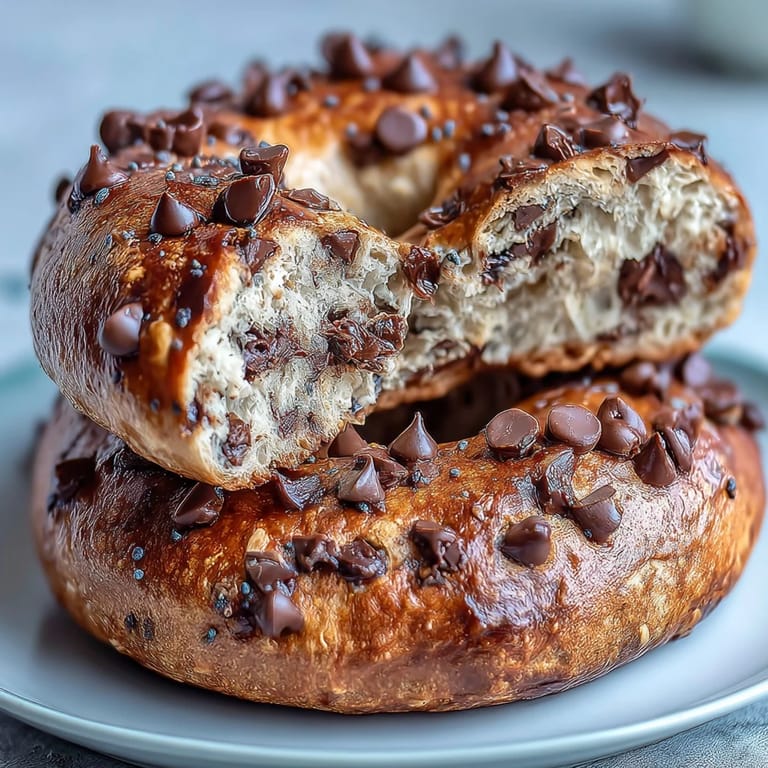
- Bake for 20 to 25 minutes, watching for that golden-brown moment around the 22-minute mark. They'll firm up considerably as they cool, so don't overbake thinking they're still soft.
 Save to Pinterest
 There was a morning when I made a double batch and forgot to boil them, just threw them straight in the oven thinking I could skip a step. My partner took one bite and said, "Why are these so heavy?" and that's when I remembered that the boiling step isn't just tradition—it's chemistry. The next batch, boiled properly, tasted completely different.
Storage and Make-Ahead Magic
These bagels are genuinely meal-prep friendly, which is rare for homemade versions. I've kept them in an airtight container for up to four days and they've stayed chewy, or frozen them for two months and thawed one whenever I wanted breakfast without thinking. The protein keeps them satisfying even after a day in the container, so they're not one of those recipes that tastes best the exact hour you make it.
Customizing Your Version
The baseline recipe is flexible enough that you can adjust it for your preferences without totally derailing the result. A pinch of cinnamon wakes up the chocolate, or you could swap the vanilla extract for almond for a slightly nuttier take. If you're feeding someone who's vegan, dairy-free yogurt works beautifully, and the chocolate chips market has finally caught up to that need.
Serving Suggestions and Final Thoughts
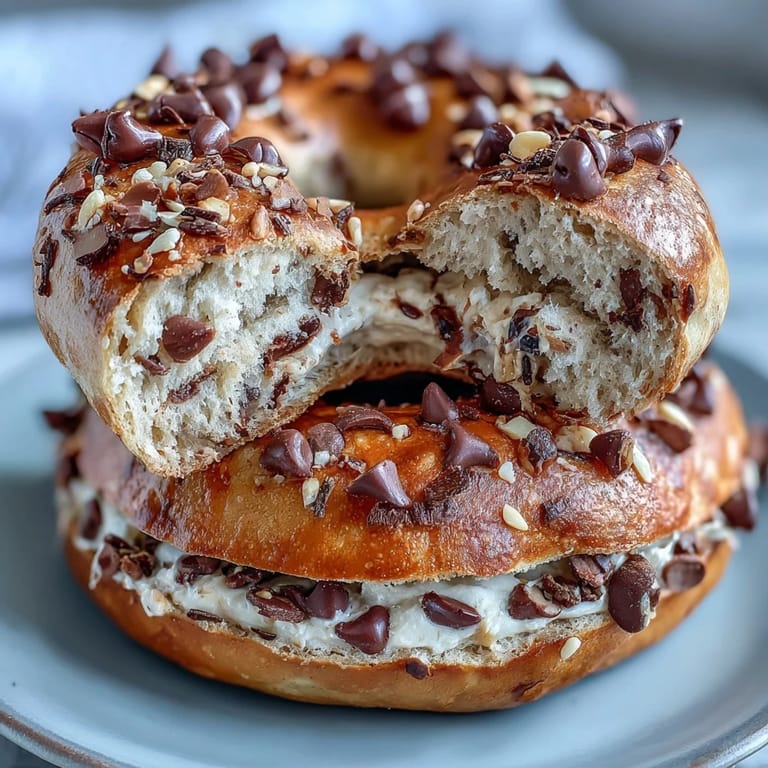
Toast them if you want textural contrast, spread nut butter across the warm crumb for richness, or go the cream cheese route if you're leaning into the bagel fantasy. The best time to eat one is when it's still warm from cooling, sliced in half while the inside is slightly yielding and the chocolate is still soft.
- Try toasting them with a thin spread of almond butter and a drizzle of honey for a quick energy boost.
- They pair unexpectedly well with savory toppings like avocado or smoked salmon if you want to blur the breakfast-lunch line.
- Keep frozen bagels in your freezer so you always have a protein-packed breakfast option that takes five minutes to prepare.
 Save to Pinterest
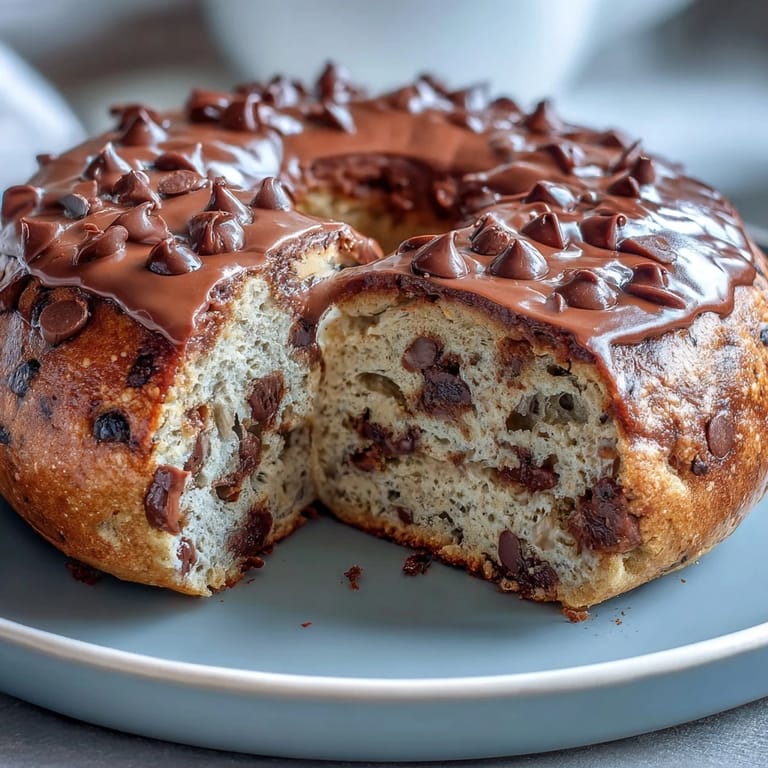
 These bagels proved to me that high-protein eating doesn't mean sacrificing texture or satisfaction. They've become a staple in my kitchen, and now they're ready to become one in yours too.
Common Questions
- → How do chocolate chips affect the bagel texture?
Chocolate chips add pockets of sweetness and a slight melty texture that contrasts nicely with the chewy bagel crumb.
- → Can I use dairy-free alternatives in the dough?
Yes, substituting dairy-free yogurt and dairy-free chocolate chips makes the bagels suitable for vegan and dairy-sensitive diets.
- → Why is boiling the bagels important?
Boiling creates a chewy crust and helps the bagels hold their shape before baking, enhancing texture and appearance.
- → What sweeteners work best in this dough?
Granulated sweeteners like coconut sugar or erythritol complement the bagels without overpowering, balancing flavors gently.
- → How should I store these bagels for freshness?
Store in an airtight container at room temperature for up to four days or freeze for longer preservation.