 Save to Pinterest
 I discovered the magic of a Celtic cross platter at a Dublin gallery opening, watching how a simple arrangement of Irish cheddar and creamy Brie could become the centerpiece of conversation. The way guests naturally gathered around it, pointing out treasures they'd found among the cheese and fruit, reminded me that sometimes the most memorable meals aren't about complexity—they're about creating a moment people want to linger in.
My aunt brought a platter like this to our family's midwinter gathering, and I watched my nephew—who usually ate nothing but plain crackers—actually try the Manchego because it was arranged so prettily he couldn't resist. That small moment of curiosity turned into him asking for the recipe, which felt like a small victory for adventurous eating.
Ingredients
- Irish cheddar: Its sharp, slightly nutty edge cuts through the richness of creamier cheeses and reminds everyone that cheddar doesn't have to come from a plastic wrapper.
- Brie: This is your crowd-pleaser, the one that melts on the tongue and makes people feel fancy without trying too hard.
- Blue cheese: A small amount goes a long way, especially when you drizzle honey over it—that sweet-salty contrast is what people will actually remember.
- Manchego: If you can find it, this Spanish sheep's milk cheese adds an unexpected richness that makes the platter feel worldly.
- Sour cream or Greek yogurt: The base for your dip; Greek yogurt keeps things lighter if that's your preference.
- Fresh chives: Don't skip this or substitute with dried—fresh chives bring a whisper of onion that brightens everything.
- Lemon juice: A small squeeze prevents the dip from tasting flat and works as a natural preservative.
- Seedless red grapes: Their sweetness balances the salt of the cheeses, and their jewel-like color is half the appeal.
- Dried apricots: Choose soft ones; they add a subtle tang that keeps the platter from becoming one-note.
- Walnuts: Their slight bitterness is the secret weapon that ties everything together.
- Honey: Drizzled over blue cheese, it becomes something magical—don't be stingy here.
- Rustic crackers: Pick ones with personality; plain saltines do the job, but seeded or olive oil crackers elevate the whole experience.
- Baguette: Slice it thin and let guests toast their own pieces if you want to get fancy, or serve as-is for casual elegance.
Tired of Takeout? 🥡
Get 10 meals you can make faster than delivery arrives. Seriously.
One email. No spam. Unsubscribe anytime.
Instructions
- Build your dip:
- Fold the chives and lemon juice into your sour cream or Greek yogurt, tasting as you go and seasoning gently with salt and pepper. This isn't something you want to oversalt since salty cheese is doing its own thing nearby.
- Center everything:
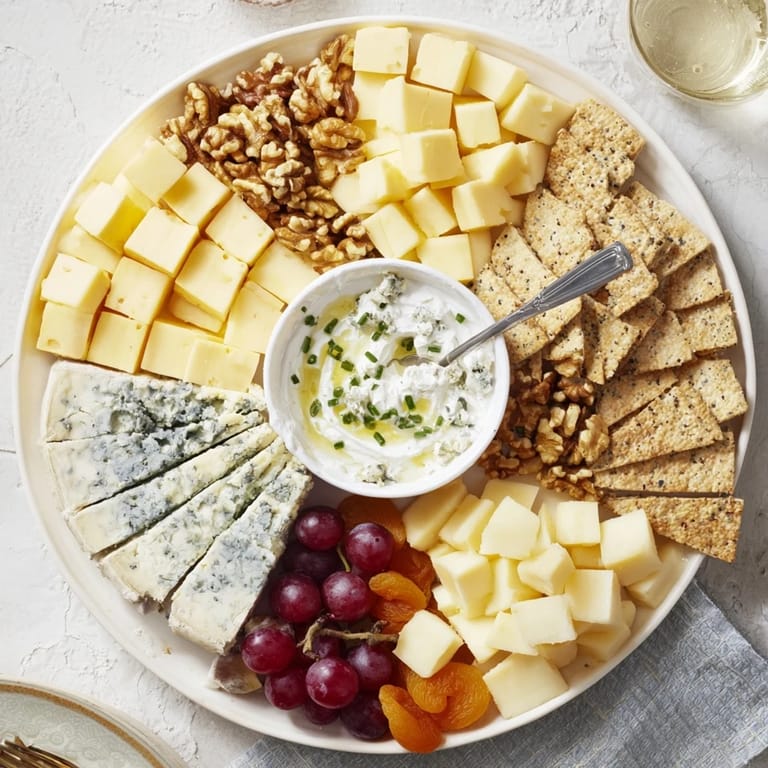
- Pour your dip into a small round bowl and set it smack in the middle of your serving platter, leaving plenty of space around it. This becomes your anchor point—everything else radiates from here.
- Create your quadrants:
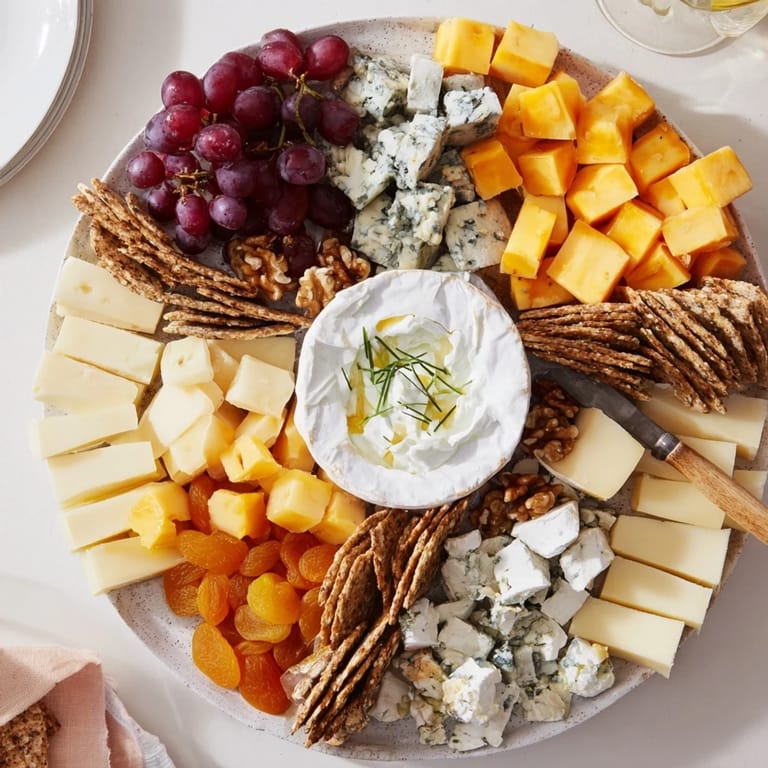
- Imagine the platter divided into four equal sections by invisible lines running through your dip bowl, like a compass. Each quadrant gets one type of cheese, arranged in whatever way appeals to you—fanned slices, casual crumbles, whatever looks generous and inviting.
- Fill the gaps:
- Use grapes, apricots, and walnuts to fill the spaces between your cheese quadrants, varying colors so no two similar ones sit next to each other. This is where you create visual rhythm and make people want to pick something up.
- Crown the blue cheese:
- Drizzle that honey over your blue cheese quadrant in loose spirals or delicate lines, letting some pool in the crevices where the crumbles sit. The honey will glisten under light and draw every eye straight to it.
- Ring it with crackers:
- Arrange your crackers and baguette slices around the outer edge of the platter, creating a frame that also happens to be edible. Leave small gaps so people can easily grab what they need without feeling like they're dismantling your masterpiece.
- Serve at the right moment:
- Let your cheeses sit out for 20 minutes before serving if they came from the fridge; they'll taste infinitely better at room temperature when their flavors actually bloom. Place the platter on a table where people can stand around it comfortably.
 Save to Pinterest
 I once made this platter for a friend who was stressed about hosting her first dinner party, and I watched her shoulders relax when guests started arriving and immediately gravitated toward it. By the end of the night, people were still standing around it, picking through the last crackers and creating tiny flavor combinations, and she realized she hadn't needed to stress about cooking complicated food at all.
The Celtic Cross Meaning
The Celtic cross pattern isn't just decorative—it's a gentle nod to tradition that makes this platter feel intentional rather than random. When you arrange four different cheeses in a cross pattern, you're creating symmetry that feels pleasing to the eye and almost meditative to look at, which is exactly what a good cheese board should do.
Wine Pairing Without Overthinking
A crisp Sauvignon Blanc cuts through the richness of Brie and blue cheese, while a light Pinot Noir works if someone's craving red. The real truth is that any wine your guests like is the right wine, but having these recommendations ready makes you sound like you know what you're doing.
Making It Your Own
This platter is a starting point, not a rulebook—swap in cheeses from your region, use whatever fruit you have on hand, or create your own dip variations by adding roasted garlic or herbs. The moment you stop treating it as a strict recipe and start treating it as a template for your own style, that's when it becomes truly special.
- Try adding sliced apples or pears for autumn gatherings, or fresh figs when they're in season.
- Experiment with different spreads in place of the chive dip, like herbed goat cheese or a sun-dried tomato paste.
- If you want the cross lines to really pop, use dark olives or toasted nuts to visually separate each quadrant.
 Save to Pinterest
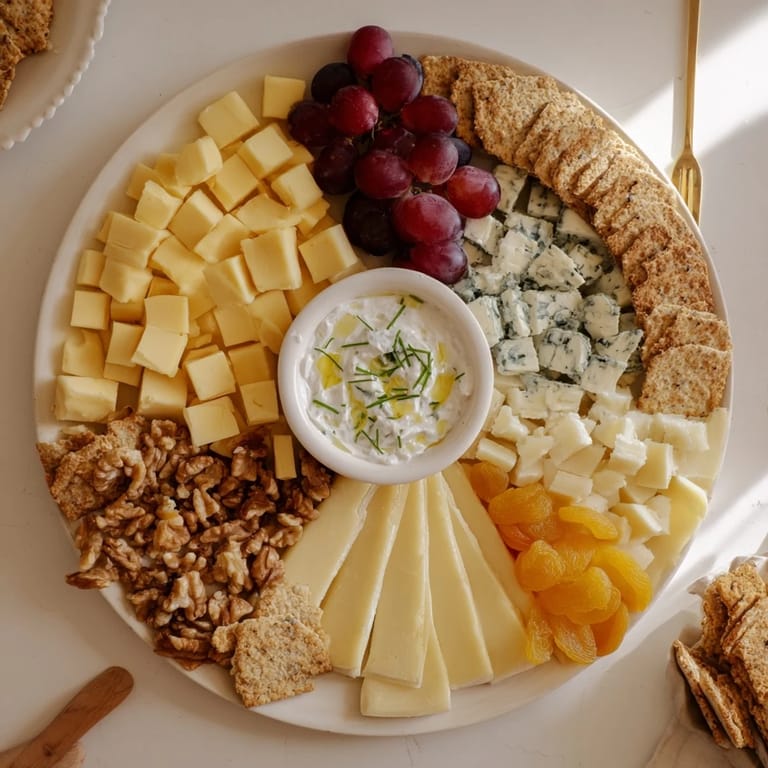
 A cheese platter like this is an excuse to gather people around something beautiful and let good conversation do the real work. Sometimes the best meals aren't about the cooking—they're about creating a space where people slow down and enjoy being together.
Common Questions
- → What cheeses are used in this platter?
Irish cheddar, Brie, Blue cheese, and Manchego are featured, offering a range of textures and flavors.
- → How is the central dip prepared?
The dip combines sour cream or Greek yogurt with fresh chives, lemon juice, salt, and pepper for a tangy complement.
- → What accompaniments enhance the platter?
Seedless red grapes, dried apricots, walnuts, and honey add sweetness and crunch around the cheeses.
- → How should the cheese platter be served?
Serve immediately with cheeses at room temperature for optimal flavor and arrange crackers and baguette slices around the edge.
- → Can I customize the cheese selection?
Yes, substitute with regional favorites or add slices of apple or pear for additional variety and flavor.
- → What beverages pair well with this platter?
Crisp white wines like Sauvignon Blanc or light reds such as Pinot Noir complement the cheese and accompaniments.