 Save to Pinterest
 I'll never forget the afternoon I discovered that the secret to hosting a memorable book club isn't complicated—it's about creating little moments of joy around thoughtfully chosen foods. I was hosting our monthly gathering, feeling slightly panicked about what to serve, when a friend mentioned how certain foods just taste better when paired with wine. That's when it clicked: why not build an entire platter around that idea? I spent an afternoon researching wine pairings and arranging cheeses, fruits, and cured meats into three distinct sections, and watching my friends' faces light up as they moved from one pairing to the next made me realize I'd stumbled onto something special.
The first time I made this for my book club, something unexpected happened. As we discussed our current read, people naturally gravitated toward different sections based on which wine they were drinking, and conversations seemed to flow more easily between the wine and food pairings. One guest even mentioned that she could taste how thoughtfully the platter was organized—and that made her feel cared for. That's when I knew this wasn't just appetizers; it was about creating an experience.
Ingredients
- Triple-cream brie: The foundation of your white wine section—it's rich and buttery in exactly the right way, and slicing it ahead of time (rather than scooping) keeps it looking elegant on the board
- Gruyère cheese: Cubed rather than sliced because the small pieces are easier for guests to grab, and they have just enough crystalline texture to be interesting
- Green grapes: These add brightness and a slight tartness that cuts through the richness of the cheeses in the first section—they're your palate cleanser
- Crisp apple: Slice it right before serving and you'll notice how the freshness seems to amplify the wine's flavors; this is more about chemistry than coincidence
- Marcona almonds: These are buttery and slightly sweet compared to regular almonds—they're the sophisticated choice that makes people pause and say 'these are special'
- Aged cheddar: The sharpness here is intentional; it's what makes the red wine section feel substantial and savory
- Smoked gouda: This adds depth and warmth—when you pair it with Pinot Noir, the smoke in the cheese echoes something beautiful in the wine
- Prosciutto and salami: Thinly sliced means delicate and elegant, not heavy; these are the proteins that anchor the red wine section without overwhelming it
- Cherry tomatoes: Sweet little gems that add color and a refreshing moment between bites of meat and cheese
- Herbed goat cheese: Formed into a small log so it's easy for guests to spread on crackers, and the herbs you see on the outside promise brightness inside
- Dried apricots: These are your secret weapon in the sparkling wine section—their natural sweetness plays beautifully against the wine's acidity
- Roasted pistachios: Slightly salty, distinctly nutty, and visually striking with their green color; they taste like a celebration
- Mixed olives: This is where you can be a little adventurous—briny, complex olives feel special when arranged on a platter meant for wine
- Cucumber slices: Crisp and cooling, they provide textural contrast and visual freshness in the final section
- Baguette and crackers: Your edible vessels; I always arrange extras around the outside as a frame
- Fresh rosemary sprigs: These do two jobs beautifully—they divide your sections visually and fill the air with their wonderful aroma as guests lean in
Tired of Takeout? 🥡
Get 10 meals you can make faster than delivery arrives. Seriously.
One email. No spam. Unsubscribe anytime.
Instructions
- Prepare your canvas:
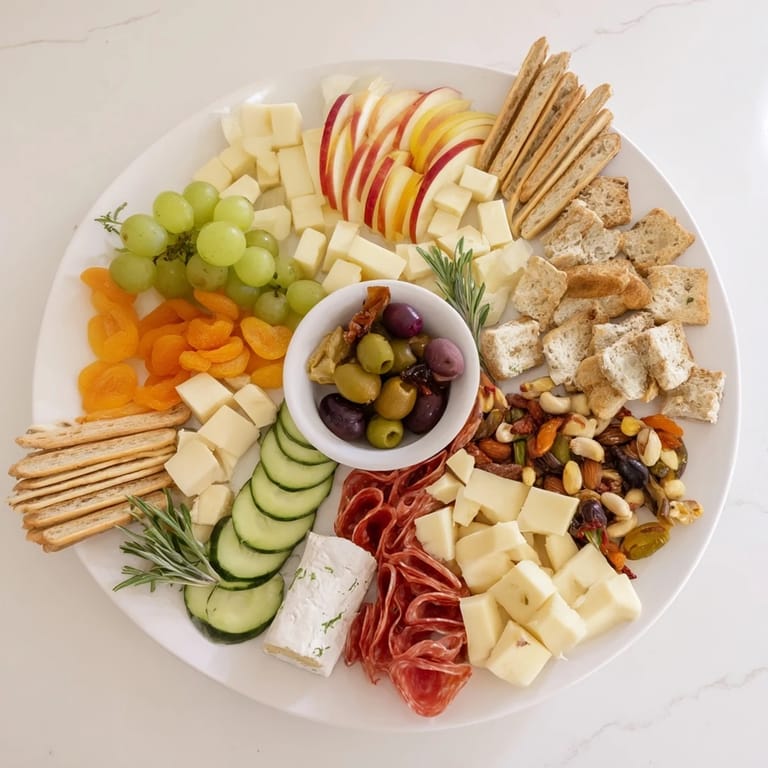
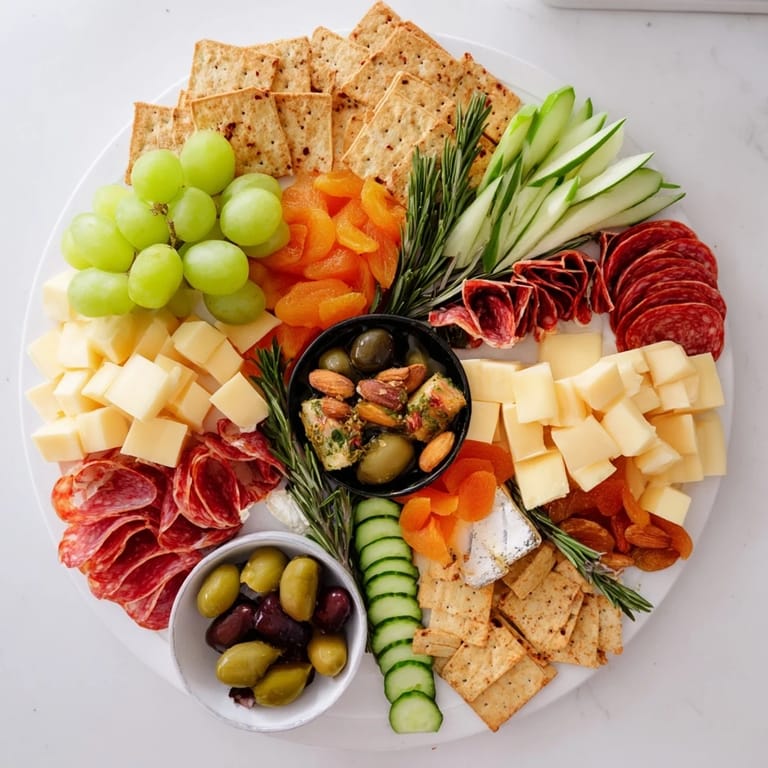
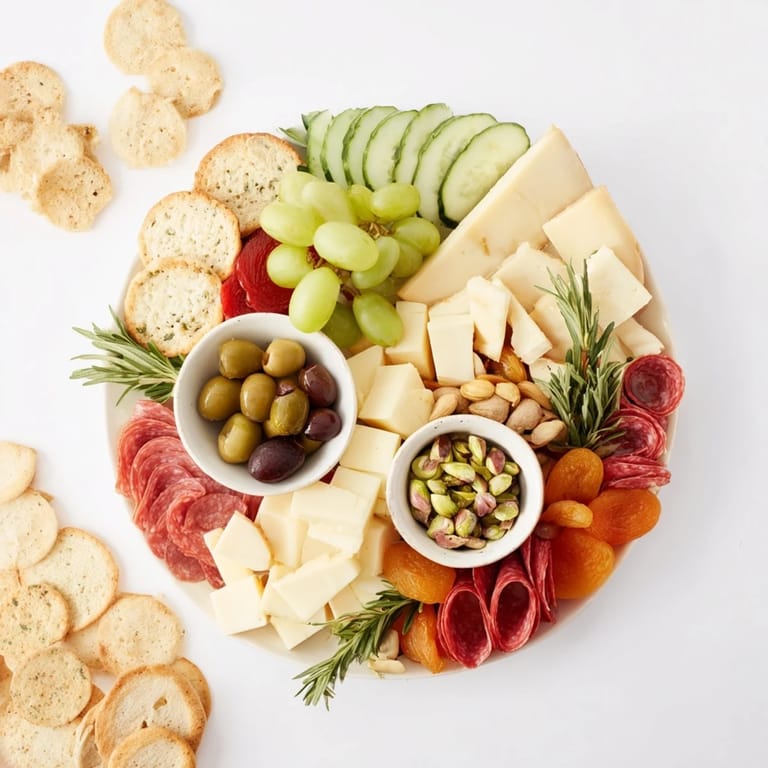
- Start with your largest platter or board laid out in front of you, and take a moment to envision where everything will go. Place your rosemary sprigs in two lines to create three distinct sections—this is the architecture of your platter, and once it's in place, everything else will feel more intentional.
- Build the Chardonnay section:
- In the first section, arrange your triple-cream brie in overlapping slices to show off its creamy texture, then scatter cubed Gruyère nearby. Cluster the green grapes in one corner where they'll catch the light, fan out your apple slices so the white flesh shows, and nestle the Marcona almonds in pockets of space. Step back and look at the color balance—you want enough variety that the eye enjoys traveling across this section.
- Build the Pinot Noir section:
- This middle section should feel richer and deeper. Arrange your aged cheddar and smoked gouda so they're clearly visible and separate—each deserves its moment. Fold your prosciutto and salami into loose waves so they look graceful, not collapsed, and scatter your cherry tomatoes like little jewels throughout. This section is all about depth and warmth.
- Build the Sparkling Wine section:
- Place your herbed goat cheese log as a focal point—it's a bit higher in profile than the other elements and catches the eye. Arrange dried apricots in small clusters, pile pistachios in one spot so guests can easily grab a handful, distribute olives from your bowl, and fan cucumber slices for freshness. This section should feel bright and elegant.
- Fill and frame:
- Now take your baguette slices and crackers and fill in all the empty spaces—this is oddly satisfying work, like finishing a puzzle. These are the connective tissue that makes everything feel complete and gives guests plenty of options for building their own bites.
- Optional finishing touch:
- If you're using honey or fig jam, pour each into a small, beautiful bowl and place them strategically on the platter where they can serve both as visual interest and practical dipping stations. This is the moment your platter transforms from 'nice' to 'restaurant quality.'
- The final reveal:
- Step back and look at your work. The rosemary should be aromatic, the colors should feel vibrant, and you should see natural flow as the eye moves from section to section. Now you're ready to serve.
 Save to Pinterest
 What moved me most wasn't the wine pairings themselves, but how this simple platter became the reason people lingered longer at the table. My friend Sarah, who usually rushes through appetizers, found herself pairing the goat cheese with crackers and taking time to really taste how the sparkling wine changed the experience. In that moment, the platter had done something beyond feeding people—it had slowed everyone down enough to actually savor the moment together.
The Wine Pairing Magic
The real joy of this platter is understanding how wine and food have conversations with each other. The Chardonnay section with its buttery brie and crisp apple works because the wine's acidity cuts through the cheese's richness, and the fruit flavors echo the grapes and apple you're eating. The Pinot Noir section with its salty-savory meats and aged cheeses creates this beautiful harmony where the wine's subtle tannins wrap around the flavors rather than overpower them. And the sparkling wine section with its brightness, sweetness from dried apricots, and fresh cucumber becomes almost effervescent in your mouth. You're not just eating—you're experiencing how thoughtfulness in arrangement elevates everything.
Making It Your Own
The structure of this platter is just a template—it's meant to be personalized. I've made versions where I swapped the brie for a creamy Camembert, substituted the Gruyère with a sharp Manchego, and once completely reimagined the sparkling wine section with roasted red peppers instead of cucumber because that's what I had on hand. The principle stays the same: thoughtful pairing, beautiful arrangement, and respecting the idea that each section has its own personality. Every iteration taught me something new about what flavors play well together, and I find myself naturally building better platters each time.
From Platter to Conversation
Over the past year, I've learned that the most successful gatherings aren't about impressing people with fancy cooking—they're about creating an environment where people feel welcomed and cared for. This platter does that without any pretense or stress. It's colorful enough to be visually interesting, structured enough to be easy to navigate, and flexible enough that you can honestly make it work with what's in your budget and your local market.
- The rosemary sprigs can be replaced with herb sprigs (thyme or basil work beautifully) or even thin lines of parchment paper if you prefer
- If you're serving in a warm space, keep everything chilled until the last possible moment—it makes an enormous difference in how fresh and vibrant everything tastes
- Give yourself permission to play with the arrangement as guests arrive; some of the best-looking platters happen when you adjust things in real time
 Save to Pinterest
 This platter taught me that the best recipes aren't always the most complicated ones—sometimes they're the ones that give you permission to slow down and be present with the people you care about. Whenever I arrange one now, I think of all the conversations that have happened around it, and I feel grateful for such a simple way to bring people together.
Common Questions
- → How do rosemary sprigs enhance the platter?
Rosemary sprigs serve as natural dividers between sections, imparting a fragrant aroma that complements the flavors and elevates the presentation.
- → Can the platter be adapted for vegetarian preferences?
Yes, meats can be omitted and substituted with extra nuts, roasted vegetables, or additional cheeses to maintain variety and flavor balance.
- → What types of cheeses are featured in the sections?
The platter includes triple-cream brie, Gruyère, aged cheddar, smoked gouda, and herbed goat cheese for a diverse taste experience.
- → How should different sections be paired with wines?
Section one complements Chardonnay or crisp whites, section two pairs well with Pinot Noir or light reds, and section three suits sparkling wines or rosé.
- → What is the best way to serve the platter?
Arrange all components on a large platter with rosemary sprigs separating sections and serve immediately to preserve freshness and presentation.
- → Are there any allergens to be aware of?
The platter contains milk, tree nuts, wheat, and pork products; consider dietary restrictions and check ingredient labels accordingly.