 Save to Pinterest
 Last Tuesday, my coworker brought one of those trendy veggie boards to our office lunch, and I watched three people gravitate toward it before anyone even opened the sandwich containers. That's when it clicked—this isn't a salad, it's permission to eat exactly what you want, exactly how much you want, with zero guilt. Now I make these whenever I need something that feels indulgent but actually nourishes me, and somehow they disappear faster than anything else I put on the table.
My sister called it an "adult Lunchables" and I've never heard a more perfect description. We were sitting at my kitchen counter on a Saturday morning when I assembled one of these while she worked on her laptop, and she kept reaching over for another cube of cheese or a handful of nuts without really thinking about it. By the end of the hour, the board was half empty and we'd barely noticed because we were too busy talking—that's when food becomes something more than fuel.
Ingredients
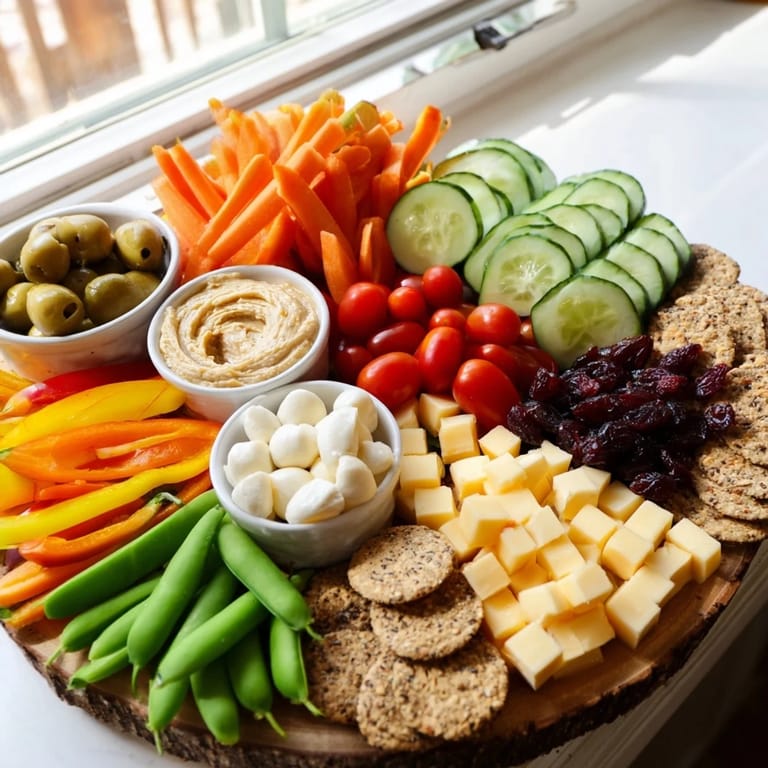
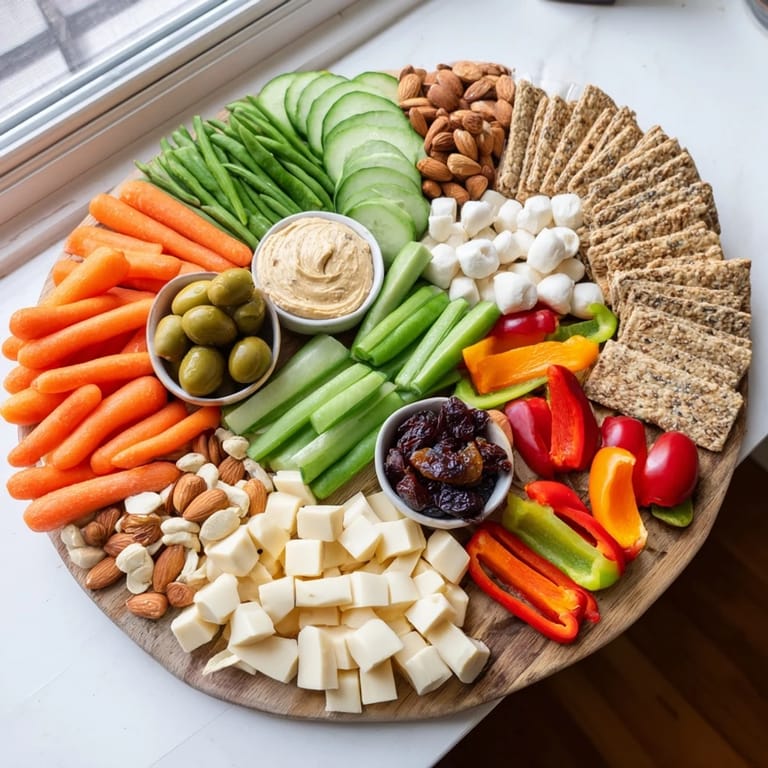
- Baby carrots: Sweet and already bite-sized, they're the backbone of any veggie board and nobody ever complains about having too many.
- Cucumber slices: Cool and refreshing, slice them thick enough that they don't get mushy but thin enough to dip without breaking.
- Cherry tomatoes: Use the ones that are actually ripe—you can taste the difference immediately, and it makes or breaks the whole board.
- Bell pepper strips: Mix your colors because it's not just prettier, the different colors taste subtly different and it keeps things interesting.
- Sugar snap peas: They're naturally sweet and crunchy, which is why people reach for them first.
- Hummus: Any flavor works, but roasted red pepper or garlic makes people ask what it is because it tastes more intentional.
- Ranch or Greek yogurt dip: This is the comfort option that makes people who'd normally skip vegetables suddenly eat three cups of carrots.
- Cheddar cheese: Cube it generous so people actually grab pieces instead of looking for something more substantial.
- Mozzarella balls: Soft and pillowy, they provide contrast to the hard cheeses and disappear first from any board.
- Gouda or Swiss cheese: Sliced cheese gives you options—some people want to layer it, others want a thinner taste.
- Whole grain crackers: They actually have flavor and texture unlike those bland white ones, plus they hold up to dipping.
- Roasted nuts: Raw nuts taste a bit flat next to everything else, but roasted nuts bring warmth and complexity.
- Olives: The briny, salty element that makes you realize how much you needed that contrast.
- Dried fruit: A hit of sweetness that makes this board feel complete instead of just virtuous.
Tired of Takeout? 🥡
Get 10 meals you can make faster than delivery arrives. Seriously.
One email. No spam. Unsubscribe anytime.
Instructions
- Prep your vegetables like you mean it:
- Wash and dry everything thoroughly—wet vegetables make the board look sad and the crackers get soggy. Slice cucumbers and peppers right before assembly so they don't oxidize and turn dull.
- Map out your board like you're designing something:
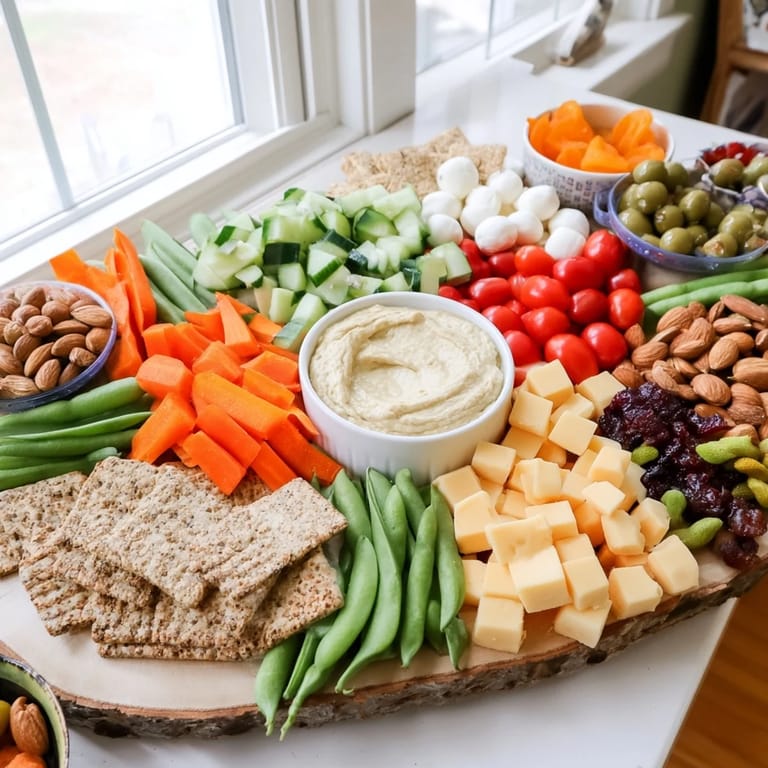
- Start with vegetables in little sections, leaving space for everything else. Think of it as creating pockets where people's eyes land naturally.
- Nestle your dips where they'll be found:
- Small bowls placed asymmetrically actually look better than centered ones, and people find them more easily when they're not perfectly symmetrical.
- Cluster your cheeses for impact:
- Group the cubes together, make a little nest of mozzarella balls, arrange the slices so the colors show. It's the detail that makes this feel special instead of thrown together.
- Fill the gaps like you're making art:
- Crackers, nuts, olives, and dried fruit go in the spaces between vegetables and cheese. This is where you add personality and make sure there's variety every direction someone looks.
- Serve right away, or chill it:
- It tastes best fresh and room temperature, but you can definitely cover it and refrigerate for a few hours if you need breathing room before guests arrive.
 Save to Pinterest
 There's something unexpectedly generous about putting this in front of people. It says you care about their preferences without asking them a hundred questions, and somehow that matters more than a meal that took hours to prepare. My neighbor brought one to our block party last summer and I realized I'd been eating vegetables for two hours without a single moment of thinking I was being healthy.
Making It Personal
The beauty of this board is that it's a canvas for your actual preferences, not some food blogger's idea of balance. If you hate cucumbers, don't include them—put in celery instead, or more bell peppers, or nothing at all. The people eating this board are doing it because they want to graze and discover, not because you followed rules. I've made versions with roasted chickpeas instead of nuts for a friend with allergies, and another that was heavy on the cheese and light on vegetables for my brother who's never met a carb he didn't like.
Timing and Seasons
In summer, I load mine with every color of bell pepper and extra tomatoes because that's when they actually taste like something. Winter, I lean into the heartier elements—more cheese, more nuts, crackers that feel substantial. Spring is when I start sneaking in fresh herbs and different dips because I'm tired of the same flavors. You can make this exact same board four different ways throughout the year just by shifting what produce is actually good.
Beyond the Basic Board
Once you've made the straightforward version, you start seeing possibilities. Hard-boiled eggs add protein and visual interest. Sliced deli meats turn it into something for people with higher protein needs. A dairy-free version is honestly just as satisfying if you use quality plant-based cheeses and ignore anyone who says otherwise. This is the kind of foundation that doesn't need tweaking—it just needs you to pay attention to what actually works in your kitchen.
- Add hard-boiled eggs or sliced proteins if people in your life eat more meat than vegetables.
- Keep everything in sections instead of scattered because it actually looks more intentional and organized.
- Prep vegetables the morning of but don't assemble until close to serving time so everything stays fresh and crisp.
 Save to Pinterest
 This board has become my secret weapon for when I want to feed people without the performance of cooking. It's nourishing and beautiful and it lets everyone find exactly what they need in that moment.
Common Questions
- → What vegetables work best for this snack board?
Fresh veggies like baby carrots, cucumber slices, cherry tomatoes, bell pepper strips, and sugar snap peas provide crisp texture and vibrant colors.
- → Which dips complement the vegetable selection?
Hummus and ranch or Greek yogurt dips offer creamy, flavorful contrasts that enhance the fresh vegetables beautifully.
- → Can this board accommodate dietary preferences?
Yes, using gluten-free crackers and plant-based cheeses allows a gluten-free or vegan-friendly version with just slight substitutions.
- → How should cheeses be prepared for the board?
Cheddar should be cubed, mozzarella served as small balls, and gouda or Swiss sliced thin to encourage easy picking and diverse textures.
- → What crunchy elements add texture balance?
Whole grain crackers and roasted nuts such as almonds, cashews, or walnuts provide satisfying crunch alongside the fresh ingredients.
- → How to store leftovers properly?
Cover the assembled board with plastic wrap and refrigerate promptly. Consume within 1-2 days for optimal freshness.