 Save to Pinterest
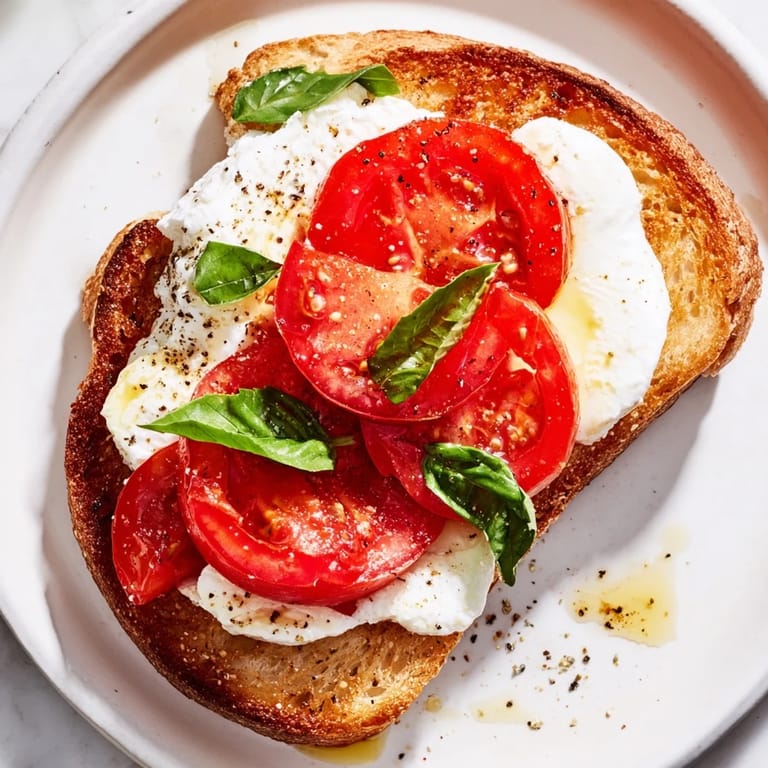
 The first time I made this was on a Saturday morning when my farmer's market haul of heirloom tomatoes was at peak ripeness—so fragrant they were almost perfuming my entire kitchen. My partner wandered in at the smell and asked what I was doing with such gorgeous fruit for breakfast, and I honestly didn't have a plan beyond wanting to taste them in their simplest form. That's when I remembered someone mentioning burrata, that cloud-like cheese that practically melts on contact, and suddenly this toast became the obvious answer.
I served this to my friend Maya on a Tuesday morning when she showed up unannounced with coffee and gossip, and watching her face when she bit into it—that moment of silent appreciation before she said anything—that's when I knew this recipe had staying power. She made me write down exactly what I'd done because she wanted to recreate it for her book club, and now she texts me photos of her versions with different basil varieties or fancy finishing salts.
Ingredients
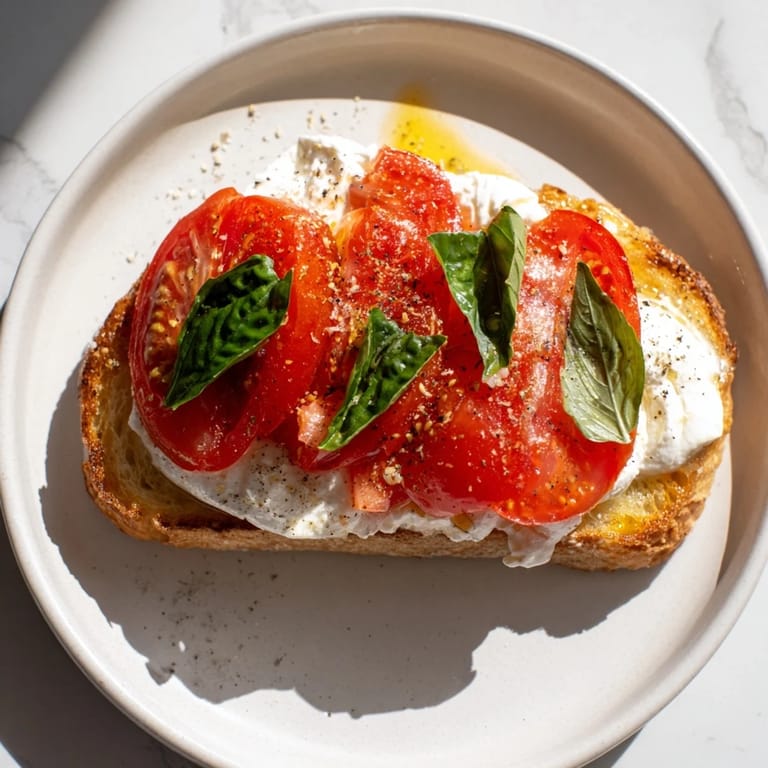
- Sourdough bread: Two large slices give you enough surface area for generous toppings while staying sturdy enough not to collapse under the weight of creamy cheese and juicy tomatoes.
- Fresh burrata cheese: This is where the magic happens—that creamy center is what sets this apart from regular mozzarella, so don't skip it even if you're tempted.
- Ripe tomatoes: Medium ones work best because they slice evenly and won't overwhelm the delicate burrata with excess liquid.
- Extra virgin olive oil: This isn't the place to economize; good oil makes a noticeable difference in the final bite.
- Garlic clove: Halved for rubbing gives you garlicky warmth without overpowering the other flavors.
- Flaky sea salt and freshly ground black pepper: Don't underestimate these—they brighten everything and let each component shine through.
- Fresh basil leaves: Torn rather than chopped so they don't bruise and release too much flavor all at once.
- Balsamic glaze: The optional drizzle ties everything together with a hint of sweetness and tang.
Tired of Takeout? 🥡
Get 10 meals you can make faster than delivery arrives. Seriously.
One email. No spam. Unsubscribe anytime.
Instructions
- Toast until golden and crisp:
- Use a toaster for even browning or a grill pan if you want those pretty char marks, and watch it closely because sourdough can go from perfect to overdone in seconds.
- Rub with warm garlic:
- Do this while the bread is still hot so the garlic releases its aroma and flavors the surface without feeling raw.
- Coat with olive oil:
- This step is about building layers of flavor and creating a barrier that keeps the bread crispy even as the juicy tomatoes sit on top.
- Layer tomato slices:
- Overlap them slightly like roof tiles so they look beautiful and cook evenly from any residual toast heat, then season generously.
- Add the burrata:
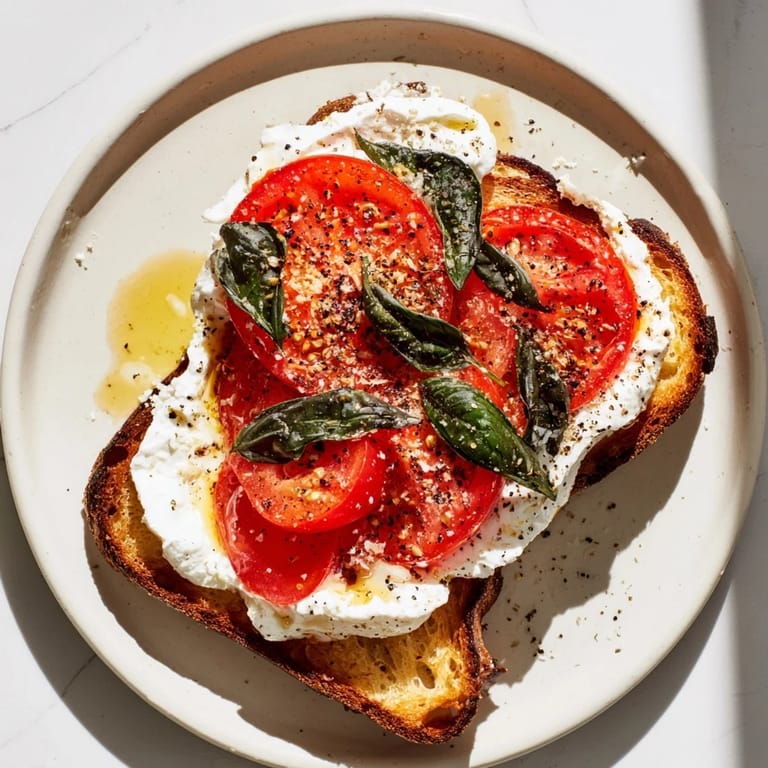
- Tear it gently by hand instead of cutting so it stays creamy and irregular, then distribute it while the toast is still warm so it softens just slightly.
- Finish with basil and glaze:
- Add the basil at the very end so it stays bright green and aromatic, and drizzle the balsamic just before serving.
- Serve immediately:
- This is not a dish that improves with time—the moment it comes together is when it's at its absolute best.
 Save to Pinterest
 There was an afternoon when I made this for my mom after her doctor's appointment, just wanting to give her something that felt like hope on a plate—bright colors, fresh flavors, nothing complicated. She sat at the counter and ate it slowly, closing her eyes after each bite, and that's when I realized some dishes are about more than taste.
Why Tomatoes and Burrata Are Perfect Together
Ripe tomatoes are naturally sweet and acidic, and burrata's creamy richness needs that brightness to keep it from feeling heavy on the palate. It's one of those combinations that feels obvious once you try it, like the two ingredients were designed to live together. The tomato juice mingles with the burrata's cream and the olive oil, creating this impromptu sauce that soaks into the bread—nothing fancy, just chemistry.
The Sourdough Canvas
I spent a while trying this with different breads before sourdough felt right—white bread was too soft, whole wheat was too heavy, brioche was too sweet. Sourdough has enough texture to hold up to moisture and toppings, but its subtle tang doesn't compete with what you're putting on top. The crispness is essential because it's the textural anchor that keeps everything from turning into a limp mess.
Small Moves That Matter
I learned these tricks through repetition and tiny failures that added up to big understanding. The garlic rub came from watching my grandmother cook and noticing how she always built flavor in layers rather than dumping everything on at once. These little gestures are what separate a toast from a moment worth talking about.
- Tear your basil by hand in the final seconds so it stays vibrant and aromatic rather than oxidizing from knife cuts.
- Use a quality sea salt that dissolves slowly on the tongue instead of table salt that disappears too quickly.
- Let your tomatoes sit at room temperature for an hour before slicing so they're at their peak flavor and juiciness.
 Save to Pinterest
 This has become my go-to when I want to feel like I'm cooking something special without the stress, and it never fails to make people slow down and actually taste what's in front of them. That's the whole point, really.
Common Questions
- → What type of bread works best?
Crisp sourdough bread provides a sturdy base with a slightly tangy flavor that complements the creamy burrata and fresh tomatoes.
- → Can I substitute burrata with another cheese?
Fresh mozzarella can be used as a milder alternative if burrata is unavailable, maintaining a creamy texture.
- → How do I enhance the garlic flavor on the toast?
Rubbing the warm toast with a halved garlic clove releases subtle, aromatic notes without overpowering the other ingredients.
- → Is balsamic glaze necessary?
While optional, a drizzle of balsamic glaze adds a sweet tang that elevates the overall flavor profile.
- → What is a good drink pairing?
A crisp Prosecco or light Pinot Grigio pairs wonderfully, balancing the creamy and fresh components of the dish.