 Save to Pinterest
 My sourdough starter was bubbling away one spring morning when I realized I'd been discarding perfectly good fed starter every week, and it felt like such waste. That's when I decided to stop throwing it away and start baking with it instead. These blueberry lemon scones were my first real attempt at turning discard into something intentional, and honestly, that tangy depth makes them taste nothing like standard scones. The bright lemon cuts right through the fermented notes, creating this balance I didn't expect to work so well. Now I bake these whenever the farmer's market has fat, juicy blueberries.
I brought a batch to my neighbor last April, and she came over the next morning asking what I'd done differently from her usual scone recipe. Watching her break one open and see those little blueberry pockets made me realize the sourdough tang wasn't just a way to use up starter—it was actually the thing that made them memorable. She now asks me to bake them for her book club meetings, which is the highest compliment I could get.
Ingredients
- All-purpose flour (2 1/4 cups): The backbone of tender scones; I learned to measure by weight for consistency since scooping can pack down flour and make them dense.
- Granulated sugar (1/4 cup): Keeps the crumb delicate without overwhelming the lemon and tang.
- Baking powder (1 tablespoon) and baking soda (1/2 teaspoon): Work together to lift the dough; the soda especially brightens the sourness and helps them brown.
- Fine sea salt (1/2 teaspoon): Balances sweetness and brings out the lemon flavor naturally.
- Lemon zest (from 1 large lemon): Use a microplane to get the oils without the bitter white pith; this is where most of the bright lemon flavor lives.
- Unsalted butter (1/2 cup, cold and cubed): Cold is non-negotiable here—it creates little pockets that make scones flaky instead of cakey.
- Sourdough discard (1 cup, unfed, room temperature): The secret ingredient that adds moisture, tang, and depth; unfed discard has looser texture than fed, which helps the dough come together better.
- Heavy cream (1/4 cup plus more for brushing): Binds the dough and brushed on top creates a burnished, golden surface.
- Large egg (1): Adds richness and helps the scones stay tender.
- Pure vanilla extract (1 teaspoon): A whisper of vanilla rounds out the sharp lemon notes.
- Freshly squeezed lemon juice (2 tablespoons): Always fresh, never bottled; it adds acidity that keeps the crumb tender and bright.
- Fresh blueberries (1 cup): Or frozen straight from the freezer; frozen actually helps them hold their shape better because the cold keeps the dough firm while they bake.
- Coarse sugar (2 tablespoons, optional): Sprinkled on top, it creates little jewel-like sparkle and a subtle crunch.
Tired of Takeout? 🥡
Get 10 meals you can make faster than delivery arrives. Seriously.
One email. No spam. Unsubscribe anytime.
Instructions
- Heat your oven and prep your space:
- Set the oven to 400°F and line a baking sheet with parchment paper so your scones won't stick and you'll get that golden bottom crust. I always do this first because there's nothing worse than realizing mid-dough that you're not ready.
- Combine all your dry ingredients:
- Whisk together the flour, sugar, baking powder, baking soda, salt, and lemon zest in a large bowl until everything is evenly distributed. You'll actually smell the lemon getting more pronounced as you whisk, which tells you the zest is releasing its oils.
- Cut in the cold butter:
- Add your cubed, cold butter to the dry mixture and use a pastry blender or your fingertips to work it in until the mixture looks like coarse, wet sand with some pea-sized butter pieces still visible. This texture is everything—those little butter chunks melt during baking and create the tender, almost flaky crumb that makes people ask for your recipe.
- Mix your wet ingredients separately:
- In another bowl, whisk together the sourdough discard, heavy cream, egg, vanilla, and lemon juice until you have a smooth, pourable consistency. The sourdough will loosen up as you whisk, and you might notice a pleasant fermented smell—that's exactly what you want.
- Bring everything together gently:
- Pour the wet mixture into the dry ingredients and stir with a wooden spoon just until combined; the dough will look shaggy and rough, and that's perfect. Overmixing develops gluten and makes scones tough, so resist the urge to keep stirring once everything is just barely held together.
- Fold in the blueberries with a light hand:
- Gently fold the blueberries into the dough using as few strokes as possible, folding rather than stirring so you don't burst them and stain the crumb. If you're using frozen berries straight from the freezer, they'll hold their shape beautifully and won't turn the dough purple.
- Shape your scones:
- Turn the dough out onto a lightly floured surface and gently pat it into a 1-inch-thick circle about 7 inches across, using your fingers rather than a rolling pin. Treating the dough gently here keeps it tender; I imagine I'm handling something fragile.
- Cut and arrange:
- Using a sharp knife or bench scraper, cut the circle into 8 wedges like you're cutting a pie, then transfer each wedge to your prepared baking sheet with a bit of space between them. The space lets hot air circulate and ensures they bake evenly on all sides.
- Add the finishing touches:
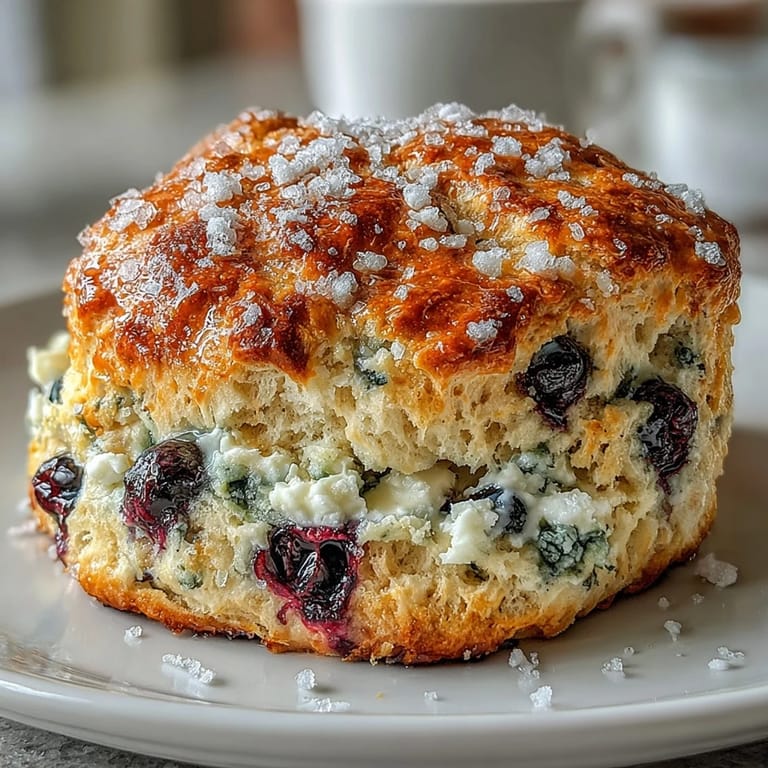
- Brush the tops lightly with a little extra cream and sprinkle with coarse sugar if you're using it, which catches the light beautifully once they're golden. This step is pure optional, but it gives them that bakery-quality appearance that makes them feel special.
- Bake until golden:
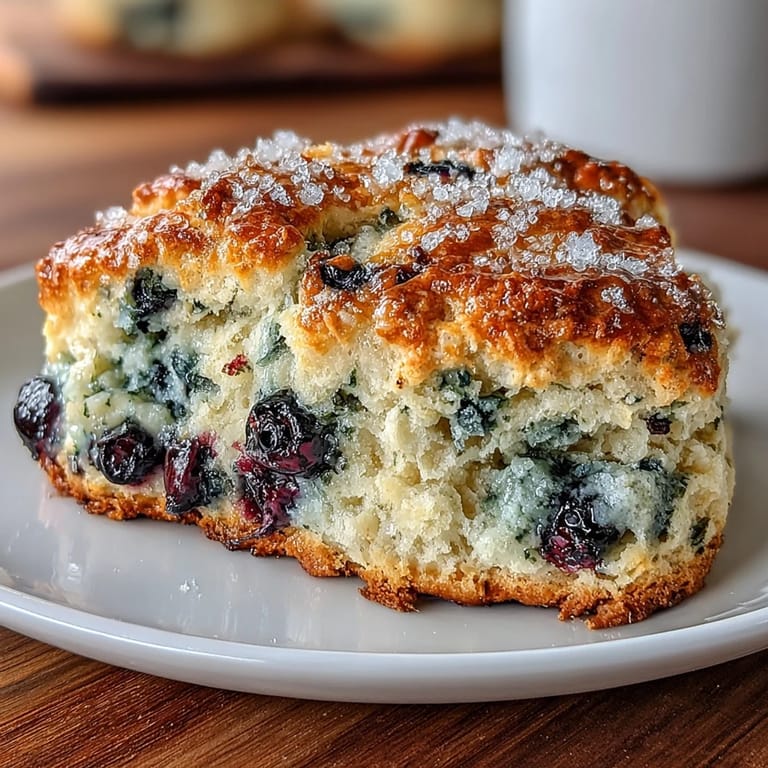
- Pop them into the 400°F oven for 18 to 22 minutes; they're done when the tops are golden brown and a toothpick inserted into the thickest scone comes out clean with just a few moist crumbs. I set a timer for 18 minutes and start peeking because ovens vary, and you want to catch them right when they're perfect.
- Cool and enjoy:
- Let them sit on the baking sheet for about 5 minutes so they firm up slightly, then transfer them to a wire rack to cool completely. They're technically best served warm, but honestly, they're pretty hard to resist the moment they come out of the oven.
 Save to Pinterest
 One afternoon I was testing a batch and my friend texted asking what I was doing, so I invited her over for tea. We split a warm scone with softened butter, and she sat at my kitchen table with her eyes closed, just enjoying it—not saying anything, just being present with the lemon and blueberry and that barely-there tang from the sourdough. That moment made me understand that baking isn't really about impressing people; it's about creating something that makes them want to slow down.
The Sourdough Secret
Using sourdough discard transforms these scones in a way that's hard to describe until you taste it. The fermentation adds a subtle complexity that regular baking doesn't give you—it's not aggressively tangy like a sourdough loaf, but more like a gentle whisper underneath the bright lemon. I've made these with buttermilk as a substitute when I didn't have fresh discard, and they're good, but they lack that depth that makes people ask what you did differently. The discard also keeps the scones moister for longer, which is a happy side effect I discovered by accident when I made a batch and didn't eat it immediately.
Timing and Temperature Matter
The difference between a tender, just-baked scone and a slightly overbaked one is really just two or three minutes, so staying present while they bake is worth it. I learned this the hard way by setting a timer and walking away, only to come back to scones that were golden on the outside but a bit too firm. Now I set my timer for 18 minutes and actually hang around the kitchen, maybe sipping tea or starting to clear up, so I can pull them out the moment the tops turn that perfect honey-gold color. Room temperature matters too—if your discard, cream, and egg are cold from the fridge, the dough will be harder to work with, so I always bring them to room temperature first.
Storage and Serving Suggestions
These scones are absolutely best the day you make them, but they'll keep in an airtight container for up to two days if you need them to. I've found that reheating them gently in a 300°F oven for about 5 minutes brings back some of that just-baked softness. If you want to get fancy, make a simple lemon glaze by whisking together powdered sugar and a little lemon juice, then drizzle it over the cooled scones—it adds another layer of brightness that feels fancy without much effort.
- Pair these with clotted cream and lemon curd for a very proper afternoon tea experience.
- They're perfect alongside scrambled eggs and fresh fruit for a special breakfast that doesn't require hours in the kitchen.
- Make them ahead and freeze in an airtight container for up to a month; thaw at room temperature or reheat gently to refresh them.
 Save to Pinterest
 These scones remind me that sometimes the best recipes come from necessity, like finding a use for something you've been throwing away. Baking them has become a small ritual that connects me to my starter, the seasons, and the people I share them with.
Common Questions
- → Can I use frozen blueberries?
Yes, frozen blueberries can be added directly without thawing to prevent color bleeding into the dough.
- → What is the purpose of the sourdough discard?
Sourdough discard provides a subtle tang and improves the texture, contributing to a tender crumb.
- → How should I store the scones after baking?
Store in an airtight container at room temperature for up to two days to maintain freshness.
- → Can I substitute the cream with buttermilk?
Buttermilk is a suitable substitute that adds a slight tang and maintains moistness in the scones.
- → What tools are essential for preparing these scones?
Mixing bowls, a pastry blender or fork for cutting in butter, a whisk, a baking sheet, and parchment paper are needed.
- → How do I enhance the lemon flavor?
Drizzle with a simple lemon glaze made of powdered sugar mixed with lemon juice after baking.